NATSO Urges House Lawmakers to Preserve Framework That Makes SCR Technology Effective
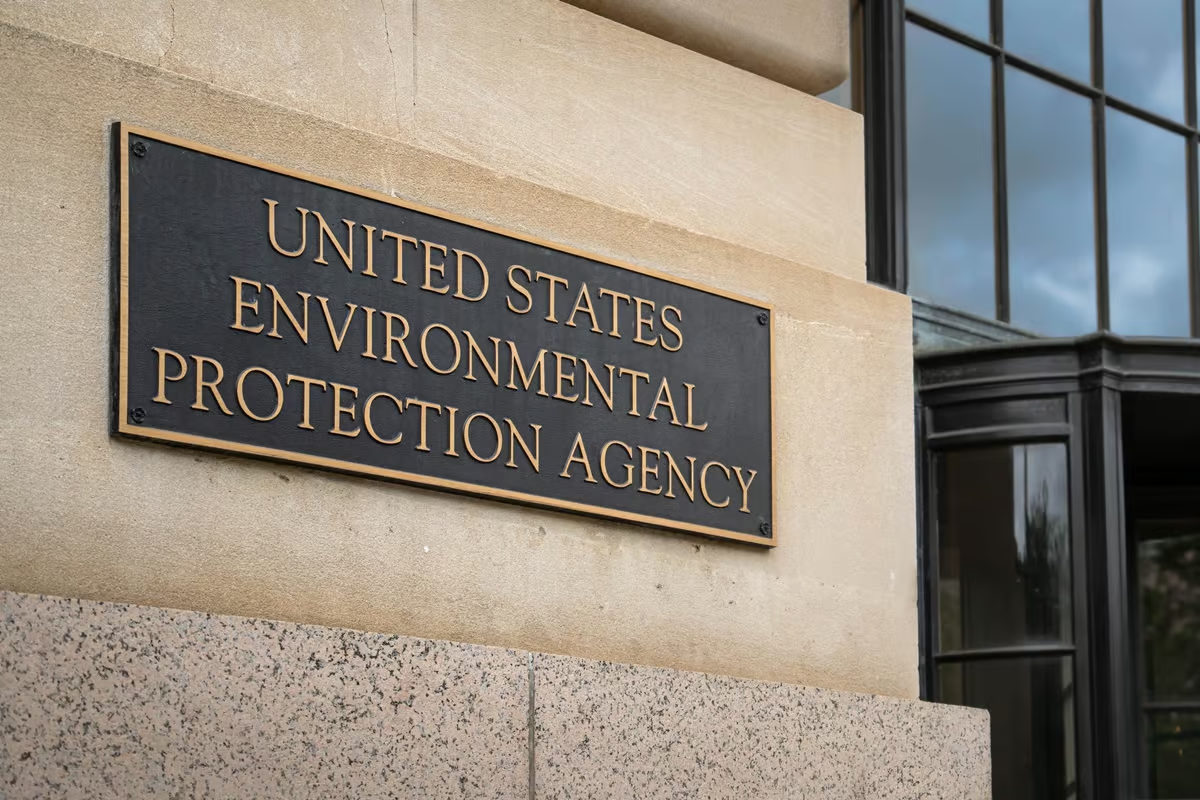
NATSO urged the U.S. House Subcommittee on Environment to ensure the Environmental Protection Agency retains clear authority to accommodate deratement as an optional compliance strategy for reducing nitrogen oxide (“NOx”) emissions as it considers the bipartisan Diesel Engine Flexibility Act (H.R. 9618) and cautioned against indirectly codifying regulations that would eliminate emissions-related deratement in its entirety.
In a letter to the House Committee on Energy and Commerce and the Subcommittee on Environment, NATSO praised the subcommittee for its attention to the bipartisan Diesel Engine Flexibility Act (H.R. 9618) introduced July 10 by Representatives Julie Fedorchak (R-ND), Don Davis (D-NC), Michelle Fischbach (R-MN), Jack Bergman (R-MI), and Brad Finstad (R-MN).
The Diesel Engine Flexibility (DEF) Act creates a 10-year statutory safe harbor for EPA guidance issued in 2025 and 2026 to reduce unnecessary engine shutdowns caused by faulty DEF sensors while maintaining emissions protections. H.R. 9618 also would allow EPA to continue approving software updates, diagnostic improvements and recalls consistent with the guidance and require lead times of at least three model years of applicability and five years before taking effect.
Of importance to NATSO members, H.R. 9618 would direct EPA to consider reducing unnecessary shutdowns, derates, and operational disruptions when developing future emissions regulations.
In its letter, NATSO urged lawmakers to preserve the inducement framework that makes Selective Catalytic Reduction technology to be effective, to “foreclose any reading of the bill that would accommodate the wholesale elimination of derates,” and to confirm EPA’s continued authority to ensure NOx compliance through “the technology and mechanisms the agency and manufacturers alike have determined work best.”
EPA’s recent guidance documents will provide diesel operators with meaningful relief from punitive derate protocols while preserving the substantial emissions benefits that DEF and SCR technology deliver.
NATSO is receptive to legislative action that codifies EPA’s guidance. But any actions aimed at regulatory stability should not remove emissions related derates entirely.
Allowing ample time for existing Guidance to penetrate the market will minimize unnecessary and punitive deratements for diesel vehicles while ensuring that Selective Catalytic Reduction technology remains an essential part of every truck manufacturer’s investment and compliance strategy.

Subscribe to Updates
The NATSO Foundation and NATSO provide a breadth of information created to strengthen travel plazas’ ability to meet the needs of the traveling public in an age of disruption. This includes knowledge filled blog posts, articles and publications. If you would like to receive a digest of blog post and articles directly in your inbox, please provide your name, email and the frequency of the updates you want to receive the email digest.