Artificial intelligence is gaining traction across at truck stops and travel centers as well as their core customer base. The technology is helping operators and fleets increase profitability and efficiency, and it has the potential to reshare how operators do business.
“AI is rapidly evolving from a buzzword into a practical business tool that can deliver real, measurable benefits and is becoming the next practical step for productivity and efficiency. It is becoming more and more accessible and is being built directly into many of the everyday systems operators already use, including point-of-sale platforms, loyalty programs and fuel management solutions. As AI use advances rapidly in the coming years, it will become increasingly important for travel centers to understand the technology and its impact on the industry,” said Amy Toner, executive director of the NATSO Foundation.
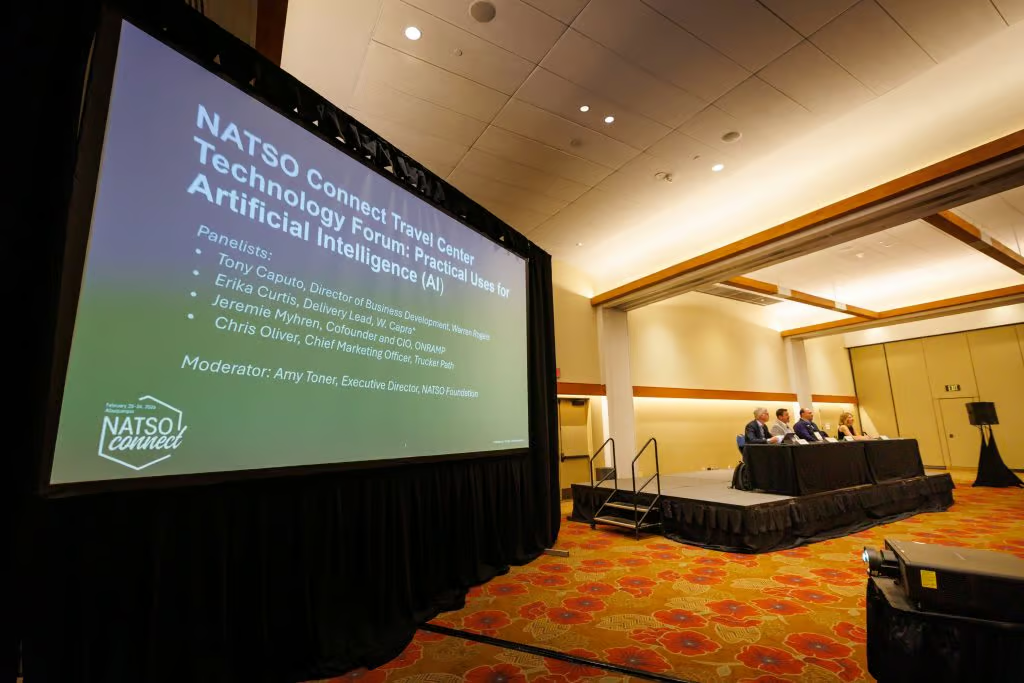
Toner moderated a panel of NATSO Foundation’s 2026 Technology Steering Council members including Tony Caputo, director of business development for Warren Rogers, Jeremie Myhren, cofounder and CIO of Onramp, and Chris Oliver, chief marketing officer for Trucker Path on AI and its travel center-specific uses during NATSO Connect 2026.
AI in Operations: From Reactive to Predictive
AI is becoming more accessible to operators of all sizes and is being built directly into many of the everyday systems operators already use, including point-of-sale platforms, loyalty programs and fuel management solutions. It is also helping operators analyze data many of their systems already generate.
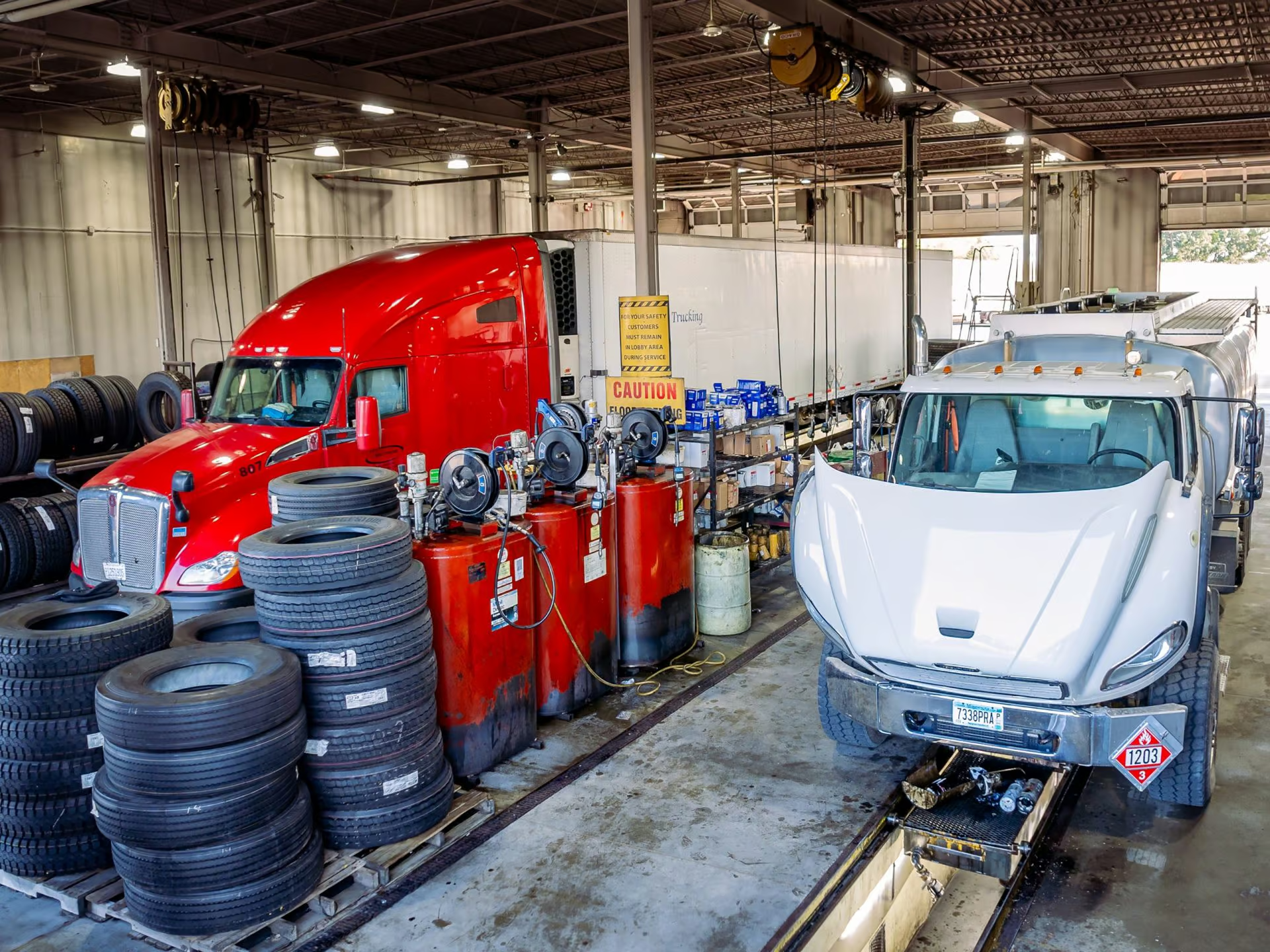
Fuel systems already generate large volumes of data, from tank gauges and alarms to flow rates and sales. AI enables operators to move beyond reacting to issues and toward predicting them. “AI can become a powerful tool to help travel centers operate efficiently, reduce risk, and improve service reliability,” Caputo said, adding that AI’s value lies in improving visibility and decision-making. “It’s about practical operational intelligence.”
Key applications include:
- Fuel loss detection: Identifying slow leaks or discrepancies before regulatory thresholds are triggered
- Alarm management: Reducing nuisance alarms while prioritizing real risks
- Run-out prevention: Predicting when tanks may run dry based on demand patterns
- Flow rate monitoring: Detecting degradation before it impacts throughput
- Dormant dispenser detection: Differentiating between low demand and equipment failure
“AI allows us to learn site-specific normal behavior and identify deviations early,” Caputo said.
For operators that means fewer outages, faster maintenance response, reduced environmental risk, and ultimately higher fuel throughput. “This isn’t about technology for its own sake,” he said. “It’s about preventing downtime and selling more gallons,” Caputo said.
Data Integration Unlocks Smarter Customer Engagement
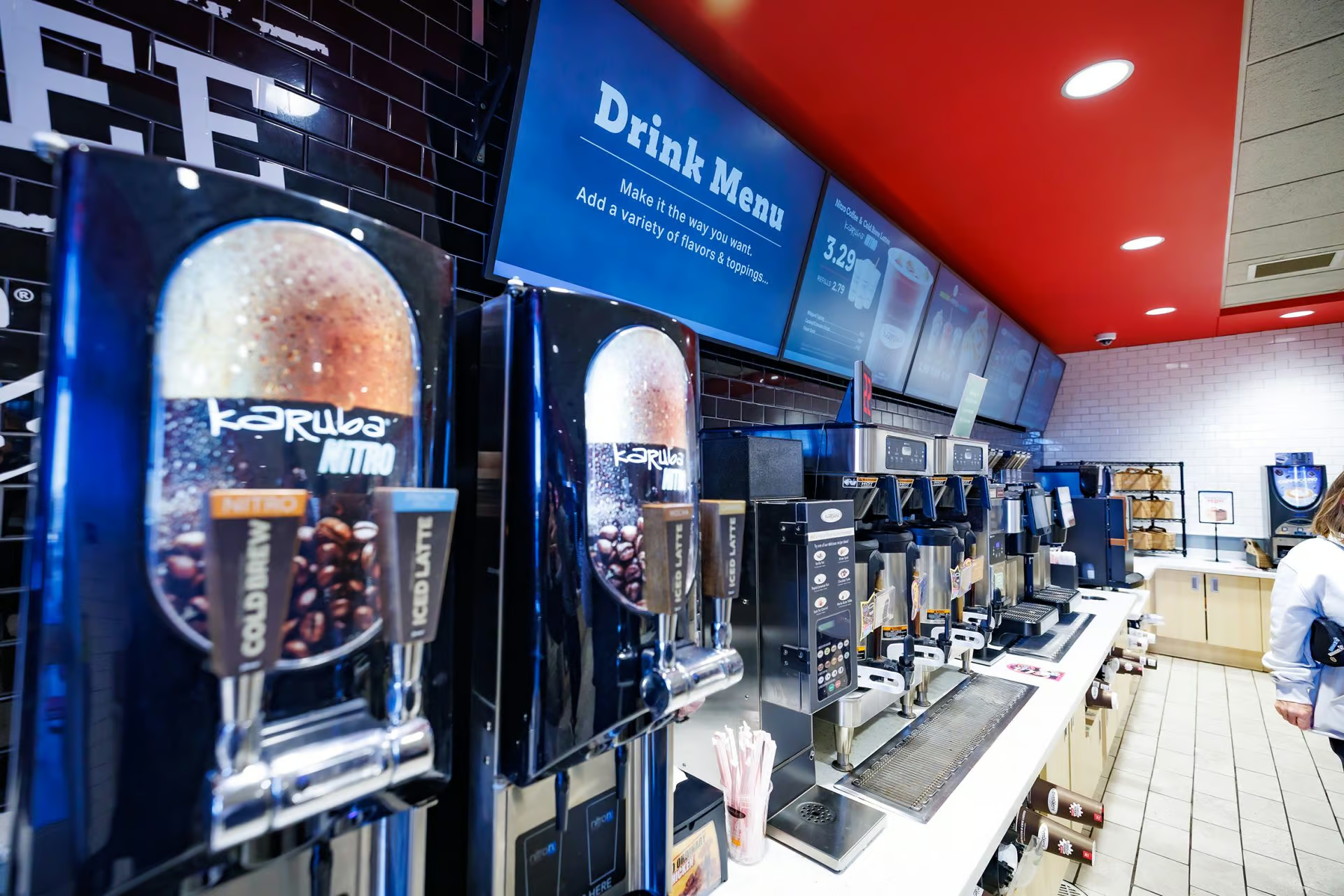
AI is also reshaping how operators engage with customers, particularly through loyalty and marketing programs. “What AI does is overlay itself across all your data sources,” Oliver said. “It reads them simultaneously, understands them, and knows how to act on them.”
More importantly, AI tools can integrate and analyze those datasets with far less effort today than it took in the past. “It used to take a lot of specialized expertise to bring those systems together,” Oliver said. “Now you can give an AI tool access, and it understands the data in a much more natural way.”
That enables more targeted and timely engagement. “For example, if a location consistently has low sales at a certain time, you can automatically trigger a promotion to nearby customers,” he said. “It could be a fuel discount, or an in-store offer to drive traffic.”
The barrier to entry is also lower than many operators expect. “You don’t need to be technical,” Oliver said. “These tools are accessible and relatively inexpensive.”
AI at the Site Level: Cameras and Real-Time Insights
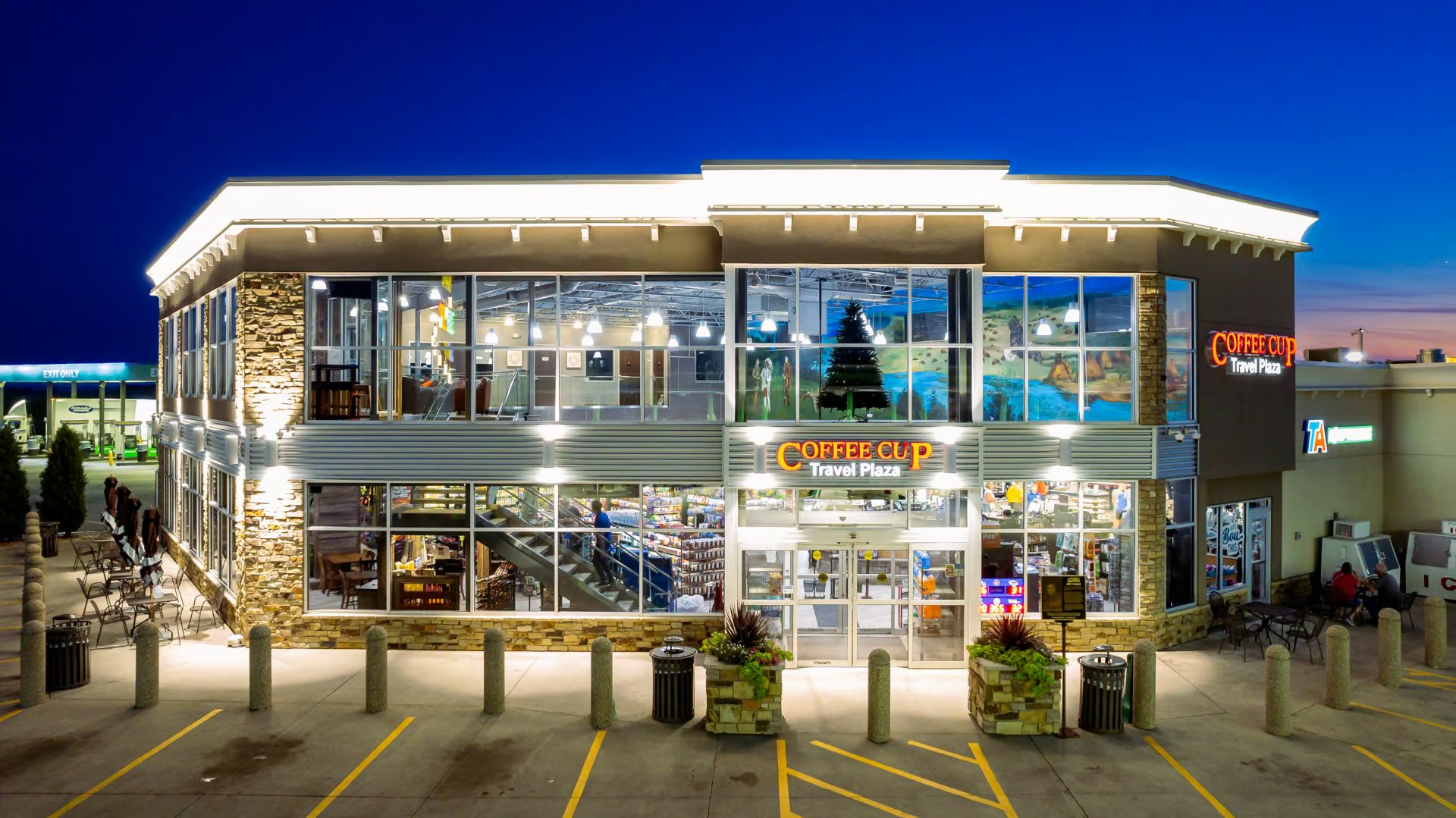
AI is also being layered onto existing hardware, particularly camera systems. “Cameras aren’t just capturing images anymore,” Oliver said. “They’re capturing images with a brain behind them.”
AI-enabled cameras can monitor store conditions and alert staff in real time. “They can detect when trash cans are overflowing or when there’s a spill that needs to be cleaned up,” Oliver added. He also said cleanliness and maintenance remain key drivers of customer satisfaction, and automation can help ensure consistency without adding labor.
Routing Intelligence Is Changing Traffic Patterns
One of the most immediate impacts of AI is happening upstream, in how freight moves across the country. Historically, routing decisions relied on relatively simple inputs, such as fuel prices, major corridors, and driver preferences. Today, AI-powered systems are layering in more variables.
“They’re bringing in many more signals than they ever could before,” Myhren said. “Weather, road construction, average truck speeds on specific corridors, fuel efficiency, and more.”
That also means systems are generating routes that just didn’t happen before,” Myhren said. “You’re starting to see freight move on state highways in ways it hasn’t before. There are areas that are becoming more lucrative, and others that may see permanent demand erosion.”
Myhren added that fleets’ use of AI introduces both risk and opportunity for travel center operators. Traditional high-traffic corridors may not be as reliable, while other routes could see more traffic.
Dwell Time Becomes a Competitive Metric
Beyond routing, AI is also evaluating what happens once a truck arrives on site. Telematics and ELD data, including dwell time at truck stops, is being aggregated and fed into routing and decision systems. “Those devices are essentially sets of eyes in your facility,” Myhren said. “They’re capturing how long it takes drivers to get in and out.”
This data is increasingly being used to influence where drivers are stop. “If a driver has a mandatory 30-minute break and it consistently takes longer than that to fuel and leave your location, you may be penalized in these algorithms,” Myhren said.
That changes the competitive equation. “It’s no longer just about price, amenities or food,” Myhren said. “Efficiency is now part of the decision.”
Operational friction points, such as slow pumps, malfunctioning card readers, lack of receipt paper or long lines inside, can all contribute to longer dwell times and lower rankings in routing systems. “You might have the best price, but if you’re slower, the driver may get routed to a smaller location down the road that’s faster,” Myhren added.
Where Operators Can Start
Oliver recommends starting simple. “Create an assistant to handle routine tasks,” he said. “Even something as basic as summarizing industry updates or analyzing daily performance can save time.”
Caputo pointed to monitoring fuel throughput trends as a practical entry point and may also deliver the fastest returns. “If you see a sudden drop in volume at a high-performing site, AI can help flag it quickly,” he explained. “That allows you to investigate whether it’s pricing, equipment downtime, or something else affecting throughput. Enhancing diagnostics, reducing alarm fatigue, and improving maintenance response all have immediate impact.”
Meet NATSO Foundation’s 2026 Technology Steering Council
Members of the NATSO Foundation’s 2026 Technology Steering Council share their time and financial resources to help truck stops and travel use technology to their advantage.
CHAD BLANKENSHIP
VP, Merchant Operations
Relay Payments
Phone: 817-578-0354
Email: chad.blankenship@relaypayments.com
TONY CAPUTO
Director of Business Development
Warren Rogers
Phone: (540) 314-6210
Email: Tcaputo@warrenrogers.com
ERIKA CURTIS
Delivery Lead
W. Capra
Phone: (309) 838-4838
Email: ecurtis@wcapra.com
JEREMIE MYHREN
Cofounder and CIO
ONRAMP
Phone: (815) 904-9988
Email: jeremie@onrampcard.com
CHRIS OLIVER
Chief Marketing Officer
Trucker Path
Phone: (623) 606-6486
Email: chris.oliver@truckerpath.com
AMY TONER
Executive Director
NATSO Foundation
Phone: (703) 739-8570
Email: atoner@natso.com










Subscribe to Updates
The NATSO Foundation and NATSO provide a breadth of information created to strengthen travel plazas’ ability to meet the needs of the traveling public in an age of disruption. This includes knowledge filled blog posts, articles and publications. If you would like to receive a digest of blog post and articles directly in your inbox, please provide your name, email and the frequency of the updates you want to receive the email digest.