The Right Travel Center Signs Boosts Sales and Improves the Customer Experience

Signage is an important tool to bring in highway traffic, but locations only have a few seconds to grab drivers’ attention.
That’s why signage needs to be clear and concise. “Drivers scan. They don’t study a sign,” Dukes added. “Complexity will hurt you.”
During NATSO Connect 2026, Dukes told attendees that drivers are scanning signs for brand recognition, price advantage or a compelling amenity and recommended operators simplify their messaging so it can be understood at speed in real-world conditions.
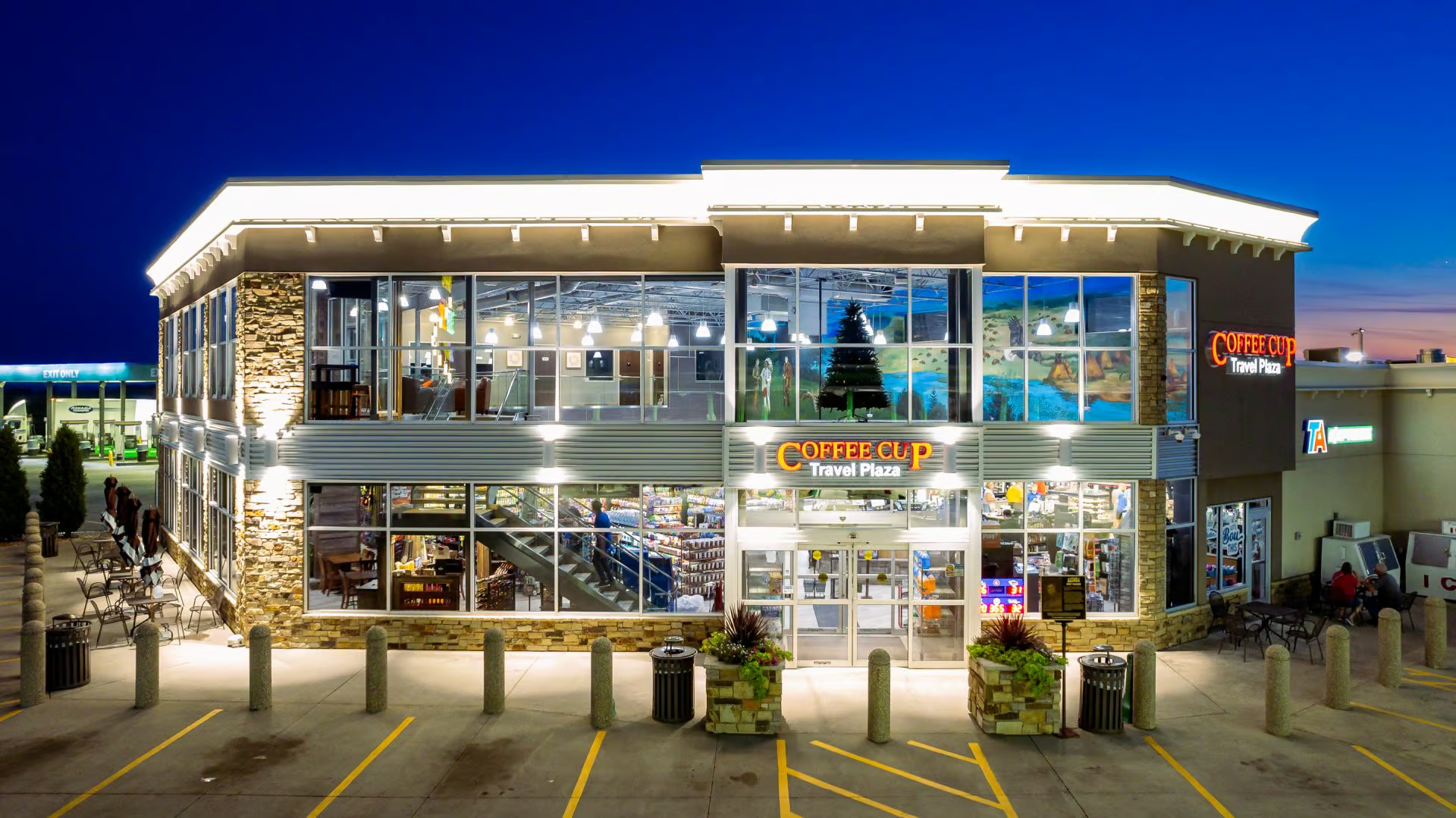
Highway signs are often the first signage that comes to mind for truck stops and travel centers, but they are just one part of the equation.
Dukes described signage as a step-by-step funnel:
- Highway/high-rise visibility: This is often the first impression and helps operators win the exit.
- Exit and approach signage: This confirms a driver’s choice and helps them navigate to the location.
- Forecourt signage: This reduces confusion once the customer arrives at the location, helps them understand where to go and improves throughput. As more sites add chargers, Dukes said operators should add EV wayfinding and lighting. “Confusion will slow your throughput,” he said. “It will hurt your customer service scores, and it will hinder a return visit.”
- Store signage: This converts fuel sales to inside sales and can boost return visits. “We are programmed to wayfind,” he said, arguing that confusion on-property slows the customer, stresses the visit and can damage customer service.
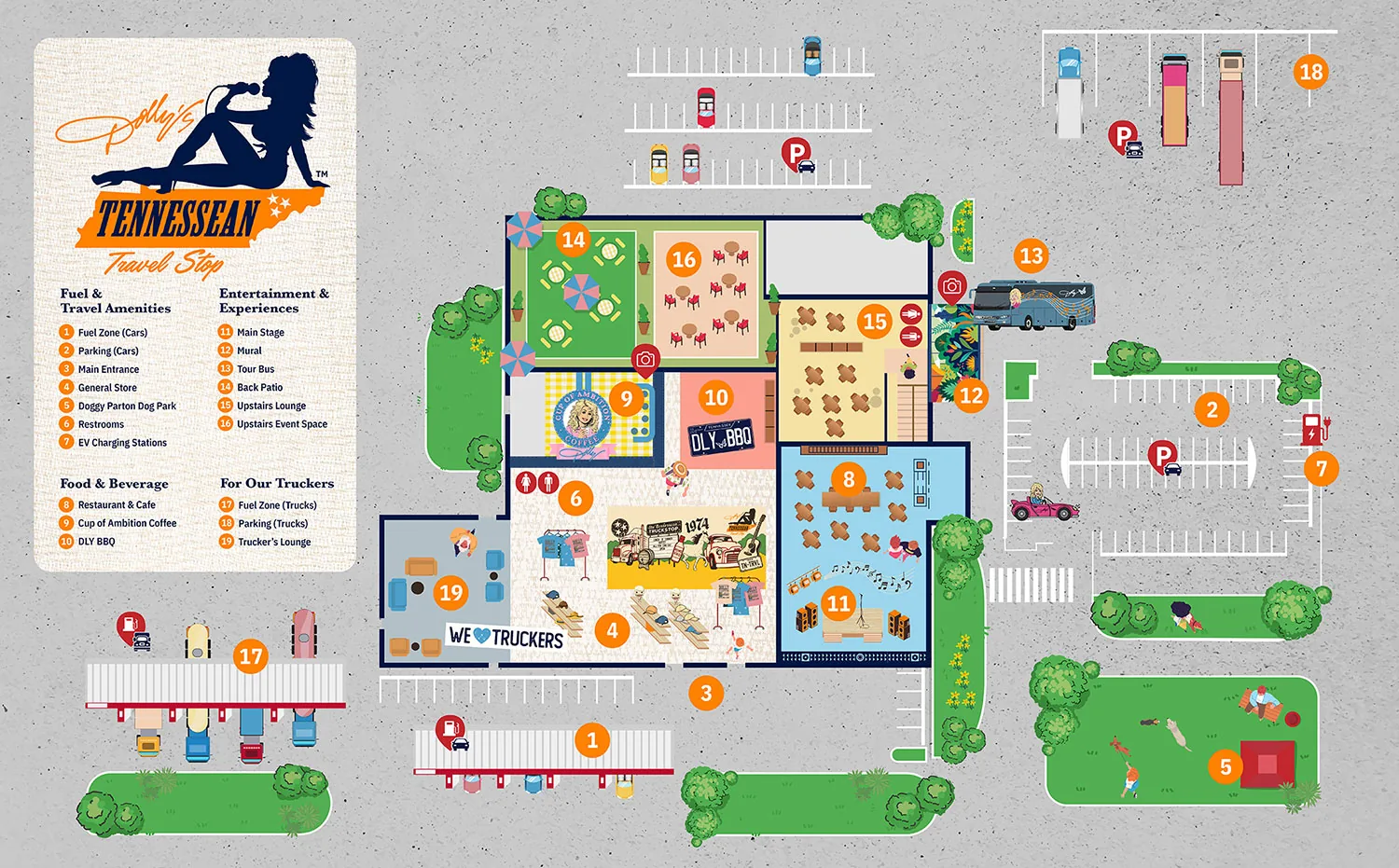
He told attendees to create a message hierarchy based on their market reality. In a price-war corridor, fuel pricing may need to dominate. In a market where drivers do not recognize the brand, brand identification may come first. If a site recently added showers, food service or a dog park, those upgrades may be the differentiator worth featuring.
Digital signs can give operators more options.
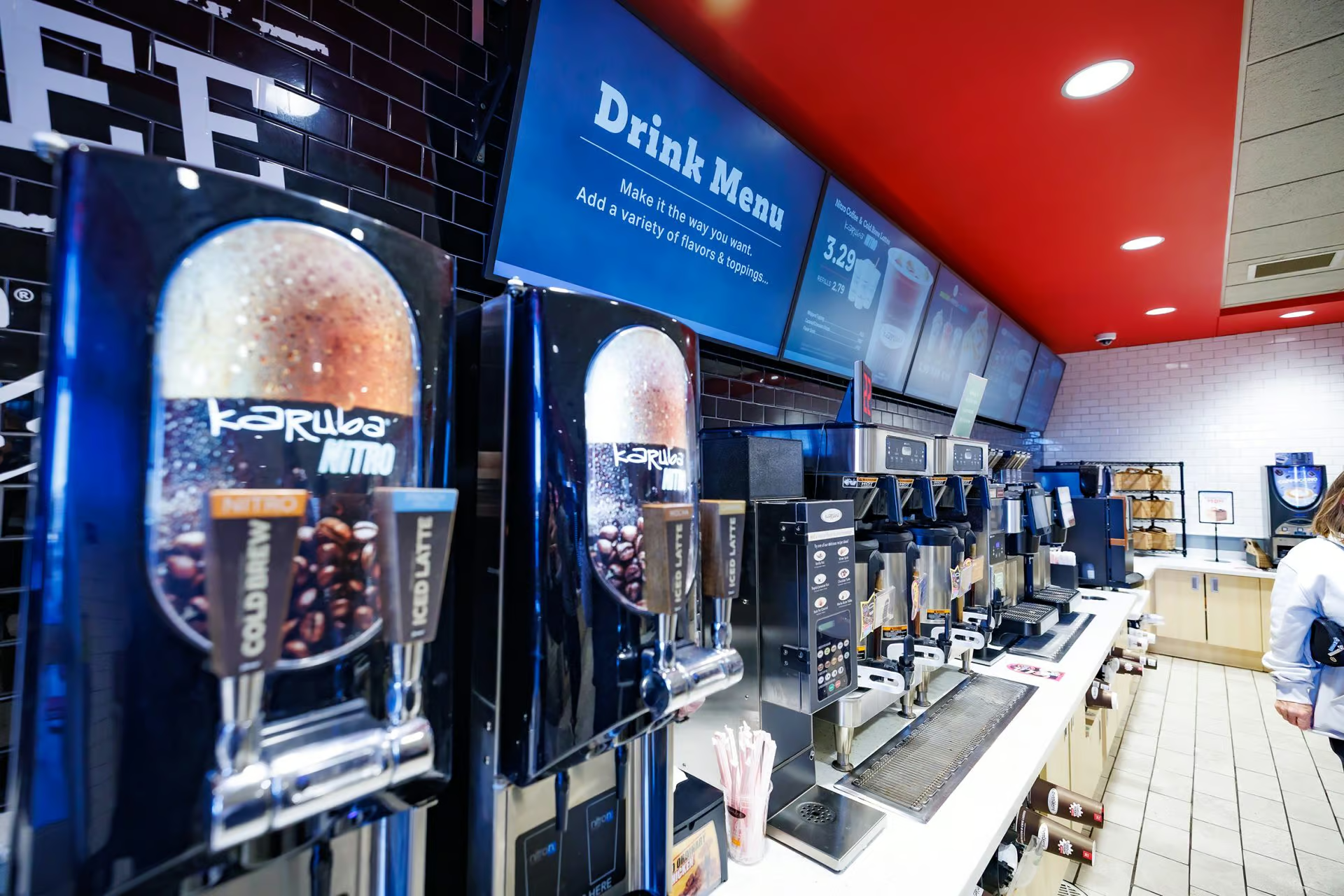
Electronic message centers (EMCs), Dukes said, are increasingly moving beyond fuel price display into dynamic content that can drive behavior. He encouraged operators to think about daypart scheduling, such as coffee and breakfast promotions in the morning, and food and snack messaging later, and event-based messaging, such as rallies, race weekends and seasonal travel.
Dukes added that retail media networks are a growing opportunity, where CPG brands effectively purchase impression space through on-site digital signage. “If you’ve got 32 square feet of digital space right now, what can you do with this?” he said, describing how operators may be able to monetize that footprint while still promoting their own offers.
It isn’t always easy to calculate a ROI on signage, but Dukes said many operators have reported a 25% to 33% increase in sales after installing a high-rise sign and comparable declines when prominent signs go down unexpectedly.
Ultimately, Dukes emphasized four key points:
- Clarity wins: Legibility at speed is the baseline requirement.
- Simplicity converts: The sign should communicate a single priority message fast.
- Consistency retains: Well-maintained, fully lit signage reinforces operational credibility.
- Strategy outperforms hardware: Placement, read time and message planning matter as much as the structure itself.


Subscribe to Updates
The NATSO Foundation and NATSO provide a breadth of information created to strengthen travel plazas’ ability to meet the needs of the traveling public in an age of disruption. This includes knowledge filled blog posts, articles and publications. If you would like to receive a digest of blog post and articles directly in your inbox, please provide your name, email and the frequency of the updates you want to receive the email digest.