Six Travel Center Considerations for Partnering with a QSR
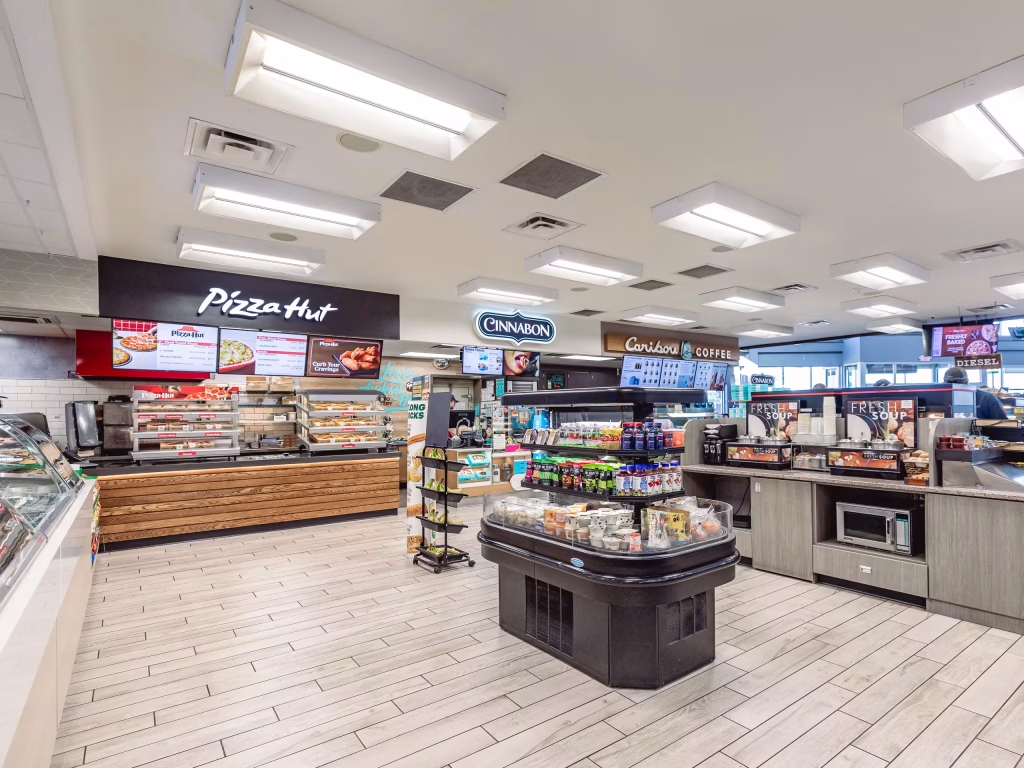
Foodservice is now one of the most important differentiators for travel centers and truck stops, and the right food offerings can create a competitive advantage.
The ideal mix of food service offerings often includes a combination of proprietary and branded programs, but what should travel centers consider when partnering with a QSR?:
What Info Do Franchises Need?
Franchises typically want to know about consumer demographics, including age and gender, consumer behavior, the average spend amount, the number of consumers traveling alone versus traveling with family, and the ratio of truck drivers vs. travelers vs. local residents. It can also be helpful to share data related to consumer visits, the number of brands visited during a consumer’s stay, consumer interaction with technology, consumer loyalty and frequency of visits.
Keys to Selling Your Location as a Good Fit?
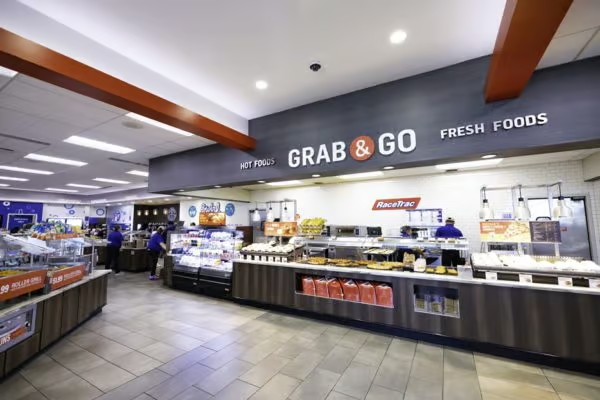
Truck stops are high-traffic locations that have a lot to offer quick-service restaurant franchise brands, including the infrastructure, experience and a built-in customer base that includes professional drivers, four-wheel traffic and locals.
When QSR brands look for partners, they’re usually seeking real estate, marketing, technology, finances and staffing, but many brands are often concerned that a truck stop can’t provide the same, predictable experience customers expect from an established franchise brand.
Will There be Footprint Restrictions?
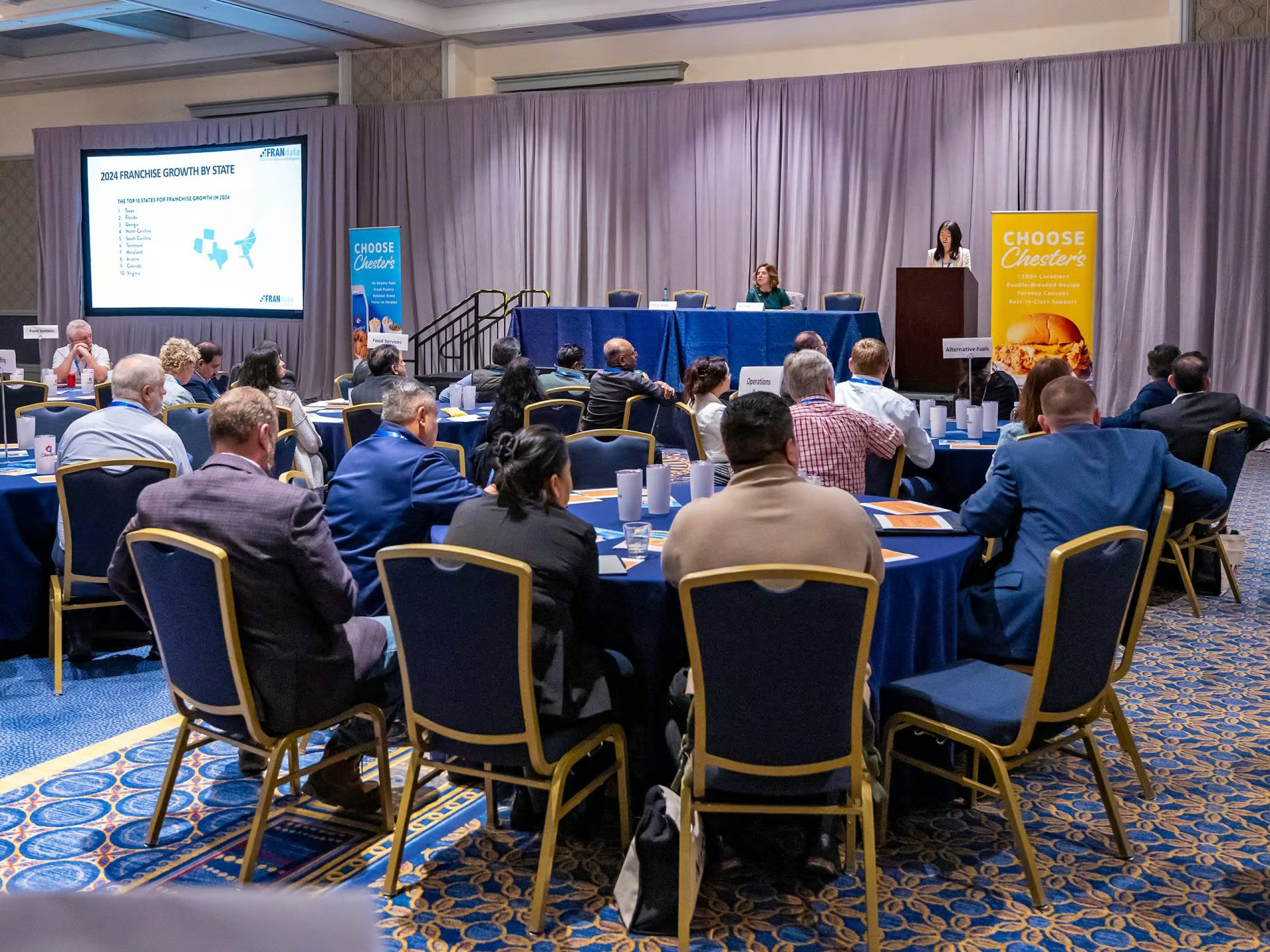
Brands often have strict expectations about a QSR’s footprint and the space needed, whether that is 100, 200 or 300 feet. “For a non-traditional location where you have shared back of the house, they will give on some of that if you can show them that you can still do everything they expect of you, you’re just going to do some of it in a shared kitchen,” Chris Heinz, director of operations and finance at Heinz Inc., said. “But, generally, for the customer facing piece, they’re pretty set on what they want.”
Heinz has had to walk away from potential brands due to space limitations. “We’re a house of brands, so we want to have multiple offerings to appeal to everyone,” he said.
Are There Fees?
Another challenge associated with national brands is the ongoing fees that help support promotions. “That national recognition is not free. It comes with a cost,” Heinz said, adding that brand standards also have to be maintained, which can mean refreshing equipment, countertops, lights or other areas of the QSR at set intervals even if it doesn’t seem like it needs it.
Finding QSR Partners
When deciding which food offerings to add at a location, LV Petroleum determines the right mix by looking at what is already at the site and in the area. Most of LV Petroleum’s locations end up having three QSR brands inside. The company has partnerships with 22 QSR brands, including Wingstop, Einstein Bagels, Hardee’s, Bojangles, Firehouse Subs, Cinnabon, Arby’s, Jimmy John’s and more.
“About half of those have come into our portfolio through acquisitions. The rest of them, we’ve built through partnerships and relationships,” said Jeanette Davis, senior vice president for LV Petroleum.
Will Renovation Be Required?
One way to address those concerns is to be prepared to renovate or build around the brands’ requirements. Yasir Bhatti, CEO of University Korner, said brands typically dictate the design and equipment. “You have to construct the way they tell you to, and everything has to be in a certain spot,” he said. “That means there are construction challenges, and it is cash intensive.”
How About Training Requirements?
Partnering with well-known brands also requires training, and brands often bring in trainers to train employees on-site. Additionally, Bhatti spent four weeks at a Dunkin location and four weeks at a Jimmy John’s location, training alongside his general manager.
“It helped me develop a bond with him so I could understand how I was going to run on the site,” he said. “That is something I wanted to do.”


Subscribe to Updates
The NATSO Foundation and NATSO provide a breadth of information created to strengthen travel plazas’ ability to meet the needs of the traveling public in an age of disruption. This includes knowledge filled blog posts, articles and publications. If you would like to receive a digest of blog post and articles directly in your inbox, please provide your name, email and the frequency of the updates you want to receive the email digest.