Travel Center See Increase in Technology at the Backcourt Pump
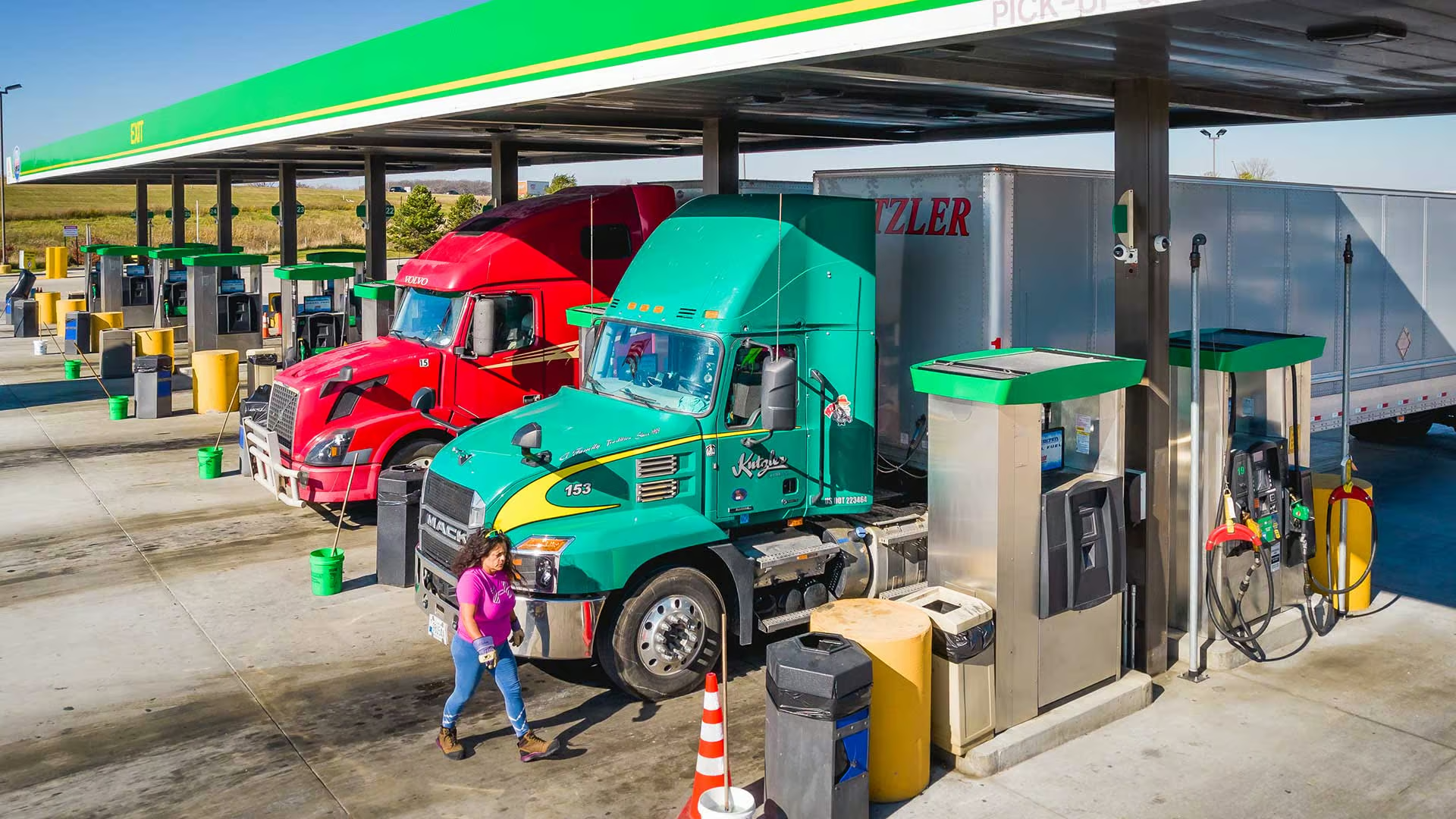
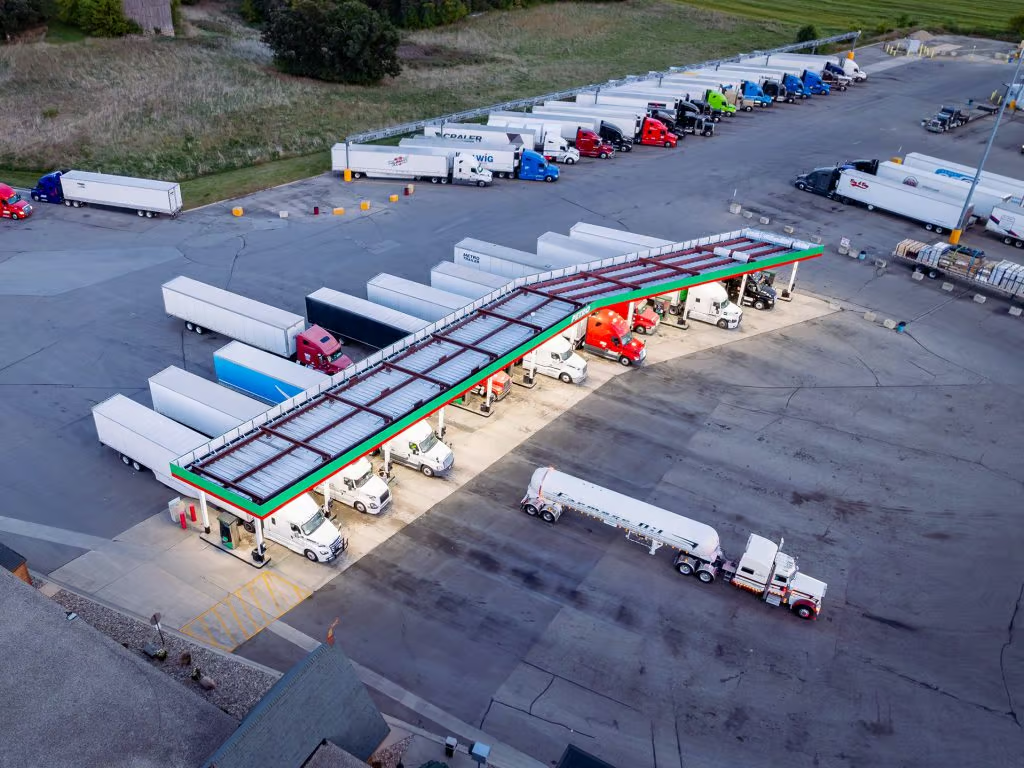
The backcourt at truck stops is evolving with new diesel fuel pump technologies designed to enhance fueling efficiency, reduce downtime and improve overall service.
Reducing friction at the pump and increasing fueling times benefits operators and drivers alike. Drivers can either back on the road or head inside to take advantage of other amenities and the truck stop has greater throughput.
Paying at the Pump
Payment technology is one tool that can increase speed at the pump. Traditionally pumps at the backcourt have not accepted credit card payments, so drivers must walk inside, visit the fuel desk to authorize the transaction, go outside to pump fuel and go back inside to get a receipt. More and more drivers want to save time by completing transactions right at the fuel island.
For drivers to pay at the backcourt, pumps need to be EMV compliant and meet Payment Card Industry Data Security Standards (PCI DSS) to protect cardholder data.
Many professional drivers use fuel cards, which require additional information, such as trailer numbers and IDs, so diesel dispensers need an alphanumeric keypad to process fuel card transactions at the pump.
“The ability to do that interface at the island moves things quickly along, and that helps the transaction time. That makes a good experience for the driver and more throughput,” said Kent Robinson, senior manager of product management for fleet, truck stops and DEF for Dover Fueling Solutions (DFS).
DFS, for example, has equipped its payment terminals to handle fuel cards, but the location must have a POS that will run them. DFS pumps also have printers, allowing drivers to get their receipts right at the pump, whether paying with a credit or fuel card. “The printer and hardware are the same, but the receipt is different because they might need different information,” Robinson said.
Offering More Choice
Traditionally, professional drivers haven’t had as many options to pay at the pump, but that is changing as companies modernize their businesses and drivers increasingly expect to operate the same in a working environment as they do in their personal lives. Customers increasingly want choice in everything, including how they pay.
Several financial technology (fintech) companies have entered the fuel payment arena, and drivers are increasingly turning to fintech payment methods, such as Mudflap and AtoB. Fintech cardless payment solutions feature new technology to facilitate digital money transfers. Non-integrated payment methods are typically processed through a tablet, requiring drivers to go inside. “A lot of them have a tablet, so it is another piece of equipment, but you don’t have to run it through your POS system,” Schulte said.
Schulte advises operators to consider both the pros and cons of fintech solutions. They typically offer customers a discount, which can attract business, but the discount has the potential to decrease margins.
Operators are also adding payment options to their apps. Love’s, for example, allows drivers to use Love’s Mobile Pay on the Love’s Connect app to answer prompts, pay for fuel and receive contactless, digital receipts using their mobile phones. While fueling, drivers can use the app to check in and pay for showers to avoid standing in line at the diesel desk.
Drivers fueling at TravelCenters of America can activate diesel pumps and pay for fuel from the cab using TA’s Pumpsmart feature in its TruckSmart app. “The feature is designed to save drivers time while fueling at TA, Petro Stopping Center or TA Express locations,” said Debi Boffa, CEO of TA and a member of NATSO’s board of directors.
TA has also added Radio Frequency Identification (RFID) technology—a wireless system comprised of tags and readers—on all diesel lanes, which provides convenience at the pump. The tags can be placed on a truck or trailer, and readers, in the form of an antenna, are placed on the diesel canopy.
Pumping Fuel Faster
High-flow dispensers can improve the diesel experience by delivering fuel faster. High-flow diesel pumps typically dispense fuel at 40 to 60 gallons per minute. Some ultra-high-flow pumps are even faster. Standard diesel pumps at retail islands dispense about 10 to 15 gallons per minute.
In addition to diesel fuel, medium- and heavy-duty trucks with 2010 engines or newer require diesel exhaust fluid (DEF). Drivers don’t need DEF every time they fuel their trucks, but when they do, having DEF on the fuel island, rather than on a separate lane or in jugs inside, saves time. Many locations are adding high-speed dispensers with DEF, so drivers can authorize the diesel and DEF transaction simultaneously if the location’s POS allows it.
For drivers, every minute on the fuel island counts, and the amount of time it takes to fuel a Class 8 truck is much longer than a passenger vehicle. In addition to filling tanks that hold hundreds of gallons, drivers also must authorize the transaction, which may require walking inside or entering additional information at the pump, conduct a walk-around inspection of their vehicle, throw away their trash, wash their windows, etc.
Security Camera Use at the Pump
The industry has also seen so new and improved camera technology to improve safety at the pump.
Cameras should be positioned so they can read license plates and DOT numbers on the sides of trucks. Today’s AI-powered surveillance systems can take theft prevention to a new level. “There are some AI tools that can detect what normal activity looks like and then flag something that is outside of the norm,” Myhren added.
Automating Fuel Management
Automated fuel management systems enable real-time monitoring of fuel levels, identify shifts in purchasing patterns, and balance supply and demand. Automated inventory management can monitor inventory levels, and if the fuel dips, the system can automatically order a truckload to drop at the store. The technology can enhance operational efficiency, reduce errors and improve inventory management.
“Electronic fuel monitoring solutions continue to evolve and change dramatically, with new tools and enhancements being added all the time,” said Tony Caputo, director of business development for Warren Rogers. Warren Rogers is a founding member of the NATSO Foundation’s Technology Steering Council.
Warren Rogers delivers real-time fuel tank levels via email, load to FTP, and via API’s, depending on how fuel operators want the information. “Operators can also see real-time tank and water levels directly on our fuelWRAp reporting dashboard,” Caputo said. “In a nutshell, we fully-automate the capture of fuel tank levels and deliver however and to whomever needs to be informed. We also offer a procurement application and dashboard—a sister application to fuelWRAp.”
Procurement displays information on all location fuel systems and computes hours to fuel runout. “At 12 hours to runout, designated users can receive emails and texts to help them avoid fuel runouts,” Caputo said.
Top Microtrends Shaping the Truck Stop and Travel Center Industry in 2025 Report
Staying ahead of industry trends—especially microtrends—enables travel centers to seize new opportunities, adapt to market dynamics and meet customer needs proactively. The NATSO Foundation created the Top Microtrends Shaping the Truck Stop and Travel Center Industry in 2025 Report to provide actionable insights to help operators maintain a competitive edge.
The Top Microtrends Shaping the Truck Stop and Travel Center Industry in 2025 Report was created with generous support from CAT Scale.


Subscribe to Updates
The NATSO Foundation and NATSO provide a breadth of information created to strengthen travel plazas’ ability to meet the needs of the traveling public in an age of disruption. This includes knowledge filled blog posts, articles and publications. If you would like to receive a digest of blog post and articles directly in your inbox, please provide your name, email and the frequency of the updates you want to receive the email digest.