Travel Center Leaders Discuss the Future of Fuels at ACT Expo
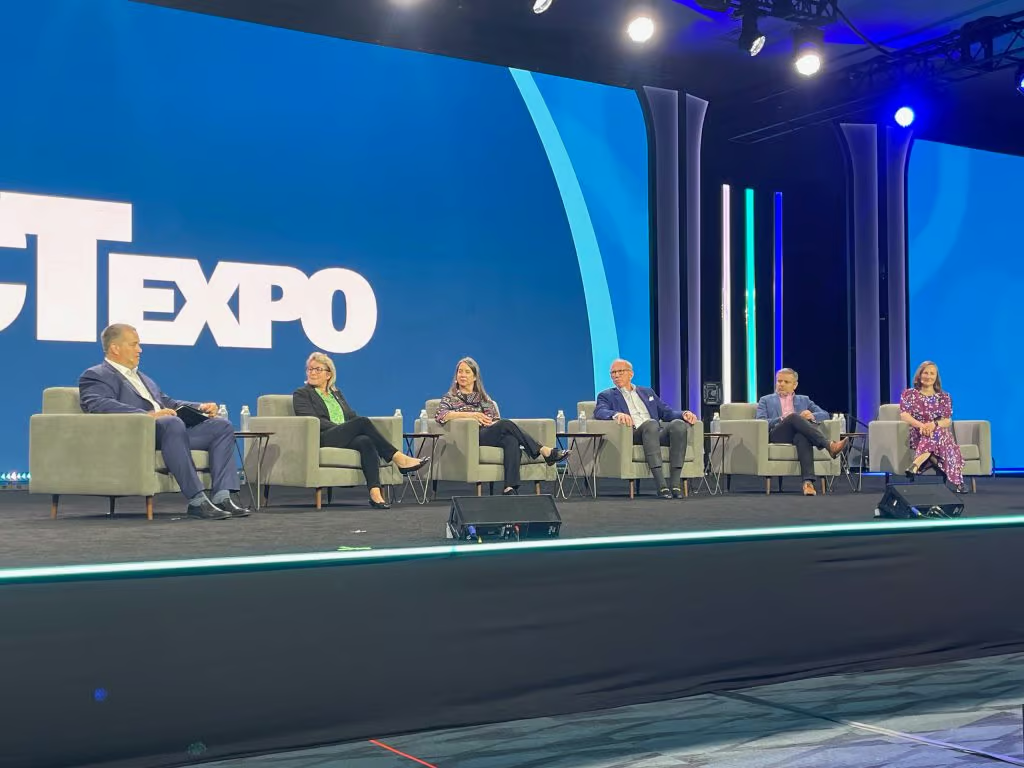
Truck stop leaders speaking at the 2025 Advanced Clean Transportation Expo said that they are investing in zero-carbon fuels for trucking fleets and rolling out solutions as the markets allow. They also see a future where locations will need to offer multiple fuels and energy sources to meet fleets’ needs.
Boffa served as a panelist in the session Low Carbon Energy for the Commercial Transportation Sector: A Dynamic and Evolving Landscape.
She said that offering choice is important because different fleets have different needs. “We’re constantly looking at what’s going on in the market, what is the best price opportunity for our customers, where we want to invest first and where we want to invest later,” she explained.
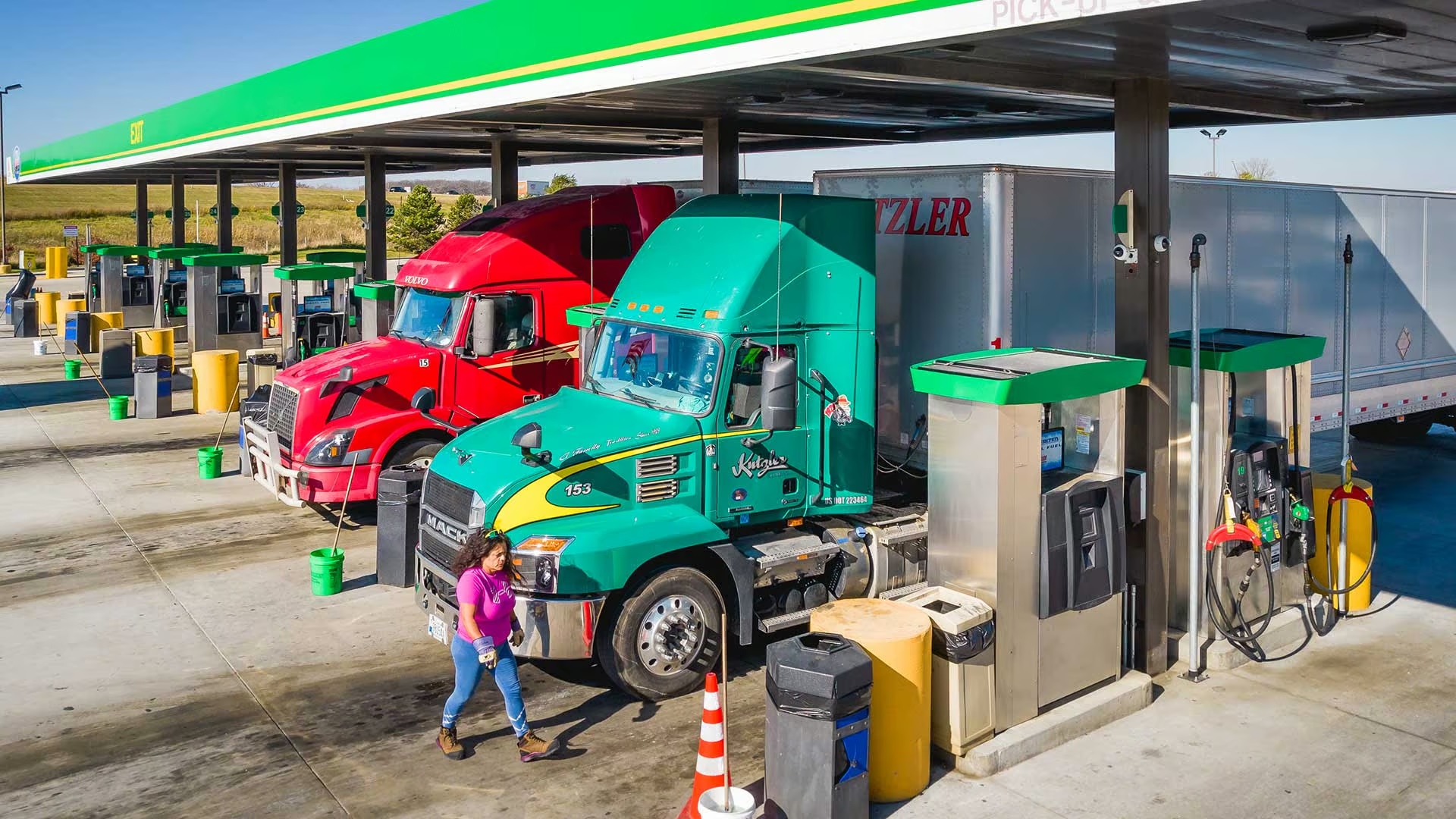
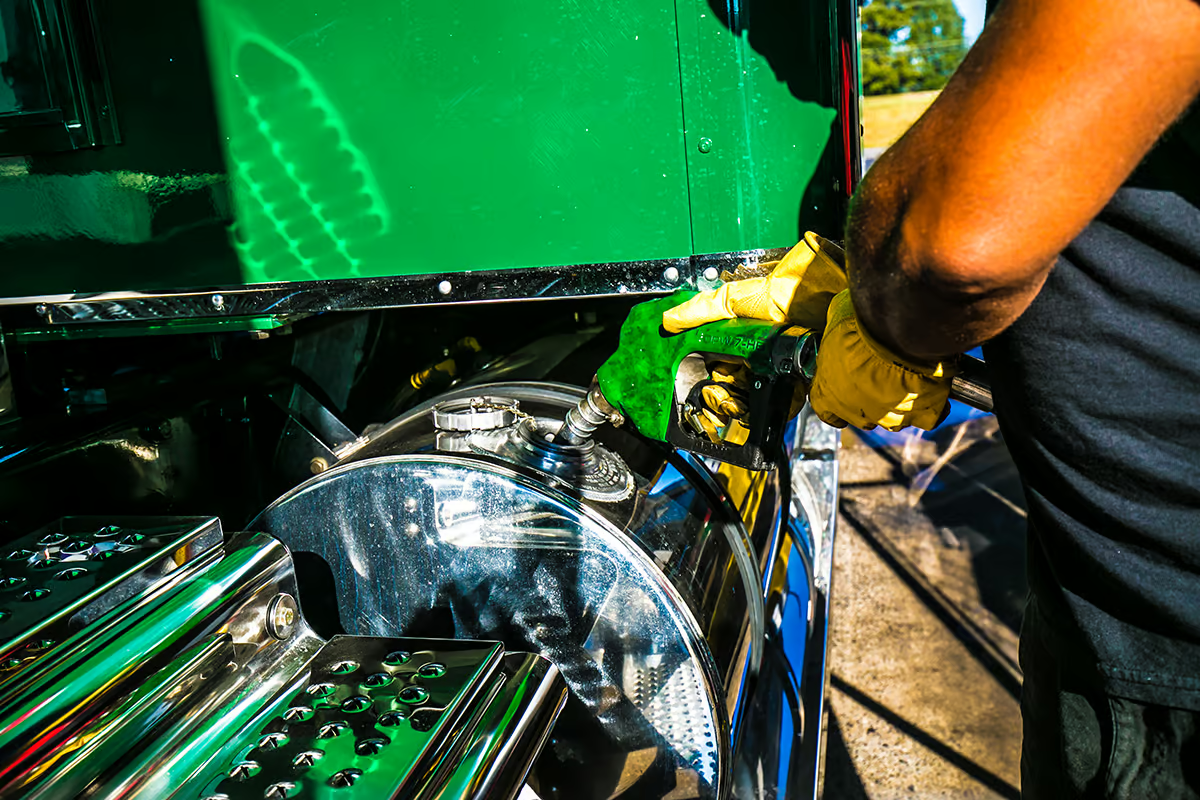
Travel Centers of America has more than 300 sites in 44 states and each location sits on about 25 acres. “We can sell you diesel and…for the last two years, we’ve really been doubling down on our ability to offer biodiesel,” Boffa said. “More than half our sites now will have biodiesel infrastructure.”
TA is also adding renewable diesel, which Boffa said “is another big play for” the company. “Obviously all of our California sites now sell renewable diesel, and, when the market was right, we introduced that into other locations,” she said.
However, Sharma acknowledged that it can be difficult for operators to pre-invest in fueling networks when there isn’t demand for the fuel. Partnership consortiums that bring suppliers and customers together can help create scale. “If we need truck adoption to increase, we have to work with the big customers as well as the small and medium to find the right corridors and create access,” he said.
Pilot currently offers EV charging at several locations and is delivering hydrogen to customers.
About 7 to 8% of passenger vehicle sales in the U.S. are of EVs, Sharma said. BP operates more than 40,000 EV charging stalls worldwide, including some at TA locations. “What is important now is to give consumers the confidence and experience that they can take that trip,” he added.
A lot of the work truck stops and travel centers are doing for consumers can apply to professional drivers as well. “We don’t have to think about the consumer and professional driver differently…there is a really big crossover here,” Boffa said.
One thing TA is doing is looking at passenger vehicle charging spots and making sure at least one is sized so a large vehicle could charge if an emergency charge is needed. “All you need is for something to go wrong—a traffic accident or detour—and your calculation hasn’t worked right and you need a charge to get back to base,” Boffa said. “We’re looking at it from multiple lenses as we build out these new infrastructures.”
Although challenges remain, industry leaders said they will continue moving forward with solutions. “We are looking to add alternative fuels to every location our customers want them,” Zobel said. “This isn’t going away. We are all committed to this market.”
Boffa closed by telling attendees: “We can do this.”


Subscribe to Updates
The NATSO Foundation and NATSO provide a breadth of information created to strengthen travel plazas’ ability to meet the needs of the traveling public in an age of disruption. This includes knowledge filled blog posts, articles and publications. If you would like to receive a digest of blog post and articles directly in your inbox, please provide your name, email and the frequency of the updates you want to receive the email digest.