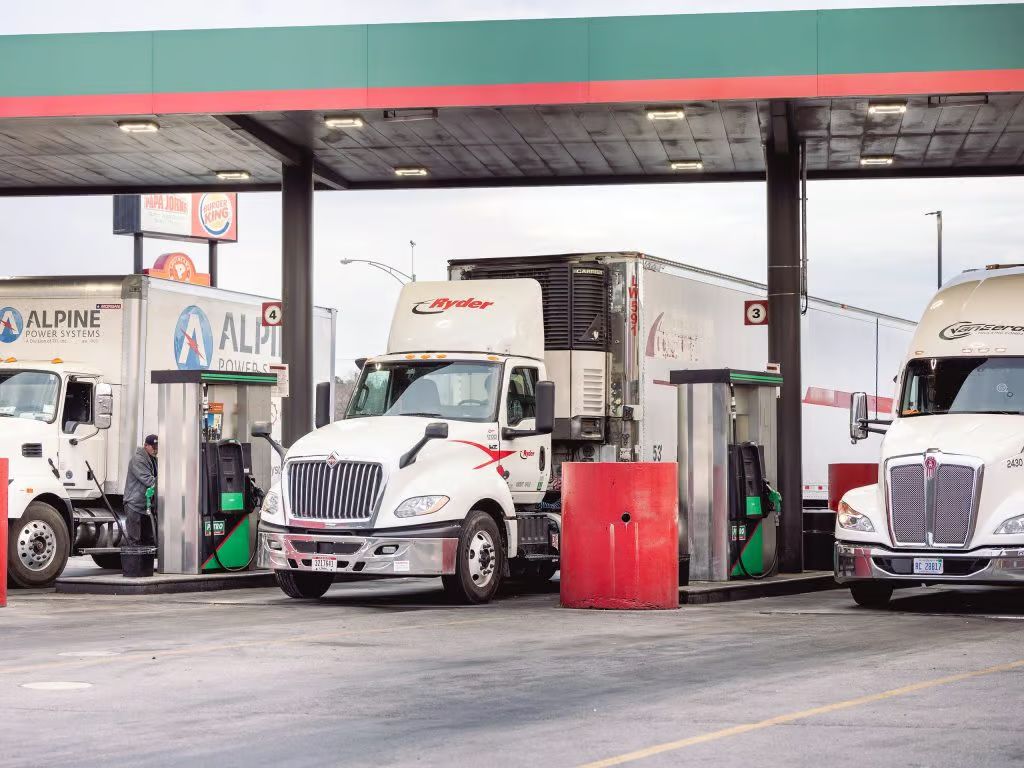
Article created for the digital issue of the NATSO Foundation’s magazine.
Commercial fuel buying is a complex process involving several pricing mechanisms, multiple fuel types, and various outside market factors that can affect supply and demand. At the same time, truck stop and travel center operators must closely monitor their budgets, fuel prices and inventory.
The NATSO Foundation collaborated with TACenergy, a national fuel supplier, to create a fuel buying toolkit to address some of the most important fuel issues and decisions travel centers face.
Randy Grizzle, director of sales and marketing for TACenergy said that in the 1940s, travel centers accounted for about 30% of road-use diesel. “That number is closer to 70% at this stage,” he said.
Fuel Pricing Mechanisms
“One of the most important things to understand is how fuel is priced. There are several pricing mechanisms, including the spot market. In a traditional procurement perspective, that means I don’t necessarily have an agreed-to price,” Grizzle said. “I needed it today. I bought it today.” However, in commercial fueling, there are one of two indices that have spot in their name, which can create confusion, Grizzle said.
The toolkit notes that operators need to know the difference between a “spot purchasing” procurement method and the “spot market” index published by OPIS, Platts and Argus.
Grizzle explained that the two primary pricing options available to truck stop owners are spot, where the buyer selects the lowest fuel price available on a given day, and index-based purchasing, where the buyer enters a contract for a set number of gallons.
“You’re trying to walk that proper balance between security of supply and lowest price. So, I don’t always want to be on one end of the spectrum or the other,” he added.
Fuel pricing mechanisms resources include:
- Fuel Buying for Truck Stops and Travel Centers Toolkit
- Oil Spot Pricing by OPIS
- Platts-ICE Gas Indices Americas
- Argus
Where to Gain Information on the Fuel Market
Several factors can influence the right mix of spot and index-based purchases, including geographic location, time of year and supply availability. To gain more information on the market, Grizzle recommends operators access weekly data from the Department of Energy’s Energy Information Administration, which offers details on pricing and demand.
“Another one is the ATA [American Trucking Associations] publishes a number on how much tonnage is being shipped,” he said. “If I care deeply about truck drivers and their ability to come to my location, those are two reports that I certainly would keep an eye on.”
Resources to gain more information on the market include:
- Weekly data from the Department of Energy’s Energy Information Administration
- ATA Monthly Truck Tonnage Report
E-85, Renewable Fuels and Hurricane Season
Grizzle also shared his thoughts on which fuels to offer and how operators can help determine which are right for their locations. For example, offering E-85 can be beneficial for truck stops that have large government fleets nearby. “This is not something that is prescribed everywhere to everyone, but…if you can find that advantage, then take advantage.”
Additionally, Grizzle told Toner that operators also need to monitor changing regulations and incentives related to renewable fuels. “Stay in tune to the changes in those regulations because they could benefit you and/or your customers as you use them,” he said.
The big unknowns right now are what will happen with hurricanes and where they will make landfall. “Last year, we were predicted to have an active hurricane season, and I think we did. They just didn’t come here to the U.S. So that is one thing to keep an eye out for,” Grizzle explained. “The second thing that we’re seeing is, unlike two to three years ago, there’s more supply in the market than there has been. You see that reflected in some of the financial reporting of some of the publicly traded refiners.”
More Fuel Buying Resources from the NATSO Foundation
Amy Toner, executive director of the NATSO Foundation, recently sat down with Grizzle during an episode of The Truck Stops Here podcast to discuss the toolkit, fuel buying and a summer fuel outlook. The entire podcast, which also includes Grizzle’s thoughts on finding reputable partners, is available here.
The Fuel Buying for Truck Stops and Travel Centers Toolkit is available here.
// This article was created for Stop Watch magazine, the magazine of the NATSO Foundation. Foundation is the research, education and public outreach subsidiary of NATSO, Inc. The NATSO Foundation provides programs and products to strengthen travel plazas’ ability to meet the traveling public’s needs through improved operational performance and business planning. Visit www.natsofoundation.org for more information.


Subscribe to Updates
The NATSO Foundation and NATSO provide a breadth of information created to strengthen travel plazas’ ability to meet the needs of the traveling public in an age of disruption. This includes knowledge filled blog posts, articles and publications. If you would like to receive a digest of blog post and articles directly in your inbox, please provide your name, email and the frequency of the updates you want to receive the email digest.