Private fleets continue to haul more and more freight, with the National Private Truck Council’s 2024 Benchmarking Survey reporting that shipments, volumes and freight value have all increased. Private fleet growth is expected to continue, with 72% of respondents planning to increase drivers, equipment or shippers in the next five years.
The report found that inbound freight volumes also increased, with private carriers hauling 35% of inbound freight, up from 31% reported in the 2023 Benchmarking Survey. Additionally, 44% of survey respondents indicated a net gain in their heavy-duty fleet population.
Private fleets now make up roughly 940,000 of the more than 2 million of truck registrations with the Federal Motor Carrier Safety Administration and for-hire truck fleets account for about 1 million.
Use of private carriers increased during the pandemic as shippers struggled to get capacity from for-hire carriers, but the trend has continued even though 72% of respondents indicated that capacity was more available in 2023.
“I frankly expected that trend to stabilize or go down, but what we’re finding now is that the private fleets are controlling that supply chain,” Moore said while presenting the report during a press conference. “They’re enjoying the fruits of their labor, so to speak, and they’re not giving it back.”
Mike Schwersenska, general manager of Brakebush Transportation, said that during the pandemic, quotes for moving goods that normally cost $5,000 were coming in for $15,000. “It really made the value proposition of the private fleet pretty apparent,” he explained.
Focusing on Home Time
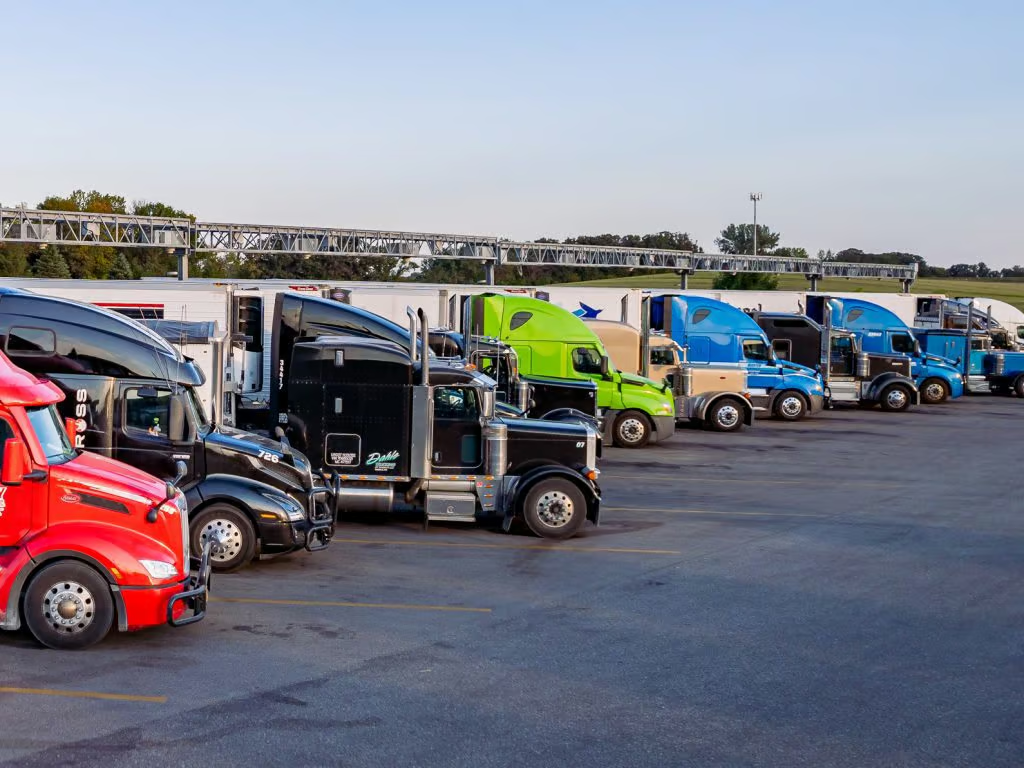
Private fleets focus on predictable routes and guaranteed home time for drivers more than for-hire fleets. “Private fleets are typically that are out and back in the same day or out one day and back the next day,” said Steve Tam, vice president of ACT Research.
Annual mileage among private fleets averaged 84,000, according to the survey, and the average length-of-haul for private carriers’ outbound movements to retail locations is 207 miles, up from 178. Despite the slight increase, private fleets’ average length-of-haul has been decreasing over the last eight years and remains significantly lower than the for-hire average.
Private fleets have moved closer to locations to increase efficiency, reduces the length of hauls and provide more home time for drivers. Just 3% of survey respondents reported that they operate out of a single location, down from 14% previously. More than a third of respondents—35%—reported an increase in terminal locations.
Leasing Equipment
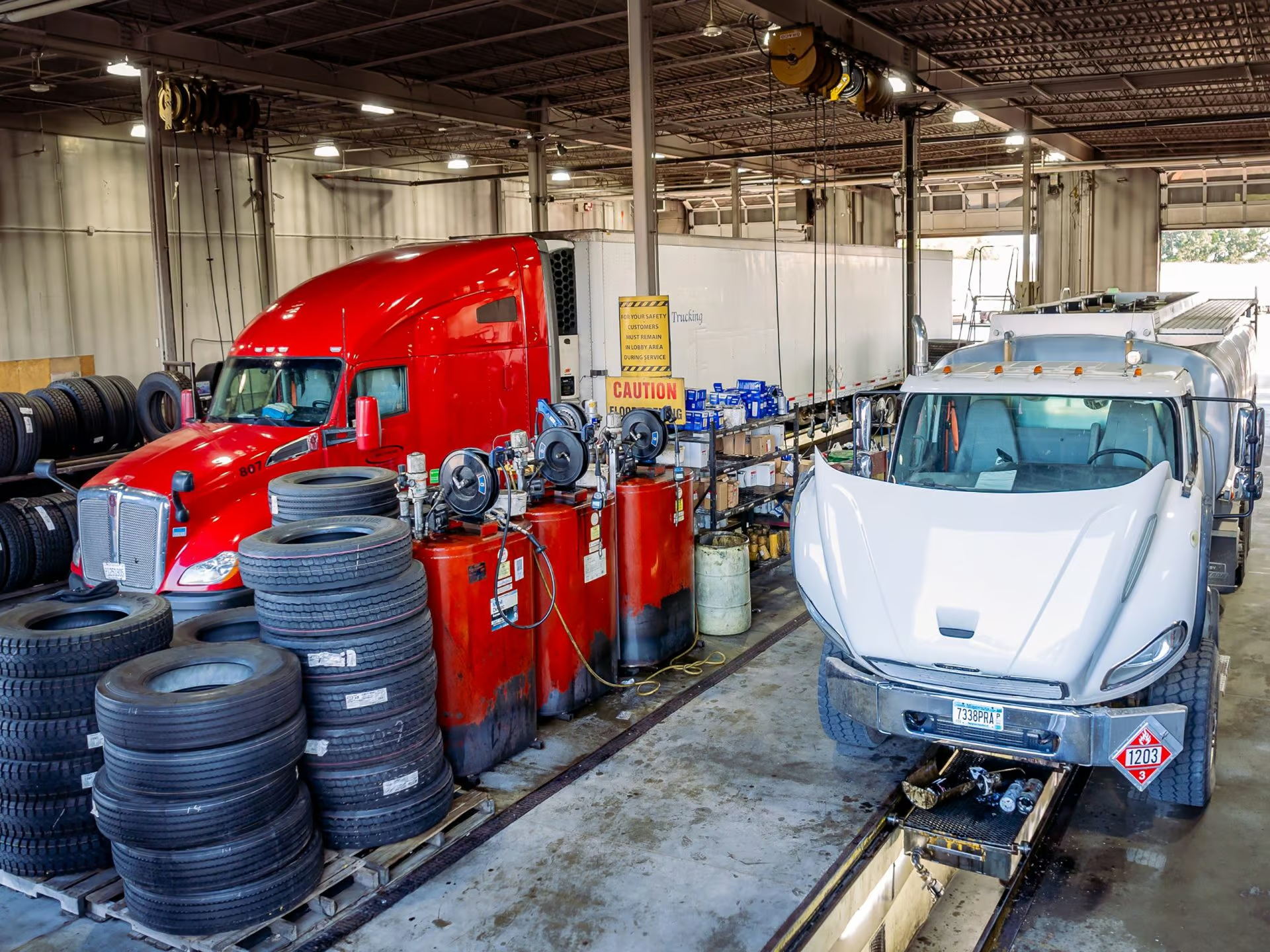
According to the survey, 38% of fleets own most of their heavy-duty equipment, 28% lease all or most of it, and 34% using a combination of leases and ownership. “With the percentage of fleets that are adopting leasing as an equipment acquisition strategy, it follows suit that most of all respondents indicate that they outsource at least a portion of their heavy-duty maintenance spend,” the report wrote.
About half of fleets—46%—outsource nearly all of their maintenance spend, the highest ever in the survey. About 20% reported that they conduct nearly all or. More of their maintenance themselves and 34% use in-house and outsourced maintenance.
Getting More MPGs
Strategies to boost fuel economy are a top priority for private fleets. Cumulatively, the fuel economy for heavy-duty units averages 7.04 mpg.
Fleets that rely on leasing have shorter trade cycles for equipment—an average of 4.8 years versus 6.7 years for companies that own most of their equipment, which helps give fleets better fuel economy. According to the report, leased fleets have a fuel economy of 7.2 miles per gallon compared to the 6.8 miles per gallon that owned fleets reported.
One out of five fleets operating heavy-duty power equipment reported that a portion of their fleet is powered by a fuel source other than diesel, which has more than doubled in the last two years. Among respondents, 98.2% of their equipment is diesel powered, 9% is CNG, and 10% reported operating electric vehicles although they constitute less than 1% of the total market.
“A lot of our fleets are taking advantage of the technological innovations when it comes to safety, fuel economy and operations to get newer model equipment out on the road,” Moore said.
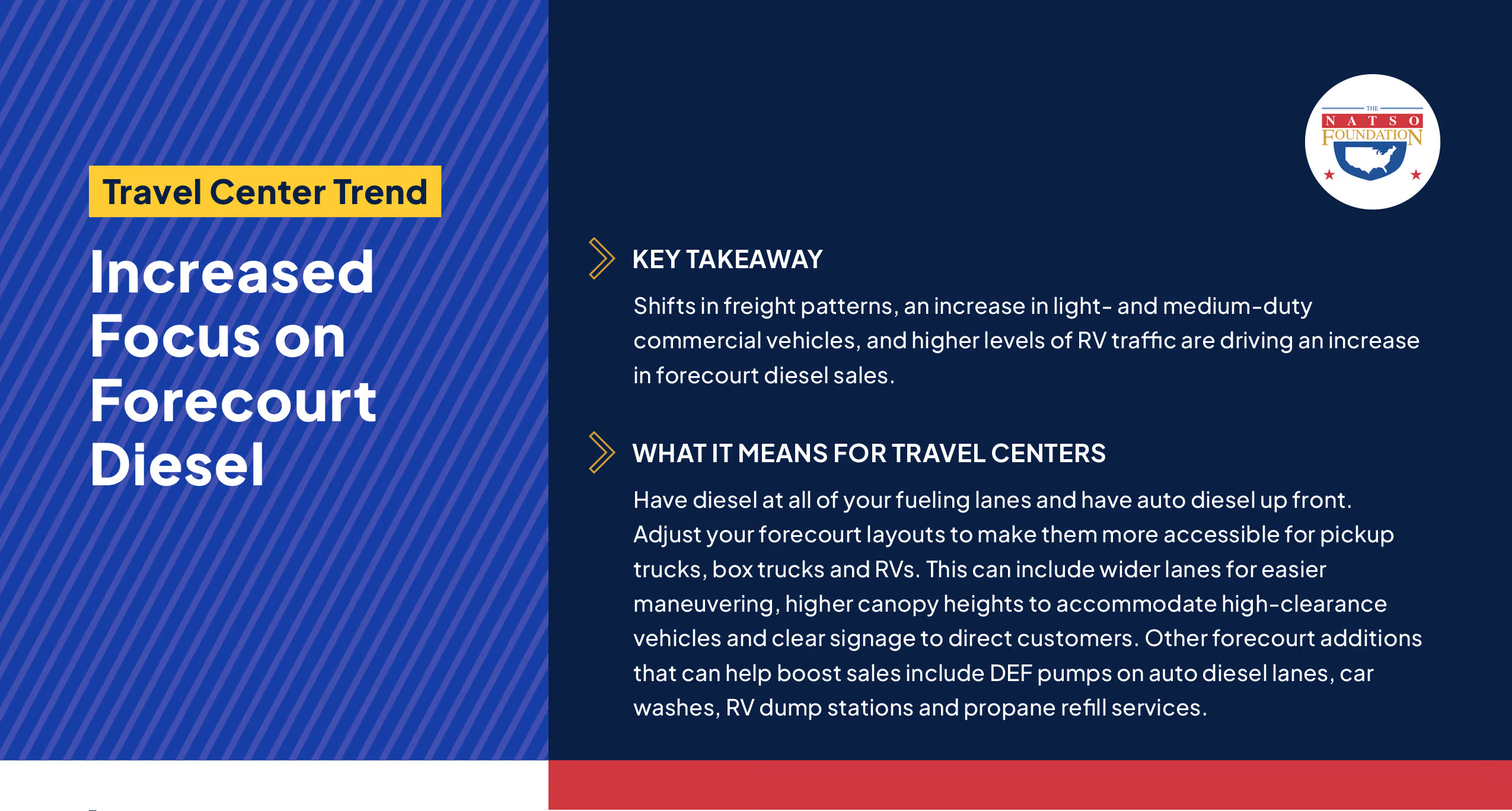
Top Microtrends Shaping the Truck Stop and Travel Center Industry in 2025 Report
Staying ahead of industry trends—especially microtrends—enables travel centers to seize new opportunities, adapt to market dynamics and meet customer needs proactively. The NATSO Foundation created the Top Microtrends Shaping the Truck Stop and Travel Center Industry in 2025 Report to provide actionable insights to help operators maintain a competitive edge.
The Top Microtrends Shaping the Truck Stop and Travel Center Industry in 2025 Report was created with generous support from CAT Scale.


Subscribe to Updates
The NATSO Foundation and NATSO provide a breadth of information created to strengthen travel plazas’ ability to meet the needs of the traveling public in an age of disruption. This includes knowledge filled blog posts, articles and publications. If you would like to receive a digest of blog post and articles directly in your inbox, please provide your name, email and the frequency of the updates you want to receive the email digest.