NATSO Submits Highway Reauthorization Policy Priorities
NATSO on April 30, 2025, submitted its policy priorities to the Highways and Transit Subcommittee portal that was opened earlier this month to collect stakeholder input on the next Highway Reauthorization. Current surface transportation law expires in Sept. 2026, and the Subcommittee has set an ambitious target or marking up legislative text this fall.
At a high level, NATSO urged lawmakers to pursue efficient, sustainable funding options that do not harm off-highway businesses. NATSO urged Congress to pursue funding mechanisms consistent with funding principles adopted by NATSO’s Board of Directors and underscored the importance of a technology-neutral approach to alternative fuels.
Among its policy priorities, NATSO urged the Highway and Transit Subcommittee of the Transportation and Infrastructure Committee to pursue efficient, sustainable funding options that do not harm off-highway businesses, such as commercializing rest areas.
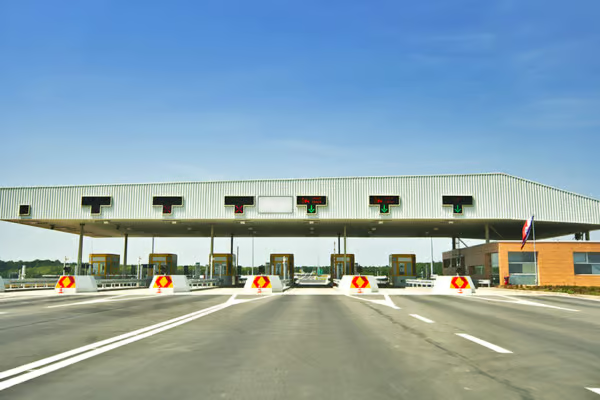
NATSO thinks funding mechanisms should be efficient and inexpensive to collect, difficult for users to evade, user-based, energy source neutral, transparent, dedicated to infrastructure and sustainable for the long term. NATSO urged lawmakers to refrain from upending the longstanding prohibition on commercial rest areas and expanding tolling on existing Interstate highways. NATSO also urged the subcommittee members to reconsider the longstanding 12 percent federal excise tax (FET) that is levied on new trucks.
In its comments, NATSO underscored the importance of a technology-neutral approach to alternative fuels. NATSO recommended improvements to the National Electric Vehicle Infrastructure (NEVI) grant program; encouraged parity with respect to weight regulations on alternative fuel vehicles and continued support for the Hydrogen Hub Program.
Modifying the NEVI program could streamline the NEVI Program, leading to a more efficient allocation of resources, ultimately ensuring a consumer-friendly EV charging experience. Specifically, states should be required to co-locate chargers at retail locations with onsite amenities (i.e., safe locations, restrooms, foodservice, and convenience amenities). Congress should also prioritize grants for states that have modernized their electricity tariff rates to meet the unique needs of EV fast charging.
NATSO thinks Congress should ensure that all alternative fuel technologies, including hydrogen, are treated equally with respect to federal vehicle weight limitations. Section 422 of the Consolidated Appropriations Act 2019 created an exemption that allows natural gas vehicles and electric battery vehicles to exceed the federal maximum gross vehicle weight limit for comparable conventional fuel vehicles by up to 2,000 pounds. This waiver was designed to account for the additional weight of vehicle components that are utilized in alternative fuel trucks. Hydrogen powered vehicles, which also require additional weight to accommodate fuel cell systems and storage tanks, should be granted the same flexibility.
NATSO on April 30, 2025, separately joined with a coalition of 21 organizations actively expanding their hydrogen transportation capabilities in urging Congress to expand the current weight waiver to provide parity for hydrogen trucks.
NATSO also encouraged lawmakers to support the ongoing development of the “Hydrogen Hub” grant program enacted under the Bipartisan Infrastructure Law, which represents an important facet of federal support for the growth of the still-nascent hydrogen industry. NATSO members continue to actively participate in multiple Hydrogen Hub projects – including the ARCHES project in California. With the the right policy framework hydrogen fuel cell technology has the potential to help diversify domestic energy sources.
NATSO reiterated its support for the Truck Parking Safety Improvement Act, which would set aside federal funds over five years for states to expand truck parking capacity. The Truck Parking Safety Improvement Act would prioritize grant applications that demonstrate partnership with private providers of truck parking.
NATSO members provide more than 90 percent of the country’s truck parking. The off-highway travel centers and truck stops that our members operate provide the essential rest opportunities and amenities essential truck drivers need. This contributes to the safety of the nation’s highways and supports the movement of goods and freight. The private sector is best suited to provide truck parking to motorists traveling along the Interstate. State investments should wherever possible be undertaken in partnership with the private sector to ensure the funds are spent efficiently and focused on the consumer experience. Truck drivers prefer to stop at safe locations that offer food, fuel, and other amenities that they have come to rely on. The funds should not enable states, localities, or others to provide truck parking in a manner that undermines the industry’s incentives to expand truck parking capacity.
NATSO also urged Congress to expand the Federal Motor Carrier Safety Administration’s emergency waiver authority for major fuel supply and distribution disruptions. Facilitating broader, unilateral federal waivers in the event of fuel supply emergencies will enable a more streamlined recovery and defray regulatory barriers that hinder an effective, emergency response. Specifically, NATSO urged lawmakers to consider expanding the circumstances under which the FMCSA permits state waivers of Federal weight limits on the Interstate System to include declarations by the Secretary of Transportation, including declarations regarding disease and declarations regarding a supply chain emergency. NATSO also asked Congress to consider allowing emergency declarations issued by states to remain in effect for longer periods than the 120-day maximum under current law.
Click here to read NATSO’s Policy Priorities for Highway Reauthorization
Click here to read the NATSO, Coalition Letter Seeking Weight Waiver for Hydrogen Trucks

Subscribe to Updates
The NATSO Foundation and NATSO provide a breadth of information created to strengthen travel plazas’ ability to meet the needs of the traveling public in an age of disruption. This includes knowledge filled blog posts, articles and publications. If you would like to receive a digest of blog post and articles directly in your inbox, please provide your name, email and the frequency of the updates you want to receive the email digest.