How to Innovate in Food Service: Lessons from Travel Centers
Innovation in food service isn’t just about trendy new menu items. For truck stop and travel center operators, food service innovation can help draw in customers, reduce friction and improve margins while also ensuring locations deliver food that people actually crave.
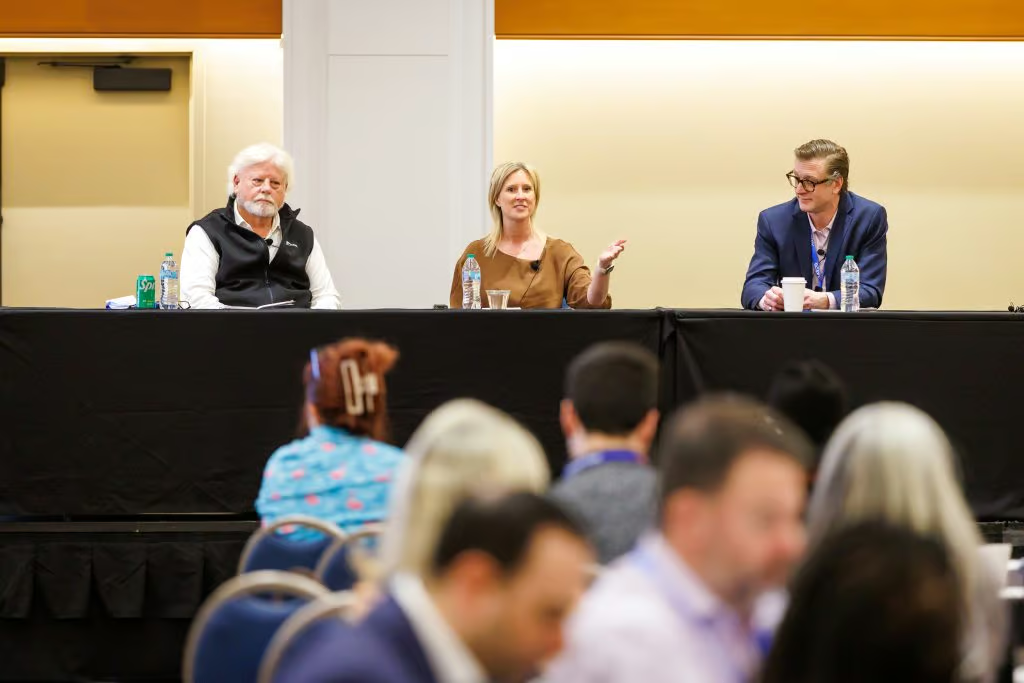
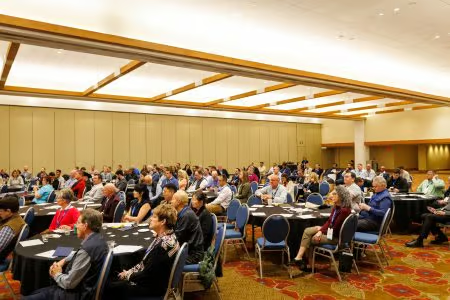
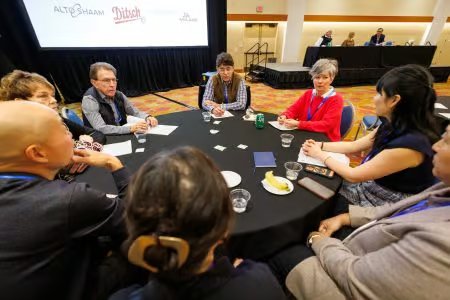
During the NATSO Connect Food Focus Forum at NATSO Connect 2026, three industry leaders shared practical ways to think about and execute innovation. Panelists included Jessica Williams, founder and CEO of Food Forward Thinking, Steve Yawn, director of trade relations for McLane Company, and Ben Leingang, senior director of national accounts at Alto Shaam.
The Food Focus Forum was generously sponsored by Alto-Shaam, Ditsch USA, LLC, Food Forward Thinking and McLane.
Start with Insight, Not Ideas
Williams said the top question she gets is how operators should think about food innovation, and she urged operators to define innovation as improving what matters, not just adding new products. “What if you could take a turkey sandwich from being the last choice to the first choice? That is an example of where you can get a little bit better.”
She told attendees that innovation starts with understanding where you are strong, where you’re weak and why. She breaks food service down into hot grab and go, cold grab and go, and bakery and then looks at it through three lenses:
- Quality: How is each category really performing?
- Profit: Where are you actually making money? Some “hero” categories, like bakery, may quietly drive strong margins. Others may lag on profit despite sales volume.
- Destination Value: Do you have anything customers will choose you for?
Instead of changing everything, Williams recommends focusing on protecting and amplifying what’s already special and diagnosing and fixing what’s underperforming, category by category.
Use Partners as an Extension of Your R&D Team
Most operators don’t have culinary labs and full-time development chefs, but Leingang said they don’t have to and urged operators to tap into the expertise their vendors can provide. “I know that you all don’t have huge culinary departments that you could lean on and develop a pipeline of limited time offers,” he said. “We’ll do that for you.”
Equipment manufacturers can help optimize cook times and procedures, develop menu items, and engineer solutions around space and utility constraints.
Williams encouraged operators to hold quarterly business reviews around food, just like they do with beverage or tobacco, and e open about upcoming promotions and volume spikes.
Innovate in Process, Not Just Product
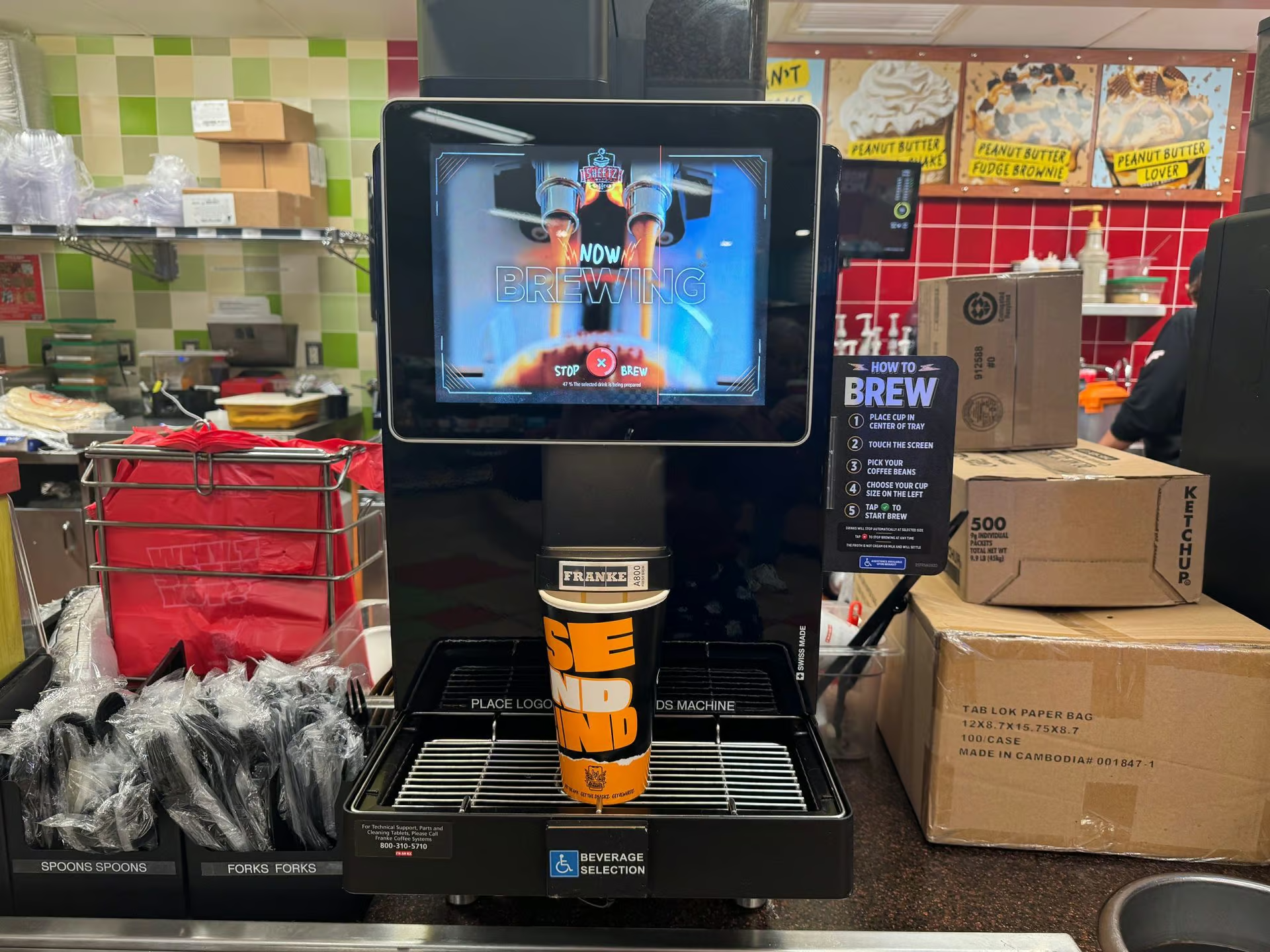
Leingang encouraged attendees to think about innovation in terms of equipment and preparation. He explained that focusing on proper cooking and better holding can give operators improved product quality and appearance and longer hold times while cutting labor time to fill the case and reducing waste and rework.
Leingang added that connectivity in new equipment is increasing, which allows locations to remotely update menus and LTOs across thousands of units, monitor how stores are cooking compared to how they’re selling, and predict equipment failures before they happen. “We are really on the cusp of that technology really proving out, where I can tell you within a month or two whether a motor is going to fail,” he said.
Design for the Real Customer Journey
Yawn reminded operators to base their programs on how customers actually shop. He said most customers are inside of a travel center for three to 11 minutes. In that short window, the basics matter more than anything else: clean restrooms, easy navigation, fast checkout and food that’s ready to grab and go.
“If the experience in the restroom is bad, I’m leaving,” Yawn said. “I’m walking out the door. I’m not buying anything.”
Clear navigation is also important, and customers should know instantly where to get hot food, cold food and beverages, which can help them get in and out of a location faster. “The time that you are saving a person is valuable and it is the most valuable thing that we have,” she explained. “We’re not going to compromise on our quality but I’m certainly not going to compromise my time.”
Innovate Around Consistency, Not Just Creativity
Chefs and marketers often chase novelty, but in food service, especially for truck stops and travel centers, panelists said consistency is the true superpower. “If you can’t produce that exact same dish on a Friday night as a Tuesday night, I don’t want it on the menu. You have to deliver on that brand promise every single day,” Leingang said.
Yawn agreed. “Whether it’s the store in Brookhaven, Mississippi, or whether it’s a store in Albuquerque, am I going to get the same quality product there no matter where I stop? If I do, it’s delightful. If I don’t, it’s a bad deal,” he said.
Leingang said that innovation that simplifies execution can be more valuable than innovation that adds complexity.
Make Small, Meaningful Improvements
Williams emphasized that innovation can be incremental but meaningful. For example, operators can upgrade a generic turkey to a locally smoked, sliced-to-spec turkey, tweak packaging or portioning for better perceived value, or adjusting cooking or holding parameters to improve quality.







Subscribe to Updates
The NATSO Foundation and NATSO provide a breadth of information created to strengthen travel plazas’ ability to meet the needs of the traveling public in an age of disruption. This includes knowledge filled blog posts, articles and publications. If you would like to receive a digest of blog post and articles directly in your inbox, please provide your name, email and the frequency of the updates you want to receive the email digest.