FHWA Unveils Jason’s Law Truck Parking Survey
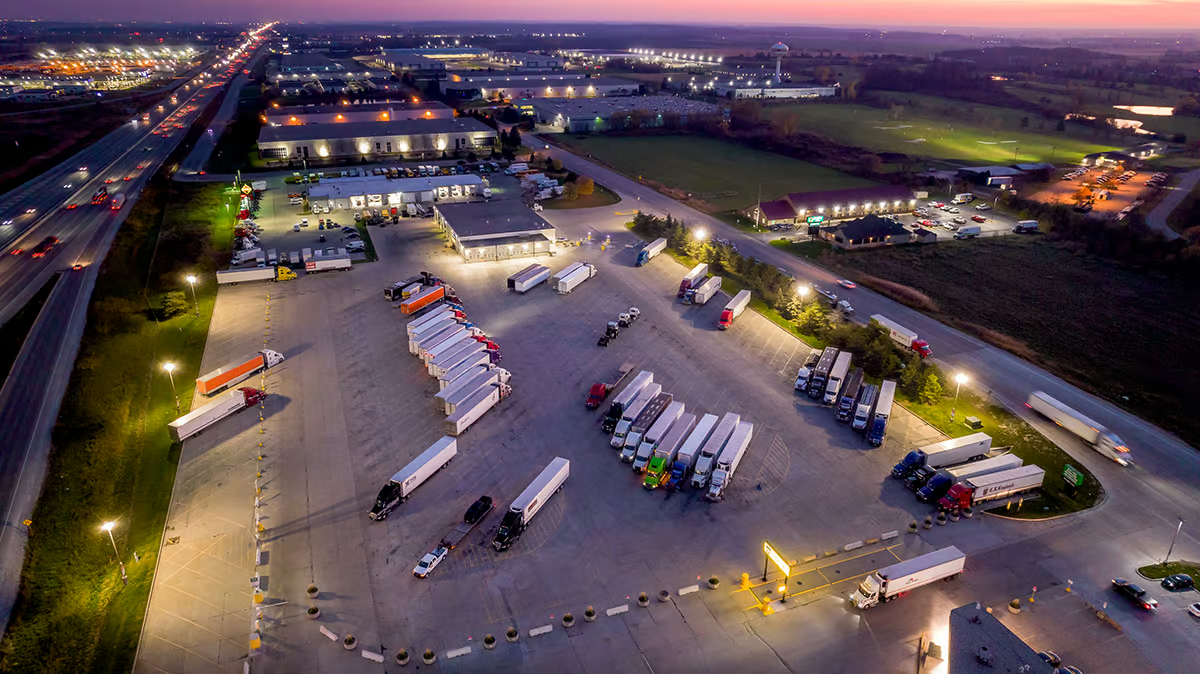
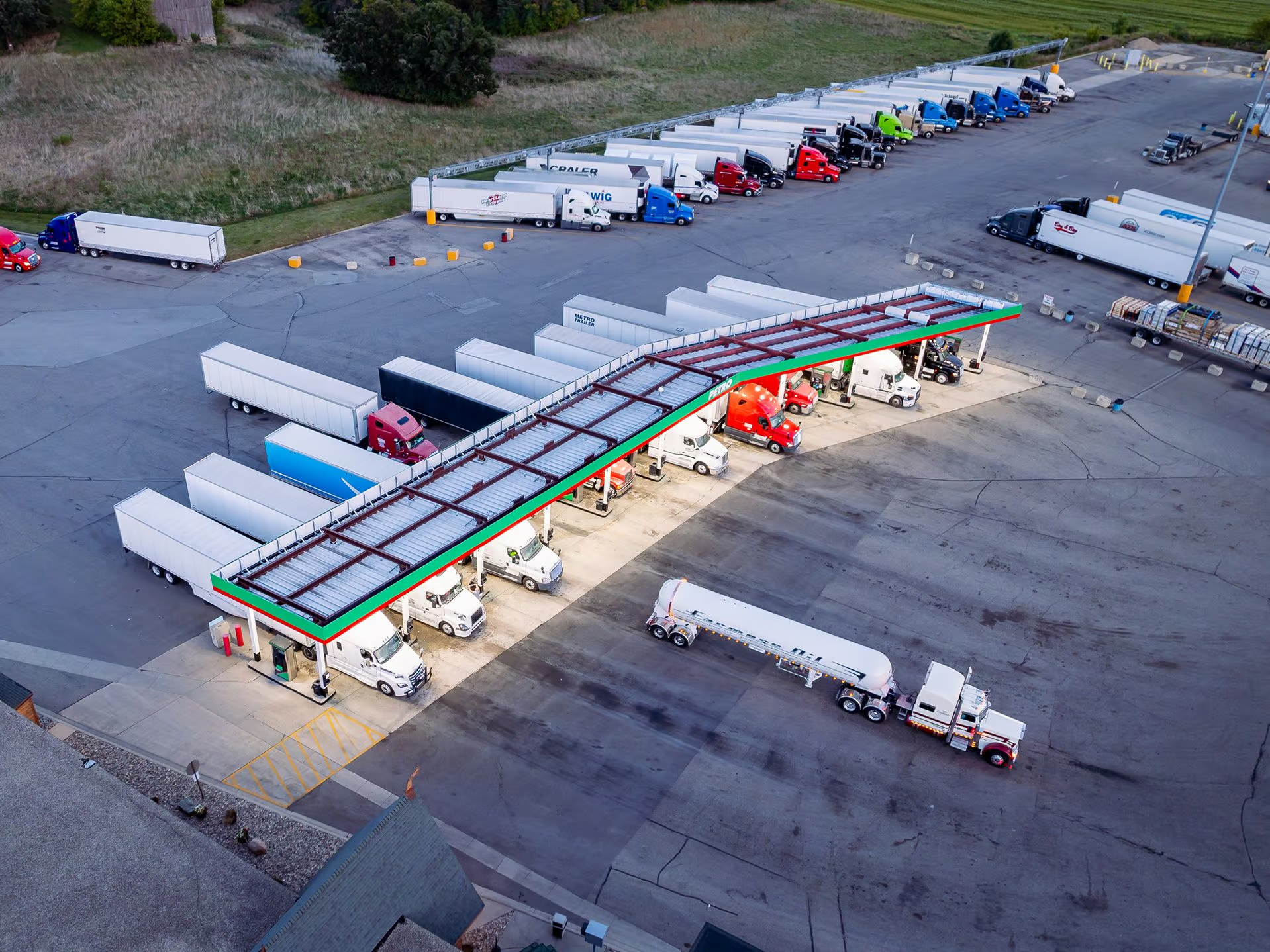
The Federal Highway Administration on January 9, 2026, opened its 2026 Congressionally mandated survey of truck parking capacity as required under the Jason’s Law provision of the 2012 highway authorization law known as MAP-21. Jason’s Law required the U.S. Department of Transportation to assess the volume of truck parking in each state and develop a system of metrics to measure the adequacy of truck parking on a periodic basis.
NATSO members are encouraged to complete the survey, which closes on February 27.
Congress is likely to consider truck parking legislation in the context of highway reauthorization over the next 12 to 18 months. The FHWA anticipates publishing its survey results and analysis within the coming year.
NATSO has long worked to help the agency understand the issues involved in the supply and demand of truck parking facilities and to ensure that FHWA’s survey adequately explores the critical factors that influence truck parking.
NATSO urged the agency to incorporate questions targeting fleets, drivers and regulators in an effort to capture more comprehensive truck parking information than early iterations of the Jason’s Law survey.
Specifically:
- NATSO requested that the agency ask whether trucking companies reimburse their drivers for truck parking as well as ask drivers whether their companies reimburse them for truck parking; truck drivers are generally unwilling to pay for truck parking.
- NATSO urged the agency to survey truck stop owners and operators as to how frequently trucking companies include truck parking in their negotiations on fuel purchase agreements.
- NATSO also requested that DOT officials be surveyed regarding the degree to which truck parking is considered when new regulations are being proposed for the trucking industry. NATSO has long encouraged the agency to consider the effects that any policy regulations will have on truck parking capacity before issuing significant regulations.
Given that the private sector provides approximately 90% of the truck parking capacity in the United States, U.S. DOT should harness the collective wisdom and expertise that private travel centers can provide to increase truck parking capacity in a given state.
- Any “solution” to truck parking concerns should center around improving the incentives for private companies to invest more money in truck parking capacity. When federal tax-payer funds are utilized for truck parking, states should enter into partnerships with the private sector to ensure that such funds are maximized and spent most efficiently.
- State-operated commercialized rest areas thwart competition from truck stops and travel centers, reducing the number of private enterprises that provide commercial truck parking. A NATSO analysis found that roadways with commercial rest areas have 1/3 fewer spaces than roadways with the same truck traffic.
- There must be an adequate return on an investment to offset the cost of providing and maintaining truck parking capacity — including the costs of initial land acquisition, permitting, zoning, and capital costs as well as recurring costs such as operations, maintenance, security, and insurance.
- Federal and state governments often recognize and emphasize the importance of adequate truck stops, but these facilities are often opposed by local governments and residents. It’s important to educate U.S. DOT about the impact that such obstacles (permitting, zoning, NIMBYISM) have on truck parking issues within a state.

Subscribe to Updates
The NATSO Foundation and NATSO provide a breadth of information created to strengthen travel plazas’ ability to meet the needs of the traveling public in an age of disruption. This includes knowledge filled blog posts, articles and publications. If you would like to receive a digest of blog post and articles directly in your inbox, please provide your name, email and the frequency of the updates you want to receive the email digest.