Article created for the digital issue of the NATSO Foundation’s magazine.
The demographics among professional drivers continue to shift, and knowing who is behind the wheel can help truck stop and travel center operators ensure they have the products and services that will appeal to today’s truck drivers.
Leah Shaver, president and chief executive officer of the National Transportation Institute, said drivers’ experiences on the road are essential for driver retention. “Truck stops and travel centers are the primary places where drivers eat, sleep, bathe, do self-care and have down-time, so truck stops are obviously intensely integrated into drivers’ day-to-day work routines,” she said.
Foreign-Born Drivers Continue to Increase
The number of immigrants entering the trucking industry continues to increase. The U.S. Bureau of Labor Statistics estimates that immigrants comprise about 18% of employed drivers and the number of foreign-born truck drivers more than doubled to more than 720,000 in 2021 from 315,981 in 2000.
A report by George Mason University’s Institute for Immigration Research found that about 59.8% of immigrant truck drivers are from Central America and the Caribbean, and 6.5% are from South America.
To help tap into Spanish-speaking drivers, the Illinois Secretary of State’s office launched a new initiative in July to offer the written CDL test in Spanish. Illinois joins more than 20 states that offer the test in Spanish, which could bring more Spanish-speaking drivers into the industry.
Jeremy Reymer, founder of Driver Reach, a CDL recruiting and compliance management system provider, said certain areas of the country tend to have different ethnicities of drivers. “If you’re in the Chicago-land area, there are a lot of Eastern European drivers. There are Indian drivers all around,” he said.
Drivers from Punjab, a region spanning northwest India and eastern Pakistan, in particular, have increased and now make up a notable percentage of drivers.
The number of immigrants may also shift as younger drivers enter the industry. According to the U.S. Census Bureau, among younger truckers under age 35, more of them are women, Hispanic and more educated than their older counterparts who are 55 and older.
There are several ways operators can connect with foreign-born drivers and better meet their needs. These include:
- Culturally Diverse Food Options: Food is a significant factor for immigrant truck drivers who may seek out non-traditional American offerings. Culturally diverse food options, such as Mexican, Indian, Middle Eastern or Asian cuisine, can also appeal to all customers who are seeking something different. Additionally, having halal, kosher, vegetarian or vegan options can also help locations meet various religious or dietary needs of drivers.
- Multilingual Signage: For many foreign-born drivers, English might not be their first language. Multilingual signage about amenities and directions can help improve the stopping experience for non-native English speakers. If possible, you could also offer your app in multiple language and try to hire staff who can communicate in different languages.
- Financial Services and Money Transfer Options: Many immigrant drivers send money home to support their families. Having financial services, such as ATMs that offer international withdrawals, money transfer services and the ability to cash checks, can save drivers time and reduce the need to visit other locations.
Driver Age Remains High
When capacity tightened during the pandemic, trucking companies were actively recruiting newcomers, including younger employees, but overall, professional drivers tend to skew older than the overall workforce.
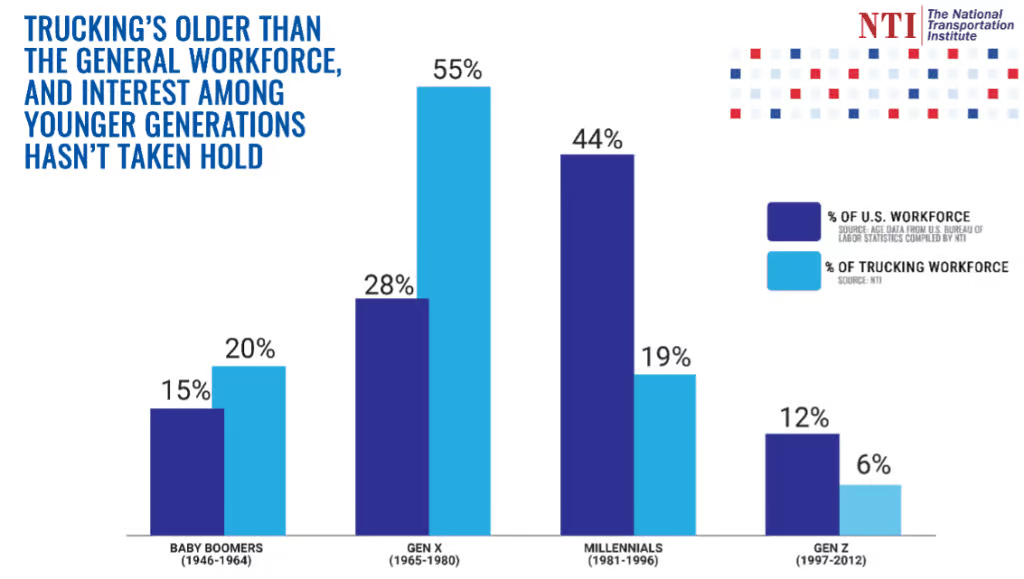
The median age of a professional truck driver in the U.S. is 46, compared with 41 for all workers. The Federal Motor Carrier Safety Administration reported that drivers under 30 are underrepresented. One of the biggest challenges for the trucking industry is the average age of new entrants, which hovers in the mid-30 range.
Drivers tend enter the industry later due regulated age limitations and insurance requirements and often pursue it as either a second, third or even fourth career. “Our visibility is limited to young people trying to figure out their career choice. Thus, when people do enter our industry, trucking was not their first-choice career,” she explained.
Overall, the industry has embraced younger drivers, but since the median age is over 45, there are some services that the demographic may need. These include:
- Health and Wellness Services: Older drivers may be more concerned about their physical health, so access to healthcare facilities, fitness centers and wellness services may be important to them.
- Access to Medication: On on-site pharmacy can provide easy access to medications and refill services for drivers when they are on the road. NATSO members have also reported success with various health monitors, such as blood pressure monitors.
- Heathy food options: Access to healthy food options at truck stops can be important to drivers who are health conscious.
Women Are an Important Segment within the Trucking Industry
Women fill a wide variety of rolls within the trucking industry, including behind the wheel. The 2024-2025 Women in Trucking Index shows that 9.5% of women are professional drivers who hold CDLs. While the percentage is still an improvement over what it was in the past, it is a 2.5% decrease from the 2023 WIT Index, which WIT said is due to a range of factors, including a lack of quality childcare, misperceptions of career opportunities for female drivers and an aging driver population that is now retiring.
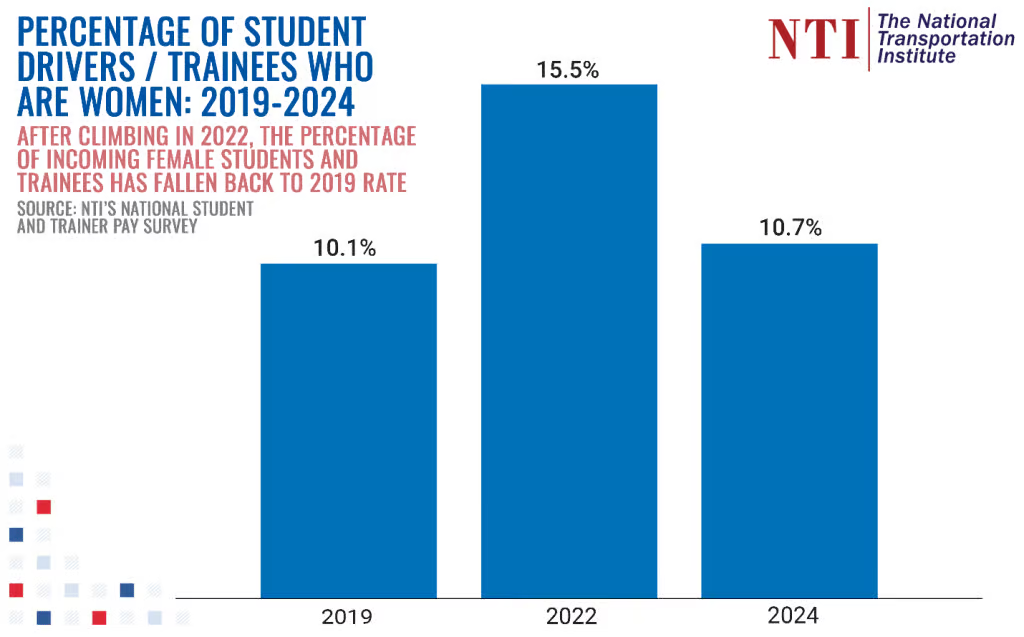
NTI’s data shows that women make up about 10.7% of student drivers and trainees, which is a decrease from a high of 15.5% in 2022 and in line with 2019’s figure.
Women often have different priorities compared to their male counterparts. For example, the most frequently occurring challenge for women, after detention time, is no/limited access to exercise facilities.
Offerings to help attract women include:
- Well-Lit Parking Lots: Ensure that parking lots and fuel islands are well-lit. It can also be helpful to create clear sightlines into the location so drivers can see inside.
- Clean Restrooms and Showers: Clean, well-maintained restrooms are important to all drivers but may be even more so to female drivers. Showers should also be clean. Providing secure, women-only shower areas could also enhance comfort and privacy for female drivers.
- Exercise Facilities: Women in an ATRI Survey indicated that they want to have access to exercise facilities but noted that it is important for them to feel safe.
Getting to Know Your Customers
Darren Schulte, vice president of membership for NATSO, said that while knowing overall demographic trends is helpful, truck stop and travel plaza operators should take time to get to know their customer base, as different locations may experience different trends.
“You may see a lot more different types of customers rather than a regular, traditional driver who used to go across the United States,” he said.
Check out tips on getting to know customers in these articles:
- 7 Ways to Know Your Truckstop Customers
- 5 Tools to Know Your Truckstop Customer
- Sell More Effectively
- Get to Know Your Fuel Customers
// This article was created for Stop Watch magazine, the magazine of the NATSO Foundation. Foundation is the research, education and public outreach subsidiary of NATSO, Inc. The NATSO Foundation provides programs and products to strengthen travel plazas’ ability to meet the traveling public’s needs through improved operational performance and business planning. Visit www.natsofoundation.org for more information.


Subscribe to Updates
The NATSO Foundation and NATSO provide a breadth of information created to strengthen travel plazas’ ability to meet the needs of the traveling public in an age of disruption. This includes knowledge filled blog posts, articles and publications. If you would like to receive a digest of blog post and articles directly in your inbox, please provide your name, email and the frequency of the updates you want to receive the email digest.