Create Reasons for the Four-Wheel Customer to Come Inside Your Travel Center
Speed, efficiency and location have long been a competitive advantage for truck stop and travel center operators, but those attributes alone may no longer be enough to drive traffic inside the store.
“The world already sells convenience,” said Frank Beard, head of marketing at Rovertown. “What convenience stores really sell is a better day.”
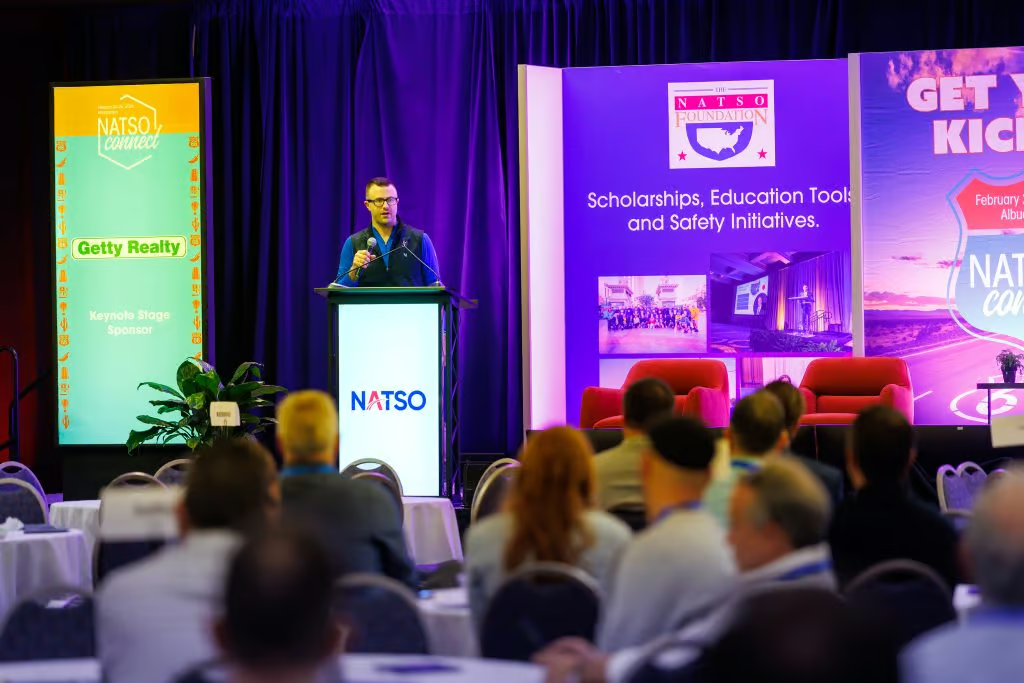
While speaking during NATSO Connect 2026, Beard said operators need to shift their focus from convenience to emotional value, saying travel centers compete not just with other retailers but with a broader ecosystem of on-demand services that are increasing convenience across nearly every aspect of daily life.
Beard’s NATSO Connect keynote was generously sponsored by McLane.
Consumer stress is shaping purchasing behavior
Most consumers buying habits are driven by emotions, including stress, Beard said. The past few years have been filled with stress for most American, including pandemic disruptions, inflation, high housing costs, and economic and job market uncertainty. Data from the University of Michigan’s long-running sentiment index shows confidence levels near historic lows, comparable to the aftermath of the 2008 financial crisis.
Those economic conditions influence spending patterns in a counterintuitive way. While consumers may delay large purchases, they are often willing to spend on small indulgences. Research from McKinsey describes this as a “paradox of splurging,” in which financially cautious consumers still purchase small luxuries as a coping mechanism. Social media trends such as “little treat culture” reflect the same behavior.
Making the store offer more interesting
The first step is offering products that feel distinctive or memorable. Traditional quick-service restaurants once dominated the fast, affordable meal segment. However, Beard explained that the competitive landscape has evolved significantly. Fast-casual restaurants, specialty coffee shops and niche food concepts have expanded the range of options available to consumers.
Convenience retailers have an advantage in this environment because their foodservice offerings are not tied to a single menu or brand identity.
“Convenience retailers can sell anything,” Beard said. “You can introduce a new item tomorrow. Large chains often take a year or more to launch a limited-time offer.”
Retailers that succeed in this category tend to offer items that are visually appealing, unique or shareable on social media.
Quality does not require premium pricing
Beard also challenged the assumption that improving food quality requires significantly higher prices. Some experimental convenience concepts attempted to reposition the channel as an upscale grocery alternative. However, several of those ventures, including Foxtrot and Choice Market, struggled to maintain profitability, which Beard believes is because they attempted to build niche, premium experiences rather than improving the traditional convenience offer.
“They pursued a very narrow, high-end concept instead of simply making everyday products better,” he said.
International examples illustrate the alternative approach. Japan’s convenience stores are widely recognized for high food quality while maintaining mass-market affordability. The stores sell fresh sandwiches, prepared meals and desserts that are inexpensive but carefully produced. “They’re not trying to be exclusive,” Beard said. “They just raise the baseline quality.”
For U.S. retailers, that approach may involve focusing on a few “hero items” that define the brand. Examples might include a signature breakfast sandwich, a distinctive dessert or a standout snack offering.
Personal interaction still matters
Beard also emphasized the importance of human interaction. He said research has shown a growing loneliness epidemic in the U.S., with fewer community institutions and social connections than in the past. Retail environments that provide small moments of recognition or friendliness can create meaningful customer loyalty.
Those moments can be simple, such as a store manager writing a brief message on a pizza box or an employee acknowledging a customer’s birthday during a loyalty redemption. “People remember how you made them feel,” Beard said.
He pointed to Disney’s use of celebration buttons, the small badges guests wear to mark birthdays, anniversaries or other milestones while they’re in the park, as an example of how recognition reinforces emotional engagement. Convenience stores can adopt similar concepts through loyalty programs or in-store interactions, he said.
Community authenticity remains a competitive advantage
It is also important for retailers to be authentic, Beard said. He noted that national chains often struggle to reflect local culture in meaningful ways, but regional convenience retailers have long-standing ties to their communities and can leverage that history. Partnerships with local sports teams, college athletes or community events can reinforce those connections. Retailers can also participate in social media trends or seasonal promotions more quickly than large national brands. “Large brands try to sound local, but customers can tell the difference,” Beard said. “Convenience retailers actually are local.”
Local food collaborations, community-focused marketing and regionally inspired products can reinforce that identity.
The convenience store as a daily reset
Ultimately, Beard said the industry’s opportunity lies in recognizing the role convenience stores play in everyday routines. For many consumers, a stop at a truck stop or travel plaza’s c-store represents a brief pause in the day, a morning coffee, an afternoon snack or a quick meal while on the road.
When retailers focus on interesting products, consistent quality, personal service and local authenticity, those moments can become meaningful parts of a customer’s routine. “Travel centers have always been places where people go for small wins,” Beard said. “When the world feels heavy, those moments matter even more.”


Subscribe to Updates
The NATSO Foundation and NATSO provide a breadth of information created to strengthen travel plazas’ ability to meet the needs of the traveling public in an age of disruption. This includes knowledge filled blog posts, articles and publications. If you would like to receive a digest of blog post and articles directly in your inbox, please provide your name, email and the frequency of the updates you want to receive the email digest.