Significant amounts of cash can change hands daily at truck stops and travel centers, making them vulnerable to theft, fraud, and human error.
To protect both assets and personnel, locations need to implement cash handling practices.
Limiting Exposure
One of the most effective strategies is limiting cash exposure at the point of sale. This includes setting maximum drawer limits, routinely removing excess cash through skims, and securing it in drop or smart safes that deter theft.
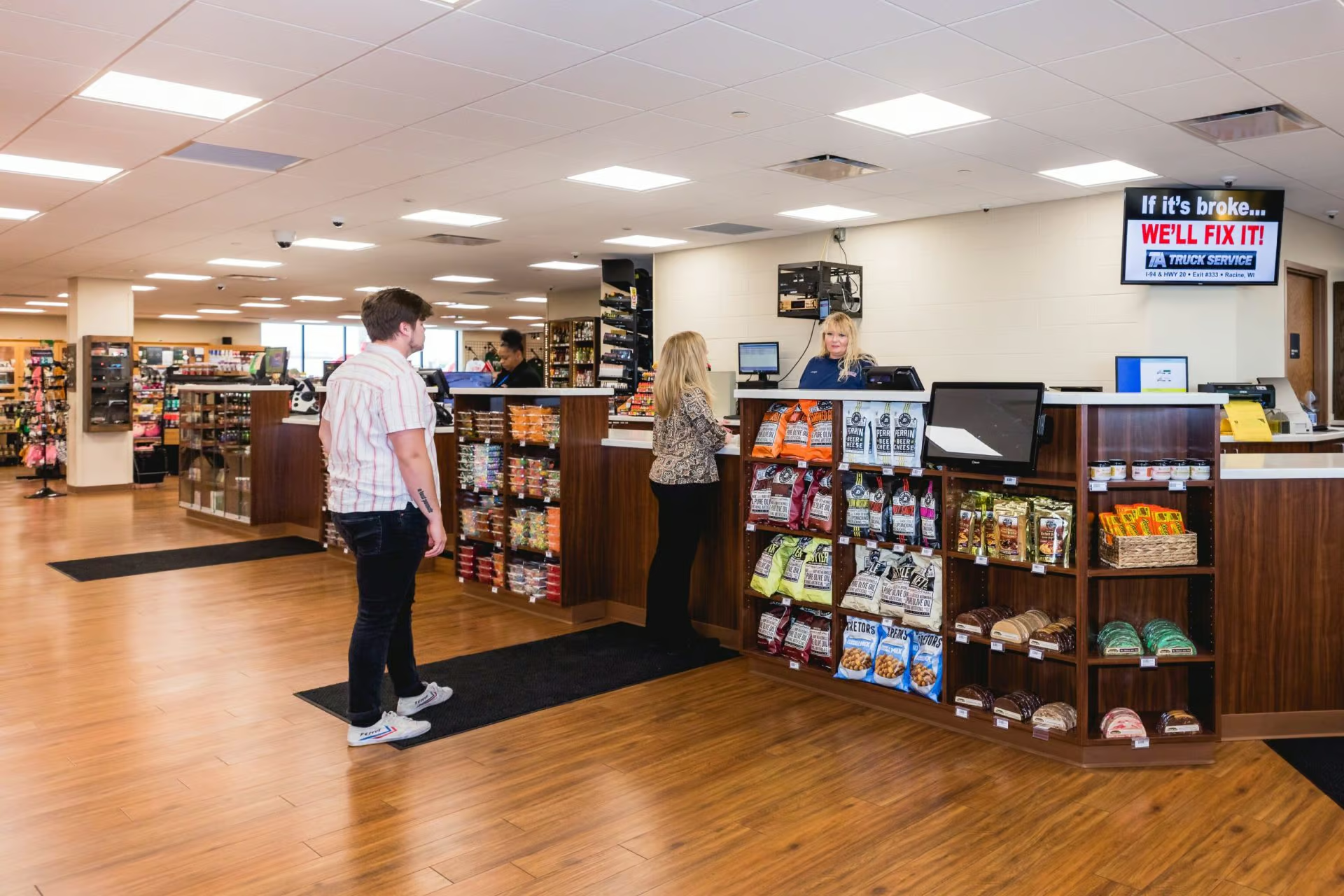
“We have a time lock safe at the fuel desk for cash/coin drops,” said Darren Goetz, vice president of operation for Mitten Inc. “Otherwise, for safety reasons we only change out and count drawers when three or more staff are at the counter, never when there is only one or two folks there.”
During NATSO Connect 2025, Krystal Adams, vice president of sales for North America at Volumatic, discussed the benefits of using technology to streamline cash handling. Volumatic’s cash counting machine can reduce errors and speed counting. “It will count a till drawer in less than one minute,” she said. “You can integrate it with back-office software. It has a memory and can do dual currency and dual languages.”
Volumatic also discussed its CounterChase intelligent (CCi) end-to-end cash handling solution that allows locations to only touch cash once. The CCi acts as a money counter, cash deposit box and forgery detector all in one unit and has been shown to cut cash loss by as much as 96%. “It creates a chain of custody for cash,” said James Harris, managing director for Volumatic.
When cashiers get cash, they feed it into the CCi, which also detects counterfeit bills. “If it won’t go in, the counterfeit is detected when the customer is still there,” Harris said.
According to Volumatic, all retailers should have clear cash handling procedures for staff that outline the steps employees must take when handling cash to reduce the risk of mistakes. Effective cash handling procedures include:
- Step-by-step instructions for employees on how to handle cash
- Staff roles and responsibilities, such as who can perform a cash lift
- How much and how long cash should stay in a till drawer
- Advice on regularly changing the routine of your cash handling procedures to avoid thieves from knowing when to strike
- What to do if there are discrepancies, including how to escalate an issue.
One of the most crucial areas is identifying discrepancies because by identifying them quickly, operators can also quickly determine the cause, Volumatic shared. Frequent errors by one or two staff members may also be an indication of internal theft or fraud.
Operational controls also play a vital role. Implementing dual counts during shift changes and segregating duties so no single employee manages all aspects of a transaction adds layers of accountability. Regular monitoring, including unannounced audits and review of point-of-sale (POS) reports, helps catch irregularities early and ensures policy adherence.
Visibility and use of surveillance cameras can deter thieves and help locations investigate any incidents that occur. Cameras should cover registers, safes, and anywhere else cash is present.
Minimizing the Risk of a Robbery
Robbery prevention and preparation is an important element of safety. While in general, robberies within our industry are few and far between, they do happen. Keeping robbery risk in mind will help improve the safety of your operation, your customers and your employees.
Greeting every customer that comes into the location is also a deterrent. “Those looking to do something unfavorable do not want to be noticed. Even employees working outside should be greeting customers as they cross paths,” Amy Toner, executive director of the NATSO Foundation said. “The more greeting, the better the overall safety and sales environment of your operation.”
Having clear lines of site throughout the location make it easy for customers and law enforcement to easily see what is going on inside. “The easier it is for you to see customers, the easier it is for you to know what is happening within your operation before it begins,” Toner said. “Additionally, we all prefer to shop in an environment that is neat and organized, allowing us to feel comfortable to spend freely.”
An overall best practice is to always keep as little as cash as possible within the cash registers by dropping cash as frequently as possible. Also ensure that employees follow your cash drop policy and enforce the policy when they do not. Many organizations prefer when their customers see them making consistent drops. Drop safes are an important part of prevention, ensure you have them.
Make sure to have good relations with local law enforcement and get to know their local sheriff, state trooper commander, and police chief and invite them to stop by.
Keith Lewis, vice president of operations for CargoNet and an active law enforcement officer with the Mohave County Sheriff’s Office in Arizona, said he has always felt that truck stops were law enforcement friendly. Prior to his current role, Lewis was a task force agent for the Georgia Bureau of Investigation. “The truck stops always have a clean restroom and they do a very good job of outreach to law enforcement. I have never had a bad experience working with a truck stop,” he said.


Subscribe to Updates
The NATSO Foundation and NATSO provide a breadth of information created to strengthen travel plazas’ ability to meet the needs of the traveling public in an age of disruption. This includes knowledge filled blog posts, articles and publications. If you would like to receive a digest of blog post and articles directly in your inbox, please provide your name, email and the frequency of the updates you want to receive the email digest.