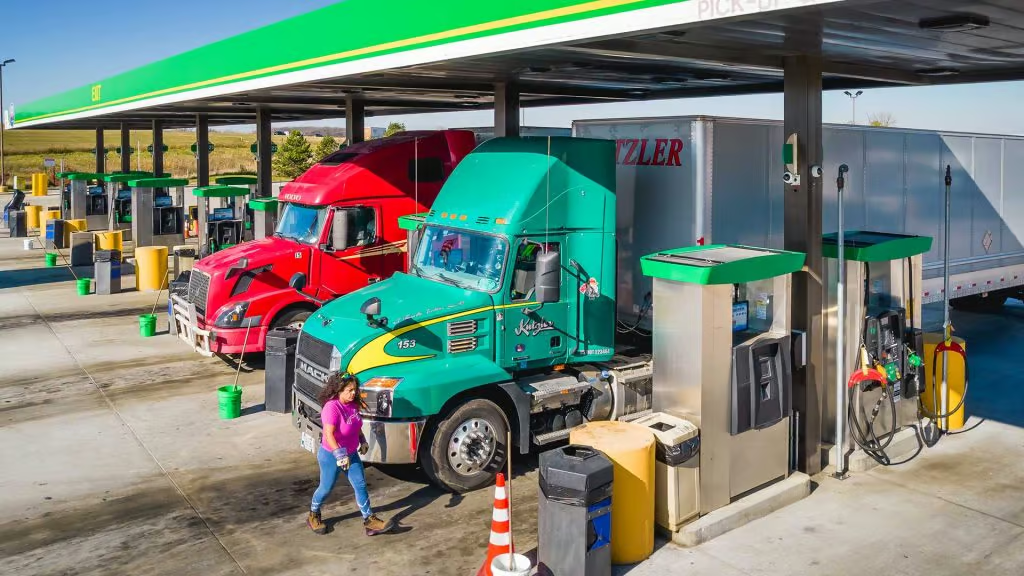
Fuel islands are vital to the operations of truck stops and travel centers, but they also pose a variety of safety risks. There are obvious dangers associated with flammable fuels as well as more routine threats of slips, trips, and falls. By focusing on employee training, regular maintenance, and safety technologies, operators can significantly reduce risks and provide a safe environment for both drivers and staff.
Raising Awareness
Employee training is essential for maintaining fuel island safety. Since fire is one of the largest risks, employees should be trained on the locations and use of fire extinguishers.
Training on emergency protocols is also important for employees. They should know how to utilize the emergency shutdown button that will stop fuel from flowing through the pumps are located.
“They also need to prevent people from smoking near the fuel islands, during loading and unloading operations and within twenty-five feet of bulk trucks and transports,” added Amy Toner, executive director of the NATSO Foundation.
Darren Goetz, vice president of Mitten Inc., said the location uses fire extinguisher training and emergency shut off training through Ready Training Online (learn more in the section on training). “We also do one-on-one training supplemented with training from our insurance company,” he said.
In addition to requiring team members working outside to wear high-visibility clothing at all times, Pilot requires fuel lanes to be completely blocked off when employees are working within the fuel islands, said Mark Sorine, vice president, enterprise safety and security at Pilot.
Borden said it is also important to remind employees to be aware of what those around them can see. “Drivers sitting in their trucks cannot always see you when you walk in front of their trucks,” he said.
Clear and consistent signage that reminds drivers of critical precautions, such as turning off their engines during refueling, not smoking near the pumps, and avoiding cell phone use, can reinforce safe behavior and reduce the likelihood of an incident.
“We can’t control the drivers, but we have signs around the site that tell them to hit the emergency all-stop button, and we list emergency numbers in case there is a bigger problem,” said Steve Kuzmanovic, advisor, environment, health and safety for Suncor, a Petro Canada company. “We also provide floor dry in the area for drivers to respond with if there is a spill.”
Illuminating Fuel Islands
Lighting is one of the simplest yet most effective ways to improve the fueling experience and safety. Poor visibility increases the risk of accidents, especially at night.
Well-lit fuel islands help drivers navigate the space more easily and feel safer during their stop. Upgrading canopy lights to energy-efficient LED fixtures can enhance visibility while reducing long-term energy costs.
Maintaining Equipment
Routine maintenance of the fuel island’s physical infrastructure, including the pavement around the pumps, is also important. Cracked pavement, oil spills, and worn-out coatings can pose slip and trip hazards. “Clean up fuel spills immediately. Keep trip hazards—air and water hoses—picked up,” Borden said.
Mittens also has a Tennant ride-on street sweeper for cleaning up gravel and debris around the fuel islands and parking lot.
Installing automatic leak detection systems for underground tanks and piping can help detect and address leaks.
Technology upgrades at the fuel dispenser can also contribute significantly to safety and efficiency. Adding alphanumeric keypads and enhanced payment systems that allow drivers to complete transactions quickly without entering the store, reducing the number of drivers walking across the parking lot and allowing them to fuel faster.
Evaluating EV Charging
As more and more customers turn to alternative fuels and the number of electric vehicle charging stations increase, locations need to ensure a safe and reliable charging experience. All EV charging stations should be installed by certified electricians in compliance with national electrical codes. Regular inspections of cables, connectors, and other equipment are essential to detect signs of wear, damage, or corrosion.
Locations don’t always own or operate the chargers on their sites and may host third parties that do. The equipment owners can help operators create emergency response plans. Tesla, for example, offers a Supercharger Emergency Response Guide. The document reminds everyone to always be aware of electrical hazards and contact a local utility company to disconnect grid power coming into the equipment when needed. Tesla also advises everyone treat all wires as dangerous and energized at high voltage.
Warning in the guide include:
- Do not attempt to move exposed power cables.
- Do not spray water on exposed cables, transformers or other electrical equipment.
- Do not disassemble electrical switchgear or transformer. This may only be done by licensed electricians or trained utility technicians with a proper understanding of the equipment Always use appropriate Personal Protective Equipment (PPE) when handling high voltage equipment.
Tesla also notes that electrical fires on supercharger equipment should be extinguished using CO2 or other appropriate electrical fire suppression and vehicle fires should be extinguished with water. “Extinguish small fires that do not involve a high voltage battery using a CO2 or ABC extinguisher,” Tesla wrote in its guide.
In addition to getting guidance from the EV charging equipment manufacturers, operators can access training on alternative fuels from the National Fire Protection Association.
Operators offering charging should consider developing emergency response plans specifically for EV charging areas, including who to contact if an issue arises, especially if the location doesn’t own the equipment. Plans could also include training for staff on handling electrical fires, equipment malfunctions, and safe use of emergency shut-off switches. Keeping appropriate fire extinguishers nearby—and ensuring they are regularly inspected—can add another layer of protection.
EV charging stations can also be targets for theft and vandalism, especially due to the high value of copper cables. To deter these threats, operators can install surveillance cameras, ensure adequate lighting, use tamper-resistant hardware, and anti-theft solutions, such as cut-resistant cables or built-in alarm systems.
Maintaining Infrastructure
It isn’t just the pumps that need to be inspected regularly. Routine maintenance of the fuel island’s physical infrastructure, including the pavement around the pumps, can help eliminate tripping hazards.
Cracked pavement, oil spills, and worn-out coatings can pose slip and trip hazards. Operators should invest in durable surface materials and to schedule regular maintenance to ensure a clean and hazard-free environment.


Subscribe to Updates
The NATSO Foundation and NATSO provide a breadth of information created to strengthen travel plazas’ ability to meet the needs of the traveling public in an age of disruption. This includes knowledge filled blog posts, articles and publications. If you would like to receive a digest of blog post and articles directly in your inbox, please provide your name, email and the frequency of the updates you want to receive the email digest.