Building a Safety Culture at Your Travel Center Starts with Training
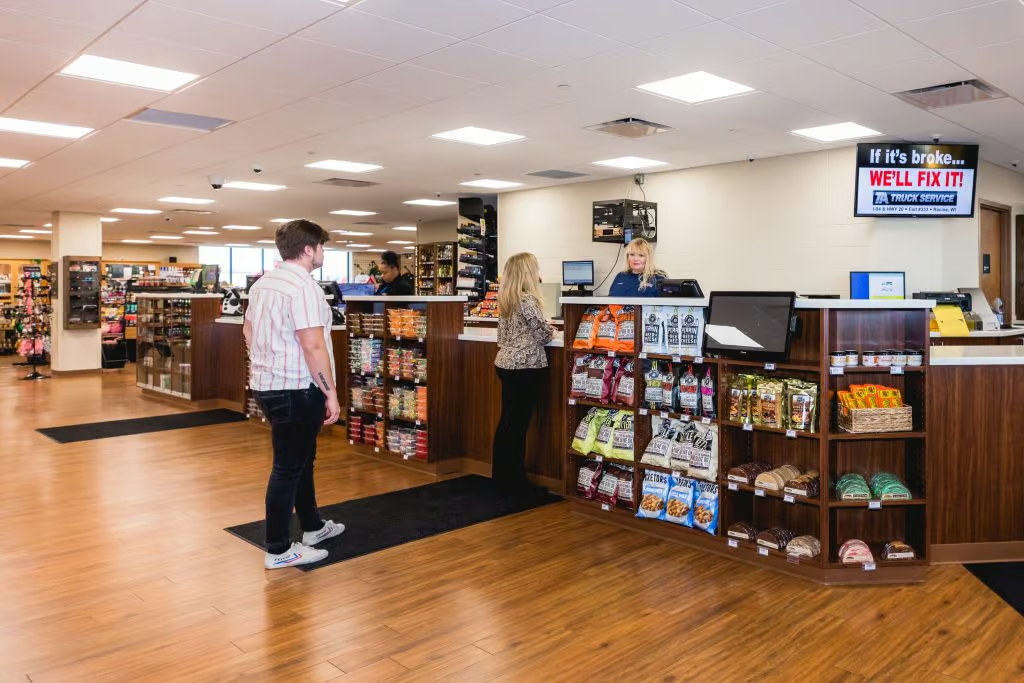
Cultivating a safety culture takes time, and structured, role-specific training programs customized for the various areas of the travel center can protect employees and customers alike. In addition to training employees receive when they’re hired, operators should offer are ongoing trainings, including post-accident and seasonal safety, to keep safety at the forefront of everyone’s mind.
Pilot also provides comprehensive safety and security training during onboarding, along with annual recertification. The training includes topics such as security measures, Occupational Safety and Health Administration-required education and hazard communications.
Tailoring Training
One of the first resources operators can turn to is the OSHA-required training and OSHA’s free resources. There are several different OSHA training employees can take depending on their role. Then, locations get specific, covering everything from how to stock a cooler to what to wear.
Darren Goetz, vice president of Mitten Inc., uses training from Ready Training Online (RTO), an online training solution tailored to frontline workers in industries, when onboarding new hires. “They have dozens of different trainings/modules for different positions including porters, custodial, cashiers, merchandisers, shop techs, etc.,” Goetz said. “There are also general trainings such as slips, falls, fire, etc.”
Ericka Schapekahm, director of human resources and special projects at Coffee Cup Fuel Stops & Convenience Stores, also tailors training to different locations in the store, with C-store team members complete safety training through Ready Training Online. Additionally, team members in food go through franchise training that includes safety training. Schapekahm said the company also offers Class C Under Ground Storage Tank Operator Training and pump safety.
To help address other unique situations that can occur at truck stops and travel plazas, Broadway Group has a “Late Night Retail” training video that deals with what to do if a robbery occurs along with videos for responsible tobacco/alcohol retailing.
Busy Bee uses a learning management system software from Trike. Trike has standard programs or can create custom training programs. Busy Bee is creating customized training segments on everything from onboarding to safety. Team members can complete the training on their cellphones.
Waring said Trike’s founders understand the human resources and operations side of travel centers. “They understand that the back end and the front end, which is, I think, pivotal and key to building a training program that is beneficial for us in our industry,” she said.
Investing in Personal Protective Equipment
Having personal protective equipment available and training employees to use it also reduces risk. Jenna Guglielmi, food safety and quality control manager at Parker’s Kitchen, said the location requires slip-resistant shoes, aprons, latex gloves for food handling, cut gloves when using knives, and hair coverings in the kitchen. “We even look at what kind of sleeves you have on. We have sleeve guards,” she said.
Broadway Group keeps fire blankets in the kitchen and trains employees on the location and use of all fire extinguishers.
Other PPE that is often needed at truck stops and travel plazas includes safety glasses or splash goggles are crucial for employees working with cleaning chemicals, automotive fluids, or completing maintenance tasks. Staff working in fueling areas or parking lots, especially at night, should wear high-visibility vests or shirts to reduce the risk of accidents involving moving vehicles. Employees working near truck wash bays, repair garages, or other loud equipment may require earplugs or earmuffs to protect against long-term hearing loss.
The right apparel can also improve the safety of workers in the shop, store, and restaurant. NATSO members have reported that they require technicians in the service center have to have oil- and slip-resistant composite- or steel-toed boots. Some companies reimburse employees for part of the cost to ensure workers don’t go too long before replacing them.
For locations that experience extreme cold or heat, providing the right apparel for those working outside can be beneficial. One NATSO member provides coats, insulated gloves, stocking caps and other warm weather gear for its facilities maintenance team to prevent frostbite or other weather-related injuries. Similarly, in the summer, the maintenance team has lighter clothing to ensure they’re not overheating.
Eliminating Injuries
Overexertion can lead to injuries, and addressing overexertion starts with trying to eliminate as much manual exertion as possible. Broadway Group tries to reduce risk of injuries related to restocking coolers by putting the bigger and heavier packages at the bottom of the cooler shelving. “We also have ladders/footstools to help with the upper shelves. We have back support braces available for those who request them,” said Damon Borden, operations manager for Broadway Group.
Borden said Broadway Group encourages has tools, such as carts and hand trucks available to help with moving large items. “We encourage staff to ask for help rather than hurt themselves,” he said.
Slips and falls remain a common challenge for both employees and customers. Some of the most hazardous areas are near entrances, beverage stations, coolers, and in aisles. For example, wet and slippery surfaces inside walk-in coolers can pose serious hazards to employees.
To help prevent slips and falls, employees should follow several best practices. For example, mats should be placed near entrances and in areas prone to spills. Floors should be constantly monitored, and any wet areas should be promptly mopped up with appropriate signage displayed to warn others. Routine inspections also help maintain a safe environment. Keeping aisles clear, stacking inventory to avoid creating tripping hazards, and practicing good housekeeping all contribute to safety.
Empowering Employees
Some situations are out of employees’ control, but Steve Kuzmanovic, advisor, environment, health and safety for Suncor, a Petro Canada company, has training to help employees de-escalate a situation if a driver is upset, which can help keep employees safe.
Kuzmanovic said Suncor never wants staff to get into a physical altercation. “Even if someone steals something, we’re not going to get into an altercation over a chocolate bar,” he said. “If there are trends where the same person is coming back, then we can get the local authorities involved.”
Suncor provides training on site operating procedures and emergency responses. The response can depend on the type of emergency, such as a fuel spill or property damage. “We use the local services—911 or fire authorities—but it helps employees with the initial response and getting the right people involved,” Kuzmanovic said.
Reaping the Rewards
Investing in safety training can have a wide range of benefits. Any workplace injury comes with direct and indirect costs, including workers’ compensation payments, medical expenses, lost productivity, and reduced employee morale.
According to the Occupational Safety and Health Administration, for every $1 a company invests in safety, it can save between $4 and $6. OSHA also reported that businesses that implement effective safety and health management systems may reduce their injury and illness-related costs by 20 to 40%. Those improvements can also lead to lower premiums for workers’ compensation insurance.
A strong safety culture also boosts employee morale and retention. Workers are more likely to stay with an employer who prioritizes their health and safety. When it comes to hiring, safety is often a key factor for job seekers.
The NATSO Foundation has created several training resources for truck stop employees, including how to help people in need of assistance.


Subscribe to Updates
The NATSO Foundation and NATSO provide a breadth of information created to strengthen travel plazas’ ability to meet the needs of the traveling public in an age of disruption. This includes knowledge filled blog posts, articles and publications. If you would like to receive a digest of blog post and articles directly in your inbox, please provide your name, email and the frequency of the updates you want to receive the email digest.