Article created for the digital issue of the NATSO Foundation’s magazine.
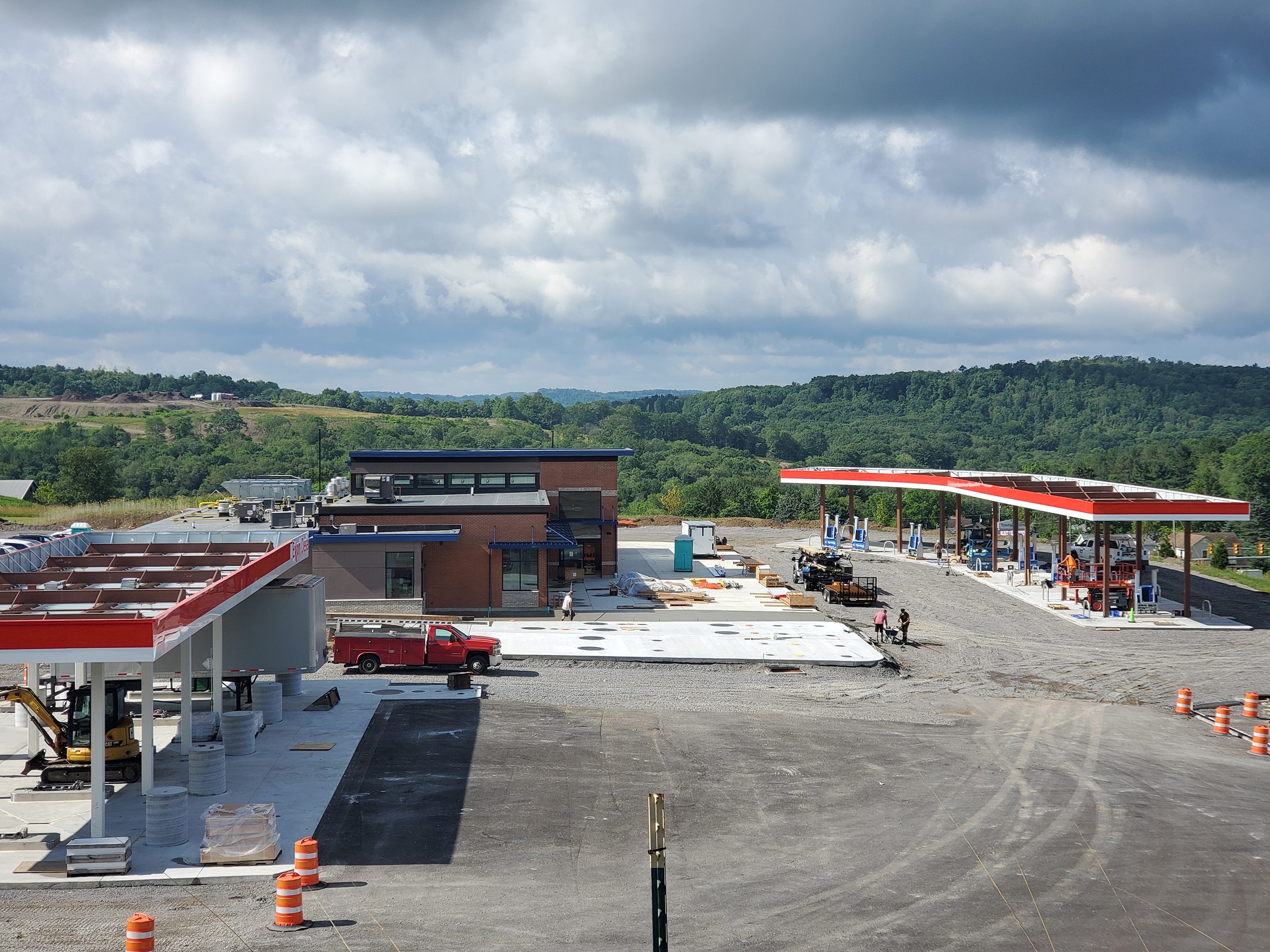
Due diligence is the groundwork to every successful travel center construction project and investing 12-24 months to complete the necessary research to ensure projects are feasible pays dividends when it is time to build. RJP Consulting Group’s Robert Peppelman, CEO, Mark Devlin, division manager, and Val O’Connor, client and construction manager, shared this advice during NATSO Connect’s New Build Workshop.
“The feasibility and due diligence will cost money. You spend money to save money. If it costs me $75,000 to $100,000 to do due diligence, but I’m about to embark on a multi-million investment, it is worth it,” Peppelman said.
Devlin added that due diligence also saves time in the long run. “The construction part is the easy part if the due diligence is taken care of properly,” he said.

Evaluating the Land
RJP Consulting group has first-hand experience working with clients who are disappointed when it comes time to build.
Another client experienced issues with removing pecan trees, which are protected in the state of Texas. There are fees associated with removing trees based on the size of the trunk and removing them at this location would cost about $200,000. “We could redesign around the trees,” Devlin added.
In addition to evaluating the land itself, Devlin recommends talking to those in local municipalities. “We set up a pre-meeting just to take the temperature of the local municipalities,” he said. “We may not know there is a consumer group out there that wants a particular thing in this site, and they have the backing of the municipality.”
Zoning is another potential issue.
O’Connor said buyers should try to negotiate a due diligence period with the property owner. “Not all sites will work out. Our professionals should be competent and on our side,” he said.
Finding a Site
Due diligence starts before even selecting a possible site to build. “Identify your customer network and who else is serving them,” he said. “Who else are they buying products from outside of truck stop? That will help you determine who your customer is.”
From there, operators and their builders can help determine what the site should look like. “We can’t identify a site and our piece of ground until we know who our customers are,” Peppelman said.
Devlin recommends operators create a written program.
Operators need to understand the demographics, but Peppelman said he often finds his clients don’t know what questions to ask.
Darren Schulte, NATSO’s vice president of membership, said it is critical that operators dig into the types of professional drivers that are passing the location because there are many types of professional drivers. “If the trucks passing are all fleet customers, they may or may not stop with you,” he said.
Operators should also consider the potential for paid parking, even if they don’t plan to offer it currently. “Future proof your operations. Even if you don’t want to do paid parking today, make sure you’re laying it out for the future. Let’s pretend all trucks become EVs tomorrow, they still need a place to park,” he said.
Other considerations include how many gas pumps to include, if there will be separate gas pumps, if the location will serve RVs, if it will focus on families, if they want drive throughs and how many, whether to be branded or unbranded and how much overall truck parking to include.
Buying a Location
Once RJP Consulting’s customers find a site, the company creates an agreement of sale for the buyer, which includes time for additional due diligence and outlines various timelines, including a timeline for planning and zoning, conducting Phase 1 environmental research, conducting Phase 2 research, and creating budgets and schedules.
“That has to be done before you buy the property,” Peppelman said. “If you don’t give yourself 120 days or maybe more, you’re going to enter into a sale without having done your homework.”
He also recommends setting up a pre-con meeting with DOT to understand any future changes to the road or roads near the site. “We had a client that learned DOT wasn’t putting an exit ramp where he thought they were putting an exit ramp,” Peppelman said.
Another big thing that comes into play is the topography, which may change the way a site looks depending on how severe it is. “It is three dimensional and we expect to have that feedback back from an engineer,” Peppelman said.
As part of its Phase 1 environmental testing, RJP Consulting Group focuses on the history of the site.
An important part of the due diligence process is understanding the geological aspects of that area, including the type of sediment that is underneath the dirt, flood plain areas and what the water table looks like. “It doesn’t mean it isn’t buildable, but we will know what our cost is so we know what our ROI is,” Peppelman said.
Meeting Local Requirements
Some jurisdictions have architectural review boards that have stringent requirements.
Every area has permitting requirements. “How much time those take will help you understand the time and money required,” Peppelman said. “You are going to add up all the costs, what it will take work wise at the site and building costs. Now that we know what it will take to build there, how to build there, now we have a price tag and can put together a schedule. Schedule will drive costs as well.”
Contractors can help shape schedules, especially as they relate to procurement timelines and supply chain challenges.
Inspectors will also have their own timelines and schedules for inspections that need to be factored into the timeline. “These jurisdictional things are important,” Peppelman said. “As government gets bigger, the job gets harder. There are new regulations every day and the red tape is difficult to navigate through.”
// This article was created for Stop Watch magazine, the magazine of the NATSO Foundation. Foundation is the research, education and public outreach subsidiary of NATSO, Inc. The NATSO Foundation provides programs and products to strengthen travel plazas’ ability to meet the traveling public’s needs through improved operational performance and business planning. Visit www.natsofoundation.org for more information.


Subscribe to Updates
The NATSO Foundation and NATSO provide a breadth of information created to strengthen travel plazas’ ability to meet the needs of the traveling public in an age of disruption. This includes knowledge filled blog posts, articles and publications. If you would like to receive a digest of blog post and articles directly in your inbox, please provide your name, email and the frequency of the updates you want to receive the email digest.