Preventing Losses Inside and Out of Your Travel Center

Loss prevention is an ongoing challenge for business owners including those of truck stops and travel centers. From merchandise shrinkage and employee theft to fuel fraud and wet stock loss, threats come from all directions and operators have to be proactive both inside the store and out at the pumps. Strategic policies, technology, and the right oversight can help reduce losses while also contributing to a safety culture.
Minimizing Merchandise Loss
The first step in preventing theft is determining where it is occurring. An estimated 70% to 90% of merchandise loss stems from cashier theft. Technology and design choices can play a vital role in addressing this. For instance, automated kiosks can reduce theft in high-risk categories such as electronics or lottery tickets.
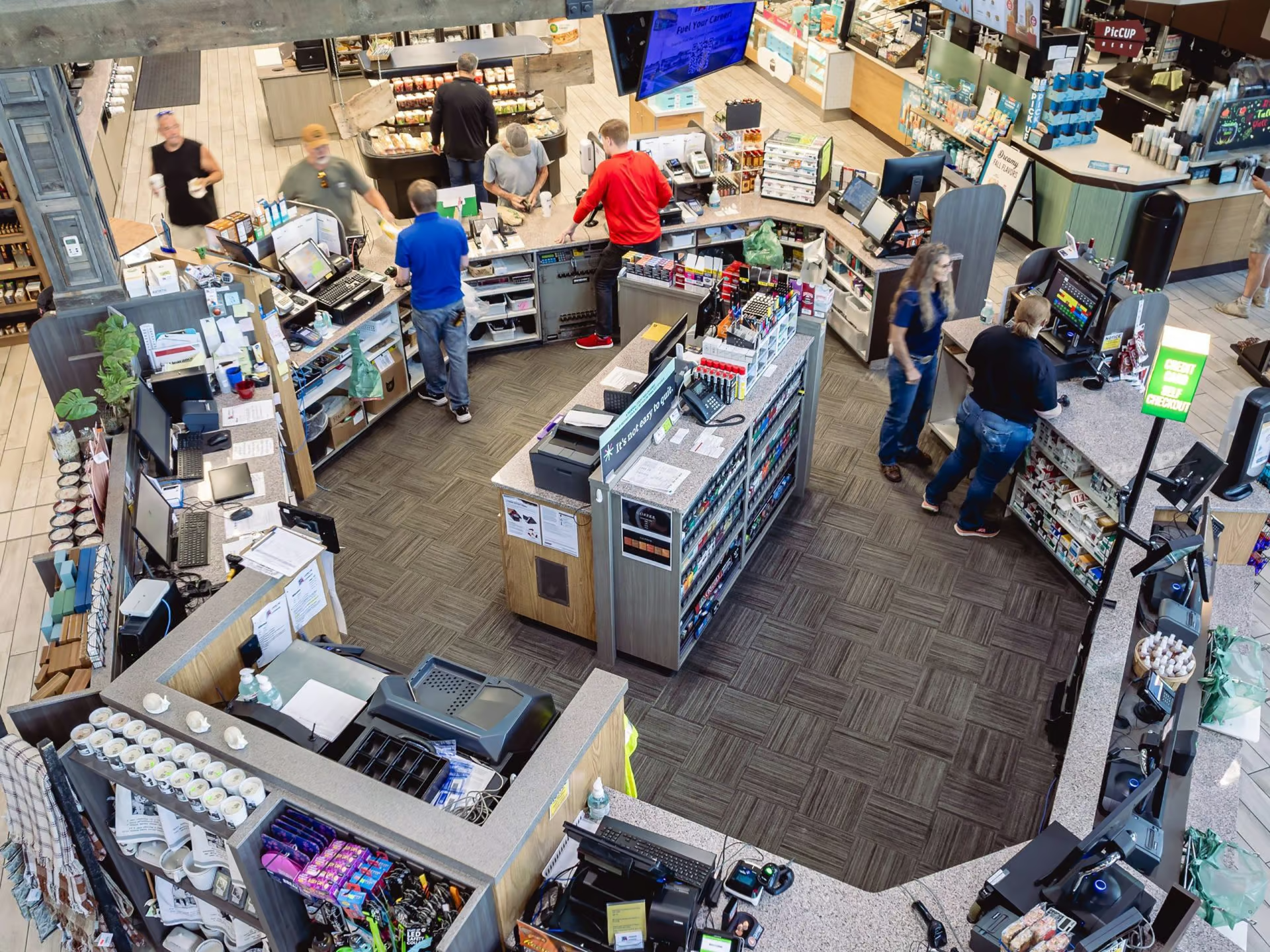
A simple best practice is to keep merchandise visible in every stage of its life, and Jeremie Myhren, co-founder of ONRAMP, recommends operators design their stores for visibility.
Mark Sorine, vice president, enterprise safety and security at Pilot, said technology plays an essential role in safety by expanding visibility, deterring incidents, and aiding incident prevention. “Our video and security monitoring systems help us provide safe environments for both guests and team members. These tools also supply valuable information to law enforcement when necessary, such as CCTV footage, and act as a visual deterrent to would-be offenders,” he said.
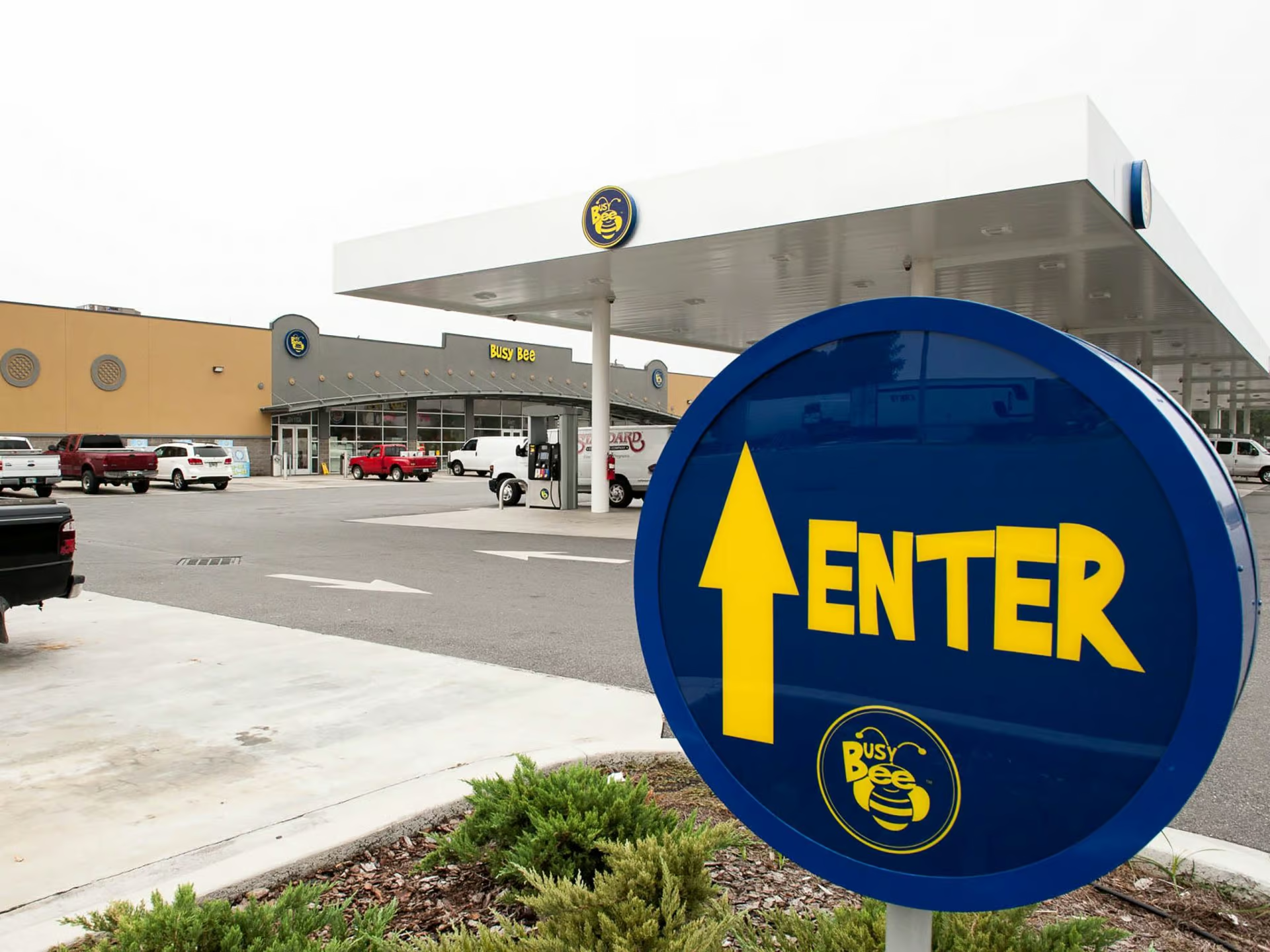
Elizabeth Waring, president and CEO of Busy Bee, has deployed the OpenEye security system that features 360-degree camera views.
Busy Bee has monitors in the gift area that display the camera footage, so customers know the cameras are in place. “That area is so crowded, and we usually only have two people in that section. We want people to know that we’re watching,” Warren said.
Beyond design and tech, vigilance and accountability are essential. Operators should respond to any theft, even if it seems minor. For example, you may see someone eating popcorn and you don’t think it is a big deal, but it is. It shows he has no respect for you and your organization. Some employees may always steal, but others—so-called “fence riders”—will follow the example set by management.
Regular audits are key. Managers should conduct surprise cash drawer counts and monitor void/no-sale transactions. When you see void/no-sale transactions, there is a good chance that money is coming out and not going in. Technology that sends real-time alerts about such transactions allows managers to respond immediately.
If discrepancies arise, conduct employee interviews. Sit down with each employee and ask them questions, such as “Are you aware of our shrink? Have you seen anything? Give them an opportunity to share to you what they’ve seen.”
Preventing Vendor Theft
Losses also occur during vendor interactions. Always supervise vendor check-ins, allowing only one vendor on the floor at a time, and closely reviewing invoices—especially those showing high returns.
Managers should physically inspect inventory. You should open up the boxes and look in each one. The smartest thing that beer vendor will do, for example, is take one quart out of each case, make their own case and glue up the box.
As a best practice, vendors should not count products themselves, and counts should never be done in multiples. Operators should also require vendors to flatten boxes before leaving to prevent concealed theft.
Fighting Fraud at the Fuel Pump
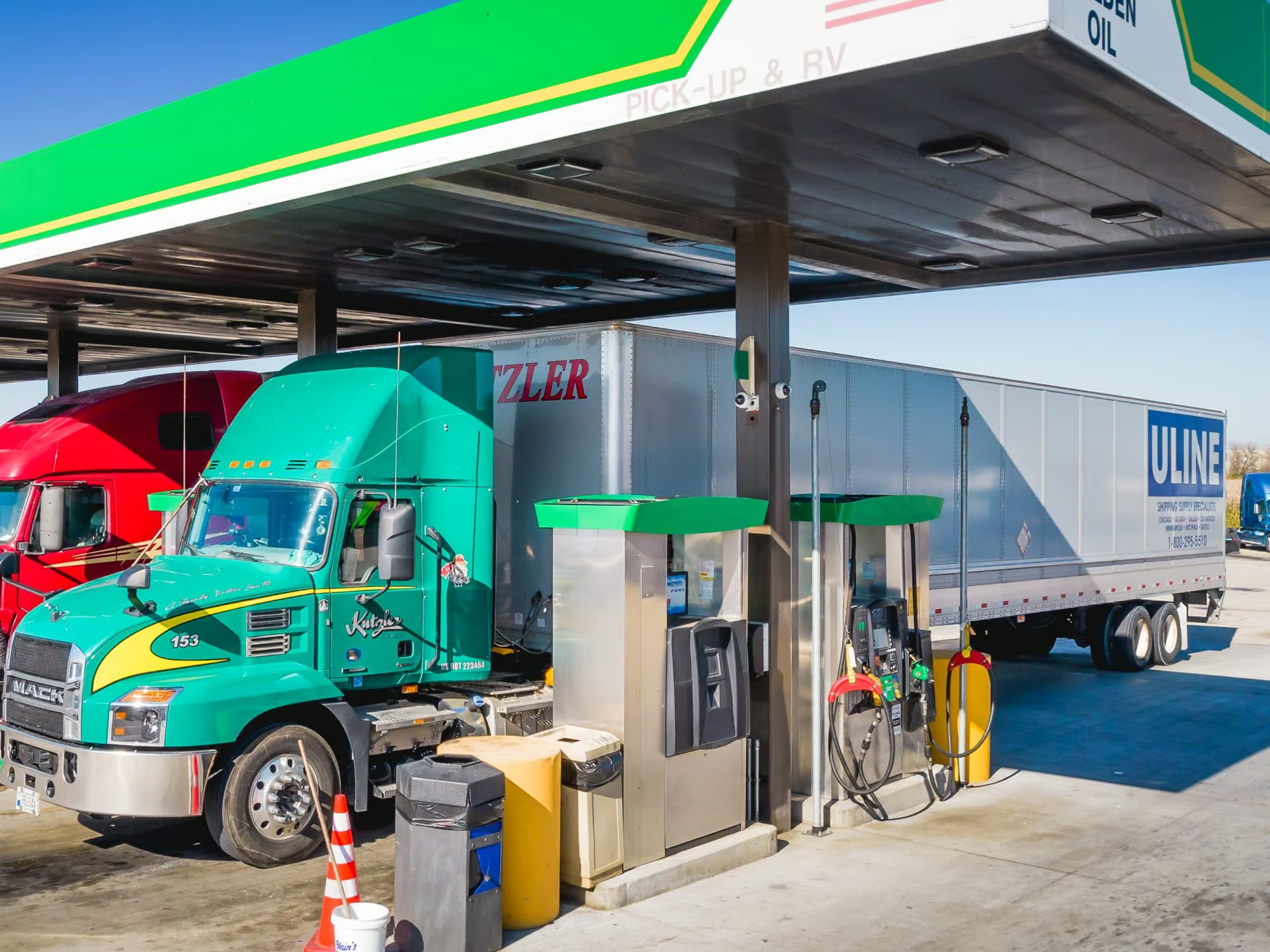
Fuel pump fraud is a serious concern, but emerging technologies are giving retailers the upper hand. As more sites adopt chip-and-PIN EMV card readers, skimming fraud has declined. “Skimmers can’t do anything with the chip because it is encrypted,” said Michael Boyd, senior manager of fleet product management at Dover Fueling Solutions.
However, locations that haven’t upgraded are becoming prime targets. “The number of locations that aren’t taking chip and EMV are getting smaller and smaller, so the locations where fraud can occur become more concentrated,” Boyd explained, adding that enabling near-field communication, such as mobile wallet payments, offers another layer of protection. “If I can go mobile, I know it is secure. I know it isn’t data that is exchanged. It is a token.”
The camera system Waring uses has a license plate reader that reads every license plate that comes in and out of the parking lot. “We have to be vigilant and put up safeguards,” Waring said.
Today’s AI-powered surveillance systems can take theft prevention to a new level. “There are some AI tools that can detect what normal activity looks like and then flag something that is outside of the norm,” Myhren added.
Low-tech solutions like tamper-evident seals remain useful. “If you ever go to a pump and see that the tape is broken, don’t use it,” Boyd cautioned. “It is a very-low tech solution, but it is absolutely an indicator of potential fraud.”
Dover’s pumps also include audible alarms and auto shutoffs in case of tampering. “It would rather shut down the pump than continue in a compromised fashion,” Boyd said.
Fraud at the pump is often a crime of opportunity. “They’re looking for a site that hasn’t upgraded to EMV and where there aren’t a lot of eyeballs on the pumps,” he said. To help deter theft, every pump should be within the view of a camera to monitor suspicious activities. Plus, having staff monitor cameras in real-time can help quickly address potential issues.
Staff should regularly inspect pumps for skimmers, checking for loose card readers or unusual devices attached to the pump. If a skimmer is found, staff shouldn’t touch or remove the device. They should shut down the dispenser and call law enforcement immediately. The location should also preserve surveillance footage for evidence.
Boyd recommends fuel retailers think about the future when installing new pumps. “At Wayne, we’ve given our customers the ability to update the pumps without having to replace them,” he said, noting the importance of modular upgrades for card readers and security locks.
Eliminating Wet Stock Loss
Another source of loss operators need to be aware of is wet-stock shrinkage, which is the gap between fuel delivered and fuel sold. This discrepancy can stem from theft or technical manipulation. “We’re all under siege as operators to monitor the fuel going through our system,” said Caputo.
Real-time monitoring solutions, including those from Warren Rogers, can flag such anomalies. “If it has been 10 minutes but only 25 gallons have been dispensed, it flags an issue,” Caputo explained.
Interacting with customers, both inside the store and on the fuel islands, can deter criminals who prefer to operate unnoticed and, as a bonus, can help boost customer service.
Mark Sorine, vice president, enterprise safety and security at Pilot, added that maintaining strong relationships with local law enforcement is critical. “With nearly 900 locations, it can be challenging, but we strive to implement robust security and safety practices and the necessary technology at all sites to support those partnerships,” he said.


Subscribe to Updates
The NATSO Foundation and NATSO provide a breadth of information created to strengthen travel plazas’ ability to meet the needs of the traveling public in an age of disruption. This includes knowledge filled blog posts, articles and publications. If you would like to receive a digest of blog post and articles directly in your inbox, please provide your name, email and the frequency of the updates you want to receive the email digest.