Point-of-Sale Technology Unlocks New Opportunities for Travel Centers
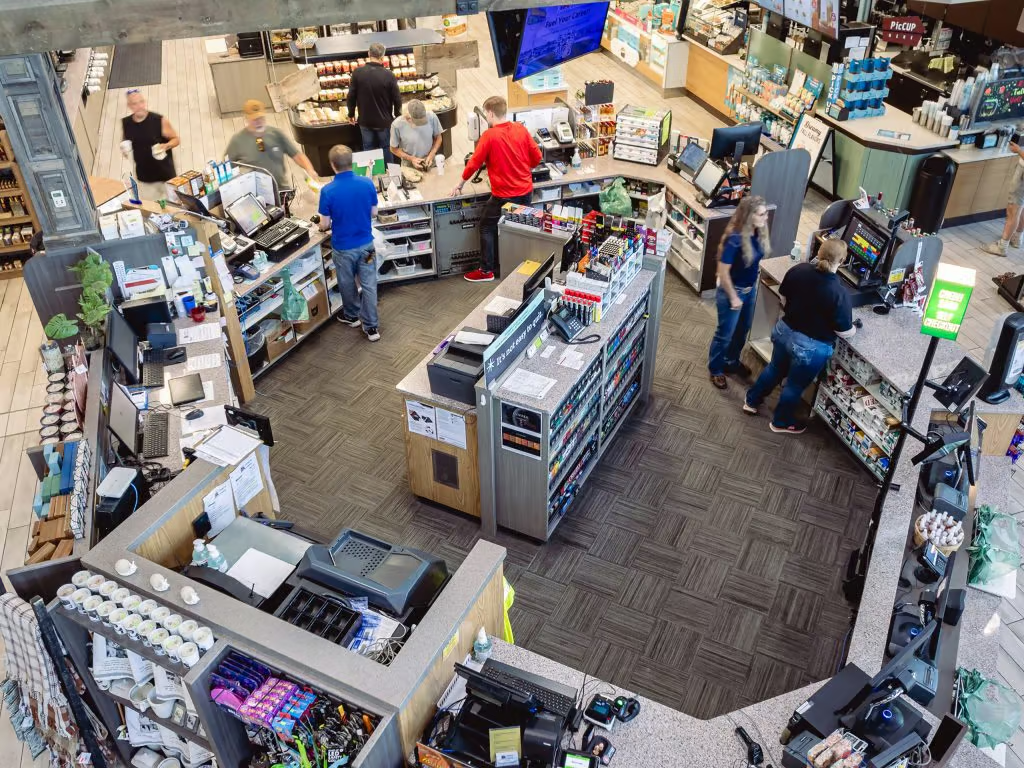
For truck stops, upgrading or updating their point-of-sale (POS) systems is the first step toward tapping into new opportunities around multiple payment methods, loyalty programs and diverse ordering options. As consumers’ needs and preferences changes, POS platforms are going beyond processing transactions and becoming the foundation for customer engagement, operational efficiency and long-term growth.
Why Integrated POS Matters
A strong, integrated POS solution that handles the entire store operation is one of most impactful technology investments operators can make to improve and streamline operations.
A Market in Transition
The point-of-sale vendor landscape evolved significantly in 2025, and the evolution is continuing into 2026. “After a decade-plus of being ‘deadlocked’ in terms of suppliers and product capabilities, late 2024 marked a turning point where things broke free and we now have a competitive roster of vendors and solutions who are feeling significant competitive and innovation pressure, which is a boon for travel center operators,” Myhren explained.
The Tote POS and self-checkout combine AI with hardware-agnostic design and headless architecture to create seamless shopping journeys and boost associate productivity while integrating with a location’s existing fuel and convenience infrastructure, according to Tote’s website.
Shyam Rao, Tote’s founder, said that after leading Punchh through its $500+ million acquisition, he kept coming back to an overlooked segment of the retail market—fuel and convenience retail. Although it is a $837+ billion industry serving millions of customers daily, Roa thought that stores were stuck with POS systems that hadn’t fundamentally evolved in decades.
“Legacy POS vendors had these retailers trapped in expensive, inflexible systems that charged astronomical fees for basic improvements and took months to implement simple changes. Meanwhile, customer expectations were evolving at the speed of AI,” Rao said.
Multiple Payments, Loyalty and Flexibility
As more point-of-sale solutions and updates come out, there are more options for connected truck or contactless payments. Staying current with POS technology is critical, but Chris Oliver, chief marketing officer for Trucker Path, said that may mean updating software rather than investing in a completely new solution.
“It’s like doing an update on your computer,” Oliver explained. “It might take half an hour, but it opens the door to reaching a much larger, more engaged audience.”
Rasmussen said that some POS systems are becoming hardware-agnostic. “That would be one that I would consider if I’m looking to change. If it isn’t, it is really restrictive,” he said.
Given the potential for rapid change within the POS segment, Myhren suggested that operators adopting new POS technology or signing long-term contracts include clauses stating that if any products or platforms are updated into a new product, their investment will apply to that upgrade.
A Big Picture View of Point-of-Sale Systems
The truck stop and travel center point-of-sale market is stabilizing around a few key players. Jeremie Myhren, cofounder and CIO of ONRAMP, described some of the changes the industry is experiencing.
PDI Expands its Offerings: CorPay, formerly Fleetcor, sold its Smart Solutions POS system to PDI in late 2024, and PDI is marketing and managing the platform. In addition, PDI has purchased Comdata Merchant Solutions, rolling it into its commercial and industrial division. PDI now marketing the platform used by most independent truck stop chains and operators.
GK Software is Focused on Omnichannel: GK Software has been widely selling its OmniPOS solution that has a commercial fueling competency and several leading truck stop operators are now deploying the solution or have it in their labs preparing for deployment. Several leading operators are already testing or deploying it. For now, GK is focused on chains with 100 locations or more, but a version for smaller operators, potentially supported via a partner, may be coming for smaller operators. GK is making headway into the market, particularly with large convenience store chains that also have truck stops.
NCR Voyix Consolidates and Modernizes: NCR’s split into two companies is complete, and its travel center-focused POS and fuel solutions now fall under the NCR Voyix brand. The three largest truck stop chains use the platform. They have signaled they intend to modernize the combined POS product solutions under that brand into a combined go-forward product with the best of everything of the other brands.
Fis-Cal Bets on PetroVerse: Fis-Cal’s TravStar One platform is still in use at travel centers, but the company has shifted its focus to its new PetroVerse system. PetroVerse is being actively marketed and deployed as a modernized alternative for operators not aligned with PDI or NCR Voyix. Fis-Cal is continuing to provide an alternative for independents to the now PDI platform.
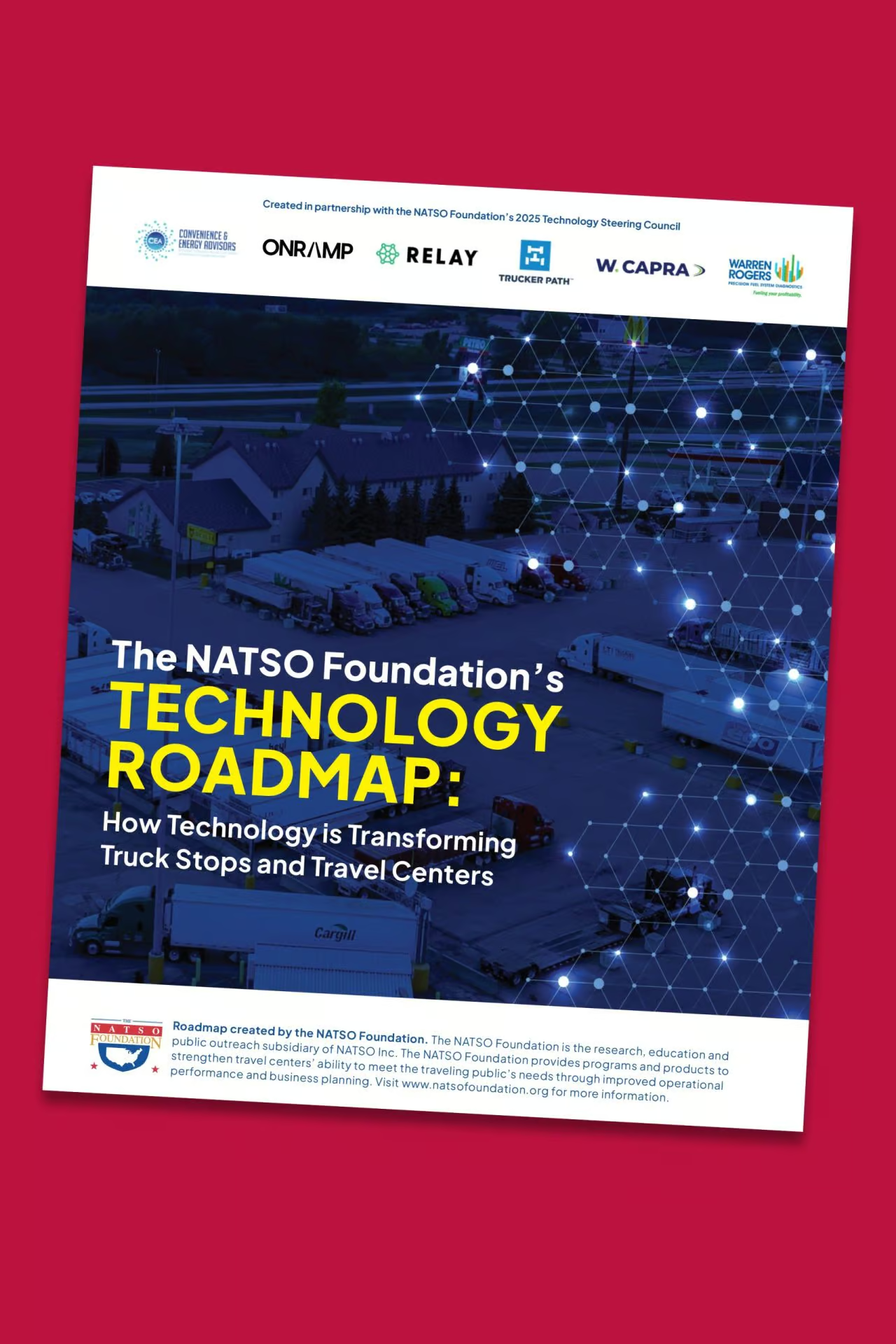
The NATSO Foundation and members of the NATSO Foundation 2025 Technology Steering Council recently created a Technology Roadmap to help travel center operators stay current on the technology landscape. Purchase a copy to gather their insights into how operators can use technology to their advantage and the most impactful tools travel centers should deploy today.


Subscribe to Updates
The NATSO Foundation and NATSO provide a breadth of information created to strengthen travel plazas’ ability to meet the needs of the traveling public in an age of disruption. This includes knowledge filled blog posts, articles and publications. If you would like to receive a digest of blog post and articles directly in your inbox, please provide your name, email and the frequency of the updates you want to receive the email digest.