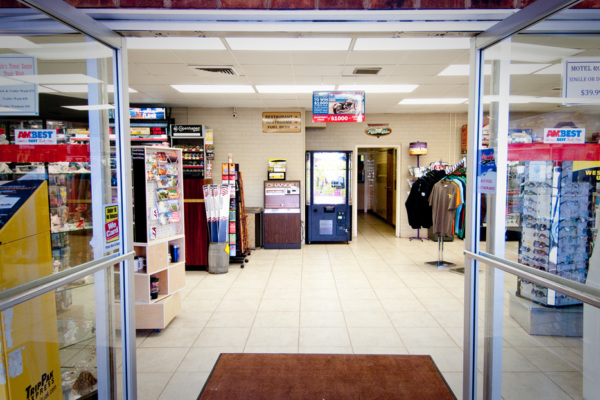
Losses from theft—also called shrink—are a part of life for retailers. Shrink will never be completely eliminated, but truckstop and travel plaza operators can take steps to minimize it.
“You have to do everything you can every day to control it,” said Darren Schulte, NATSO’s vice president of membership, while presenting a workshop on shrink loss at The NATSO Show in Savannah, Ga. “It takes a significant amount of increased sales to make up for any shrink loss, so minimizing loss in the first place is key.”
Unfortunately, the greatest losses come from employees. “A portion of your employees will steal no matter what you do. They’re the biggest portion of your shrink,” Schulte said. “Then there are fence riders just waiting to see what you’re going to do. You may see someone eating popcorn and you don’t think it is a big deal, but it is. It shows he or she has no respect for you and your organization. If you don’t address it, those two employees that were stealing from you grows and becomes three or four or five.”
Paperwork errors typically account for 1 to 2 percent of a location’s variation, customers are 5 to 7 percent, vendors make up 7 to 10 percent and employees a whopping 80 to 90 percent.
Schulte recommends employers watch at least 25 seconds of their security camera recordings and then catch employees “doing something right,” which reinforces positive behavior and also lets employees know they watch the recordings. “Come in and say, ‘Don, I saw you mopping last night, thanks.’ Don will know you watched, and everyone will know you review your security video system.”
Schulte said inventory audits and cash audits can also help prevent losses. “Just show up, pull the till, count it and make sure it balances. When you do a cash audit, don’t tell your employees in advance that you’re going to do it. Even dumb thieves will say, ‘I better not steal tonight, he will be checking.’”
Employers should also watch for voids, returns, no-sale rings on the cash register and cash registers open too long. “When you see those red flags, there is a good chance that money is coming out and not going in,” Schulte said, adding that there are systems available that will send real-time information on no-sales and other red flags so managers can visit the sales floor to see what is going on.
If an inventory audit shows a high level of shrink, employers should interview employees about the situation. “Sit down with employees and ask them questions. Are you aware of our shrink? Have you seen anything? Give them an opportunity to tell you what they’ve seen. You’ll be surprised at what you’ll learn and how much better your operations will run,” Schulte said. “This is your store and your money, you have to figure out what happened. If you don’t do those things, you’re making a terrible mistake.” Because the second largest percentage of shrink loss comes from vendors, Schulte suggests managers be present when vendors check in, only allow one vendor at a time on the sales floor and review invoices carefully, especially those that have high returns. Managers should also look at the inventory as it comes in.
“Open up the boxes and look in each one. The smartest thing that a vendor will do is take one of something out of each of the 12 cases he is delivering, make his own case and glue up the box. Your vendors stock most of your coolers, so you’re never going to know,” he said.
In addition, retailers should not allow vendors to count the products themselves during the check-in process and never allow products to be counted in multiples. Vendors should flatten their boxes before they leave.
Operators should also pay attention to invoices, spot checking for retail or price-change errors. If there are mistakes on an invoice, Schulte suggests operators ask for an updated invoice rather than allowing vendors to make handwritten changes. What’s more, store employees should hold onto the invoice once they review it rather than handing it back to the vendor.

Addtional Shrink Management Resources
- Download slides from Schutle’s presentation “Become a Shrink Management Master: Tools and Techniques for Immediate Impact”. FireKing Security Group also presented during the workshop.
- NATSO’s Truckstop and Travel Plaza Training Manual contains additional resources on shrink management, including a sample cash audit form. Download a sample chapter here and purchase the manual at here.
- Schulte regularly writes on NATSO’s website about shrink management. For more ideas on minimizing losses, check out Schulte’s recent posts on the NATSO blog One Dozen Ideas to Reduce Shrink at Your Truckstop Immediately and One Dozen More Ideas to Reduce Shrink at Your Truckstop Immediately.

Photo Credit: photopaul65/bigstock.com
 |
This article originally ran in Stop Watch magazine. Stop Watch provides in-depth content to assist NATSO members in improving their travel plaza business operations. The magazine is mailed to NATSO members bimonthly. If you are a member and not receiving Stop Watch, submit a request to be added to the mailing list. Not a member? Join today or submit a request to receive additional information. |

Subscribe to Updates
The NATSO Foundation and NATSO provide a breadth of information created to strengthen travel plazas’ ability to meet the needs of the traveling public in an age of disruption. This includes knowledge filled blog posts, articles and publications. If you would like to receive a digest of blog post and articles directly in your inbox, please provide your name, email and the frequency of the updates you want to receive the email digest.