The ability to evolve and change can strengthen a business and contribute to long-term success. Within the truckstop and travel plaza industry, shifts in consumer behavior coupled with increasing competition are driving the need for operators to explore and adopt new service offerings in order to stay competitive.
“You have to clarify how the future is going to be different than the past and how your team can make the future a reality,” said Darren Schulte, vice president of membership at NATSO.
Recently, Dollar General added fuel, Purple has started offering home delivery of fuel in certain areas and big box retailers are offering grab-and-go food.
“We need to get into other people’s business because they are getting into ours all of the time,” Schulte said. “We are truckstops, but we have to be thinking of how we get to other pieces of the business,” Schulte said. “We have to use what we have and the weapon we have is fuel. We have to figure out ways to maximize that.”
Don Quinn, president of Sapp Bros., said change has always been necessary for success. “We have understood the opportunity that comes with change,” he said.
Quinn said Sapp Bros. has pursued change when it has found ways to improve the customer experience with faster, better or less expensive offerings. The company also looks at opportunities that make the employees’ jobs easier. “The other factor is the bottom line,” he said. “What are the economics of it? What is the cost benefit of the opportunity?”
While there is no reason to change for change’s sake, the successful companies are ones that start changing before something dramatic happens, Schulte said. “They are the ones that start doing something before change has to happen,” he said.
For example, companies that are reacting now to upcoming CAFÉ standards and the improved fuel mileage vehicles are going to get are the ones that are going to be successful, Schulte said. “They recognize that both trucks and cars will get better fuel mileage and that means less and less stops. There are doing things to make different types of customers shop with them,” he said.
Seekin Growth Opportunities
Keith Wade, manager at Dodge City Petro, said the location is constantly looking for opportunities to grow. “We can never stop thinking about our next growth opportunity. I’ve been here for five years and we have not stopped adding to the business,” he said.
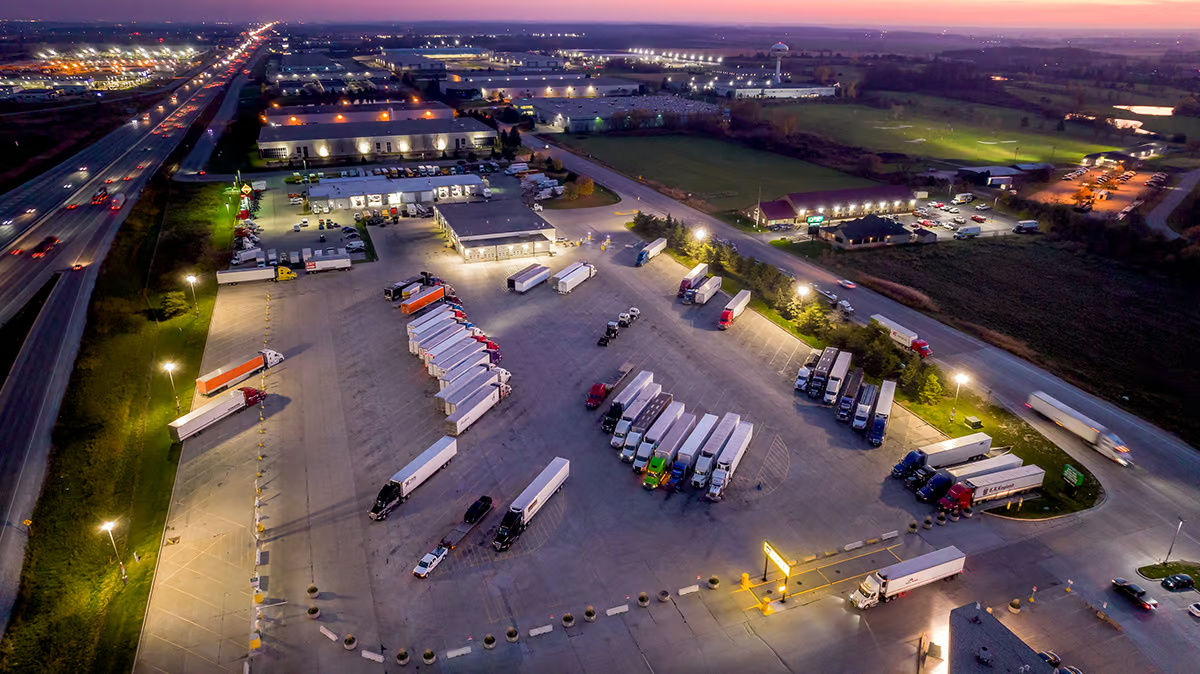
In the past five years, Dodge City Petro has added 200 more parking spaces, a six-bay truck service center and a Popeye’s Chicken, and it is preparing to add a Dunkin Donuts. “We’ve taken the store from 2,300 square feet to 7,000 square feet,” he said.
Each addition has provided an overall boost. “Every option you add is just another draw off the interstate,” Wade said.
Initially Wade was concerned adding a quick-service restaurant would hurt sales in the sit-down restaurant, but that hasn’t been the case. “When we added the Popeye’s, Iron Skillet sales went up 6 percent and gas went up 30 percent,” Wade said. “Every time we add an additional piece to our property or another profit center, we’ll have double-digit growth. “
That growth lasts for a few years then levels back out, Wade said. That is when they decide it is time to “go at it again.”
Implementing Changes
Managing change requires a strategy to move forward. “When it comes to change, you have to set the stage,” Schulte said. “As the leader, you have to guide that change.”
Quinn agrees that change begins with the leadership. “You have to identify the change you want to pursue or affect within your organization,” he said. “At that point you need to identify the steps involved and what the end result is or that you desire.”
Identifying the steps is similar to setting any goal or objective. “You set it and map out the plan to get there,” Quinn said, adding that the end goal can sometimes be a moving target. “Plan A might turn into Plan B before you’re finished. Someone might come up with a better idea.”
For Schulte, managing change is a team effort. True, powerful change comes when the group is acting together and guiding the change. “It can start with the CEO or owner having a vision, but you build a team to move change,” Schulte said, adding that the team leaders need to identify team members who will support the project and help it move forward.
“You’ve got to communicate so everyone understands it and has buy in. The more people that understand the program and buy into it, the quicker change will happen and the more successful it will be,” Schulte said.
To make change successful, Schulte said leaders have to empower other people. “Have faith in them. Remove as many barriers as possible to make success possible,” he said. “There can be a vision, but then there is red tape. You have to remove that.”
Quinn said it is important to give employees the opportunity to tackle projects. “By relying on them, you’ll discover that those people can probably do it better and faster and more effectively than you can,” he said. “Give them a chance and look back and thank God that someone gave you a chance. There are employees that work for you that are chomping at the bit to get that same chance.”
Once the plan is in place and team members have been identified, the key is to act. “Create a sense of urgency. Help others try to understand why the change has to happen, why it is important and why you have to act,” Schulte said.
Managing Employee Expectations
Change can sometimes bring uncertainty, which makes communication paramount. “As you communicate the change with your staff and employees, it is important that you identify the benefits knowing that their job may change or will change but they are still a valuable employee and that they will remain on staff even though their job may look different,” Quinn said.
To get employees onboard, Quinn explains the benefits and then leads the way. “You can’t just talk. You have to show the way,” he said.
When Bobby Berkstresser, owner of White’s Travel Plaza, purchased the location, he implemented a number of changes, which he said many employees welcomed. “There were a lot of people that wanted to see the place do good. They’d invested years of their time and they were anxious to see someone come in and start remodeling,” he said.
The catalyst for change can sometimes be a dip in sales or a failure of some sort. “When things are broken, things aren’t working or there has been a disaster or an epic failure, that is when change happens,” Schulte said. “From every disaster comes the power to re-shape a stagnant organization.”
“When you change, you’re refusing to be defeated,” Schulte said.
Marking the Milestones
Celebrating the wins and successes, even when they’re small, can help keep momentum. “Celebrate the success and the change when you get there,” Quinn said.
Schulte said, “When you have a long-term strategy, it can take a long time to reach it. You have to produce some early wins and things you can celebrate.”
Short-term wins should be visible. “If the goal is to increase the average ticket 30 cents and it has moved up a nickel after a month, that is visible and tangible,” Schulte said.
It is important not to let up after some initial victories. “After you’ve started to see some successes or improvements, that is when you should try even harder,” Schulte said. “Pressing harder and faster after the first success is critical and you have to continue to be relentless in initiating change.”

Subscribe to Updates
The NATSO Foundation and NATSO provide a breadth of information created to strengthen travel plazas’ ability to meet the needs of the traveling public in an age of disruption. This includes knowledge filled blog posts, articles and publications. If you would like to receive a digest of blog post and articles directly in your inbox, please provide your name, email and the frequency of the updates you want to receive the email digest.