Franchising Offers Strategic Growth Opportunities for Travel Centers

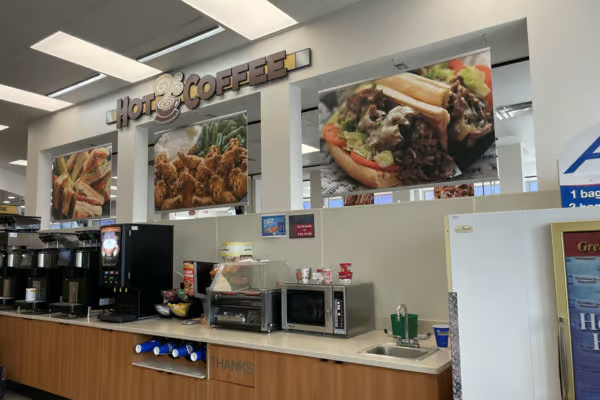
Well-known quick-service brands are powerful tools truck stop and travel plaza operators can use to attract customers and drive traffic inside and boost sales throughout the location.
“One golden brand is all you need,” said Keith Wade, owner of KEW Travel Center Consulting, while speaking during the Great Ideas! Workshop at NATSO Connect 2025. Wade added that a known brand can even boost sales of proprietary offerings. “When I see a billboard with Bob’s Tacos and clean restrooms, I think I need to keep going. If you have a smaller site but can put in a Wendy’s or branded site, then you’ll sell the hell out of your Bob’s Tacos. You just have to get them there first.”
“Try this exercise. Take a trip 10 to 15 miles down the interstate from your location. Open up Google, Apple Maps, Waze, etc., and type in “food” and hit search. Does food at your location come up that would make a car stop at your travel center that hasn’t stopped at your location before? A QSR with known a food offering can be a big motivator in getting cars to stop,” said Amy Toner, executive director of the NATSO Foundation.
Dustin Trail, manager of Trails Travel Center, said there is always a fear that adding another food-serve brand will cannibalize sales of the existing offerings. “Sometimes you do, but if you pick the right ones, they all actually see an increase with all the new logos and billboards,” he said. “You give people another reason to stop, and you’re driving traffic to your location.”

Finding the Right Fit
Getting a QSR to agree to partner with a travel center often requires a strong value proposition and a strategic approach, especially if they haven’t been in the travel center space before.
Even if the brand doesn’t jump on board, Davis said she keeps the door open. “A year and a half ago, I tried to get Starbucks, and it was a hard no. It wasn’t until they saw the growth in other brands in travel centers and how successful they’re doing that they were interested,” Davis explained.
Now, LV Petroleum has Starbucks locations approved in eight sites. “The next brand I’m trying to work with is Buffalo Wild Wings to Go. They’re not in travel centers, but I think Buffalo Wild Wings to Go would very well in our facility. They just haven’t yet gotten pulled over that bridge yet into the travel center world.”
Creating Interest in the Travel Center Industry
While speaking during NATSO Connect 2024, Mohamad Sharaf, who handles business development for Victron Energy, said the company is “trying to up our game” with QSRs. “I think everyone has realized the benefit of QSR brands and having a brand that is aesthetically impressive is great,” he said.
Davis said one of the most important things she does when working with new brands is to explain the travel center industry. “When you say truck stop, a lot of people get the image of a dirty, grungy truck stop, but that’s not what we are,” she explained. “We’re travel centers, and we want that to be inviting for the entire family.”
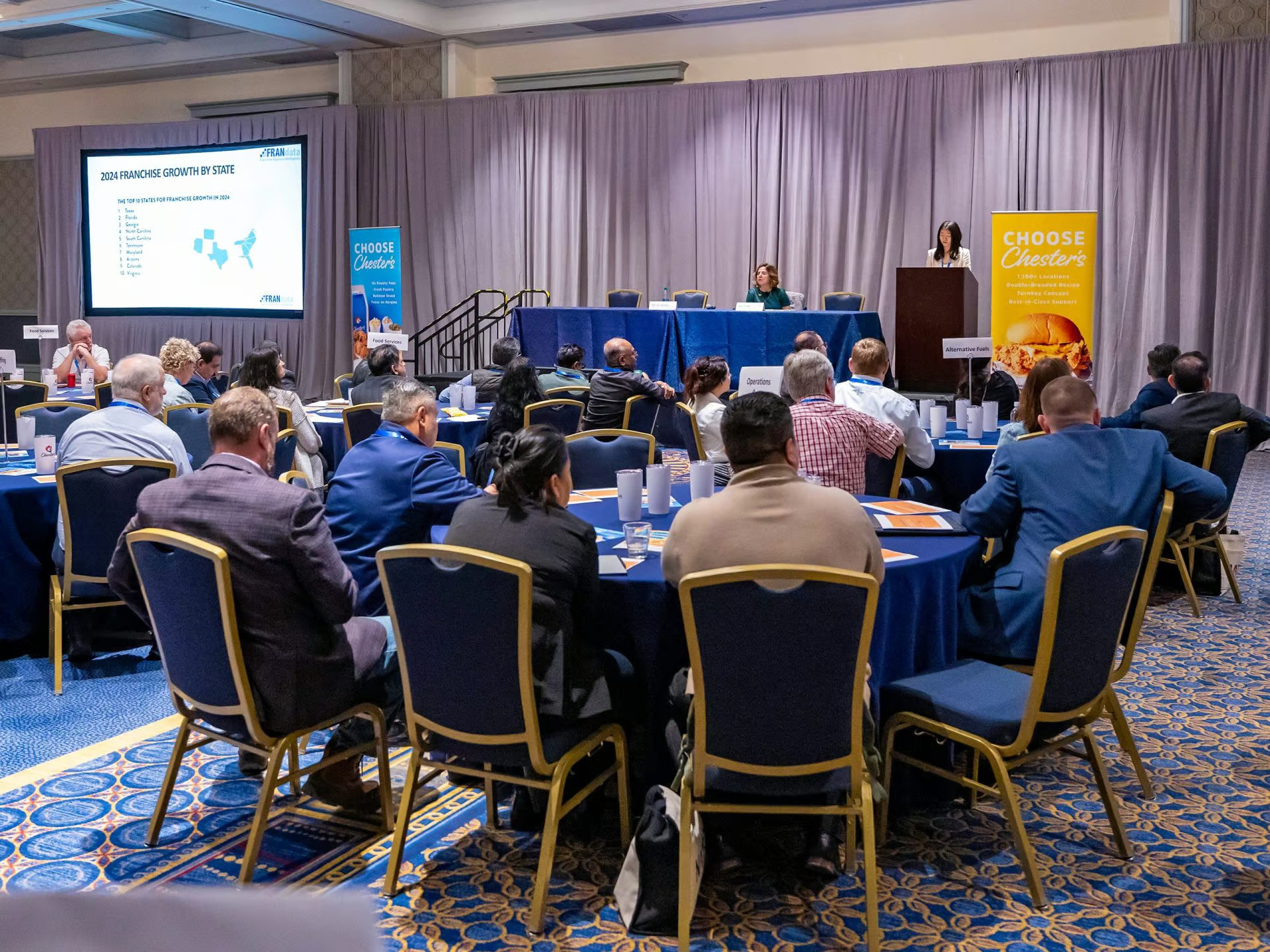
Christina Niu, a speaker at NATSO Connect 2024 and research director at FRANdata, a franchise research and data company, said franchisors are interested in modernized travel centers and truck stops that emphasize cleanliness, have comfortable seating, have a sophisticated design and aesthetic appeal, and are evolving amenities to meet changing consumer needs.
According to FRANdata, franchising has experienced unprecedented growth. Niu said there are an estimated 800,000+ franchised businesses in the U.S. with more than 8,000 franchise brands across 30 industries and 234 subsectors.
Davis breaks potential QSR partners into three categories. “There can be a no, a not a no but not a yes, and a yes. We’re going to try to get to the yes,” she said, adding that she often starts conversations by sharing her vision for the partnership.
Getting to Yes
Potential QSR partners want real estate, marketing, technology, financial, and human resources support, which travel centers can provide. Strategies to help persuade QSRs about the benefits of location inside a travel center include:
Highlight the Unique Audience: Travel centers serve a unique and reliable customer base—professional drivers, four-wheel traffic and locals—which can lead to a consistent flow of business as well as repeat business, increasing the QSR’s long-term revenue. Plus, travel center customers are often focused on speed and gravitate towards quick-serve options that can get them back on the road.
Emphasize Revenue Potential: Travel centers are high-traffic locations, especially those along major highways or busy interchanges, which means QSRs can benefit from high sales and customer volumes. Niu recommended that operators emphasize how they can give brands access to new customers.
Share Data: Niu said data is important to franchisors. They typically want to know about consumer demographics, including age and gender, consumer behavior, the average spend amount, the number of consumers traveling alone versus traveling with family, and the ratio of truck drivers vs. travelers vs. local residents. It can also be helpful to share data related to consumer visits, the number of brands visited during a consumer’s stay, consumer interaction with technology, consumer loyalty and frequency of visits.
Showcase the Brand Visibility: For QSR brands, one key advantage of partnering with travel centers is the visibility along major interstate highways and busy exits. Locations’ prime real estate provides QSRs with valuable exposure. Even drivers who don’t stop may remember the QSR’s location when planning future stops.
Discuss Marketing Opportunities: Travel centers often engage in their own marketing and loyalty programs, which can provide the QSR brand with additional promotional opportunities. Co-branded advertising or digital signage along highways can draw attention to both the travel center as well as the QSR partner.
Offer Flexibility in Location Setup: QSRs might have concerns about brand consistency or the operational complexity of running a franchise inside a travel center. Operators can help alleviate these concerns by offering flexible setups. Sharaf said he often tells potential QSR partners he will build the travel center around their needs. “If there is any design specification, operational requirement your brand would prefer in any way, I’m going to design and execute on it,” he said.
Focus on Operational Synergy: Operators can discuss howexisting infrastructure and operations align well with a QSR’s business model. They already provide 24/7 operations, restrooms and fuel, which complement the food offerings QSR’s provide.
Strive for Long-Term Benefits
The right partnerships can create a win-win situation for travel centers as well as QSRs, and Quyntyn Johnson, president of operations at LV Petroleum, said it is essential to set expectations about how both sides can help each other succeed if they work together.
Top Microtrends Shaping the Truck Stop and Travel Center Industry in 2025 Report
Staying ahead of industry trends—especially microtrends—enables travel centers to seize new opportunities, adapt to market dynamics and meet customer needs proactively. The NATSO Foundation created the Top Microtrends Shaping the Truck Stop and Travel Center Industry in 2025 Report to provide actionable insights to help operators maintain a competitive edge.
The Top Microtrends Shaping the Truck Stop and Travel Center Industry in 2025 Report was created with generous support from CAT Scale.


Subscribe to Updates
The NATSO Foundation and NATSO provide a breadth of information created to strengthen travel plazas’ ability to meet the needs of the traveling public in an age of disruption. This includes knowledge filled blog posts, articles and publications. If you would like to receive a digest of blog post and articles directly in your inbox, please provide your name, email and the frequency of the updates you want to receive the email digest.